







Conveyor Belt Fabrication
– Custom conveyor belt fabrication for application-specific conveying, positioning, tracking, product retention, gripping and material-handling requirements
– Available modifications include cleats, sidewalls, V-guides, coatings, perforations, vacuum holes, grooves, surface profiles, edge modifications and selected joining options
– Fabrication can be applied to suitable PU, PVC, silicone and other conveyor belt constructions according to belt specifications, conveyor design and application requirements
Custom Conveyor Belt Fabrication Solutions
Conveyor belt fabrication allows a standard belt to be configured for specific conveying requirements.
Fabricated belts can provide additional product retention, positioning, grip, tracking, separation and conveying capacity compared with a standard flat belt.
| Fabrication Option | Main Purpose | Typical Parameters |
|---|---|---|
| Cleats | Product separation, positioning and inclined conveying | Height, width, shape, pitch, spacing |
| Sidewalls | Prevent products or bulk material from falling from the belt | Height, pitch, profile, thickness |
| Surface Patterns | Increase grip and improve product stability during conveying | Pattern type, profile height, direction, texture |
| V-Guides | Improve belt tracking and alignment | Profile, dimensions, position |
| Perforation | Vacuum conveying, drainage or airflow | Hole diameter, pattern, spacing, position |
| Splicing | Create endless belts or prepare belts for installation | Splice type, belt construction, dimensions |
Multiple fabrication options can be combined when required. For example, a belt may combine cleats, sidewalls and a V-guide for inclined conveying, or perforations and V-guides for application-specific vacuum conveying systems.
Conveyor Belt Cleat Fabrication
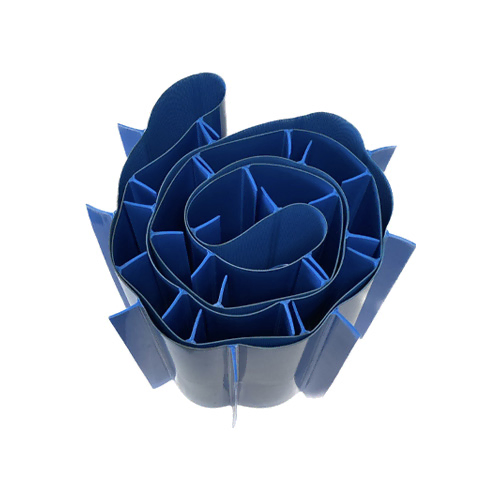
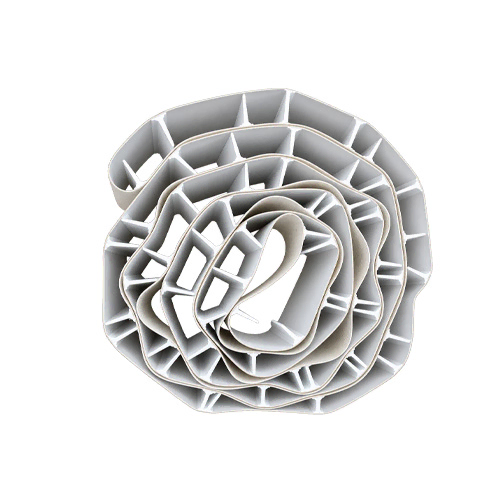
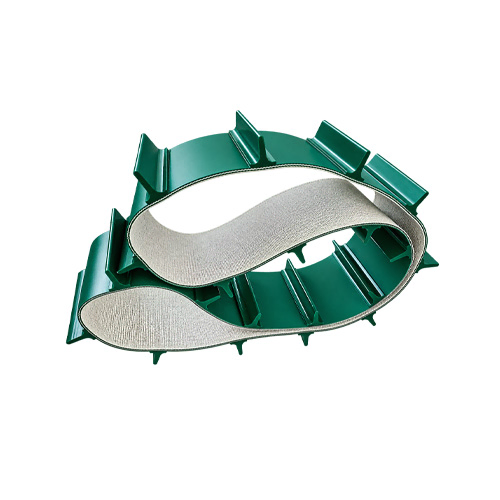
Cleats are attached to the conveyor belt surface to help separate, position, retain and move products.
They are particularly useful for inclined conveying, where products may slide backward without additional surface structures.
Cleat Types
Depending on the product and conveying requirements, cleats may include:
- Straight cleats
- Inclined cleats
- Trapezoidal cleats
- Scoop cleats
- Finger cleats
- Paddle cleats
- Profiled cleats
- Custom-shaped cleats
Cleat Configuration
Cleats can be specified according to:
- Cleat height
- Cleat width
- Cleat thickness
- Cleat shape
- Cleat angle
- Cleat pitch
- Cleat spacing
- Cleat position
- Number of cleats
- Distance from belt edges
The appropriate configuration depends on product dimensions, product weight, conveyor angle, belt speed and loading conditions.
Conveyor Belt Sidewall Fabrication
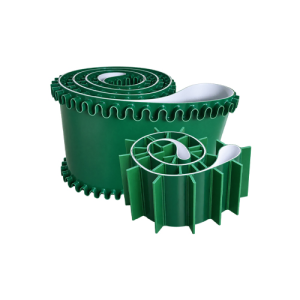
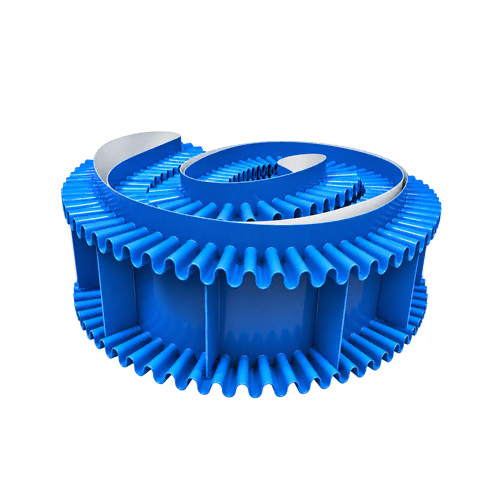
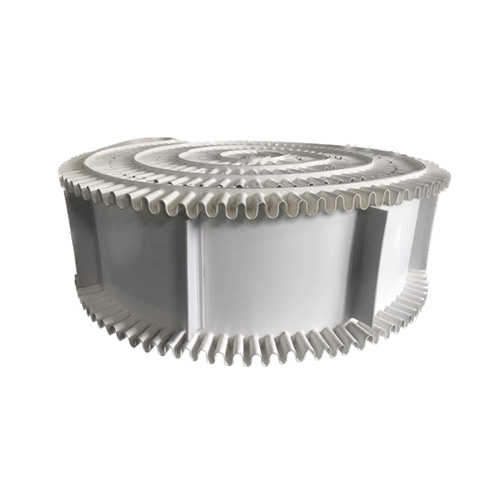
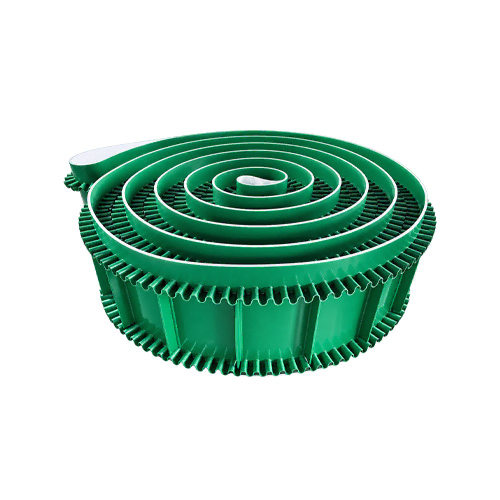
Sidewalls are added to the edges of conveyor belts to help contain products and bulk materials during inclined, steep-angle or high-capacity conveying.
They can reduce material spillage and increase the effective conveying capacity of a belt within a limited conveyor width.
Sidewall Configuration
Sidewalls can be specified according to:
- Sidewall height
- Sidewall pitch
- Profile
- Thickness
- Belt width
- Attachment method
Corrugated sidewalls and other application-specific profiles can be configured according to the conveyor design.
Sidewalls can also be combined with cleats to form compartments for controlled material conveying.
Conveyor Belt Surface Pattern Fabrication
Different surface patterns can be applied or selected according to product contact, grip, conveying direction and material-handling requirements.
Patterned surfaces are particularly useful where a standard smooth belt does not provide sufficient grip or product stability during horizontal or inclined conveying.
Conveyor Belt Surface Patterns
Available surface patterns may include:
- Rough Top
- Diamond
- Shallow Diamond
- Saw Tooth
- Longitudinal Rib
- Lateral Rib
- Fish Bone
- Crescent
- Golf
- Mini Grip
- Super Grip
- Lattice
- Round Stud
- Square
- Other application-specific patterns
Surface Pattern Configuration
Surface patterns can be specified according to:
- Pattern type
- Profile height
- Pattern direction
- Surface texture
- Surface material
- Surface hardness
- Belt thickness
- Belt width
- Belt color
The appropriate surface pattern depends on the conveyed product, required grip, conveyor angle, conveying direction, pulley diameter, belt speed and operating conditions.
Conveyor Belt V-Guide Fabrication
V-guides can be added to the underside of a conveyor belt to improve tracking and lateral stability during operation.
They help keep the belt aligned with the conveyor structure and can reduce unwanted lateral movement.
V-Guide Parameters
Typical specifications include:
- Guide profile
- Guide height
- Guide width
- Guide position
- Guide quantity
- Continuous or segmented arrangement
V-guides can be used on conveyors requiring stable tracking or where lateral forces may affect belt alignment.
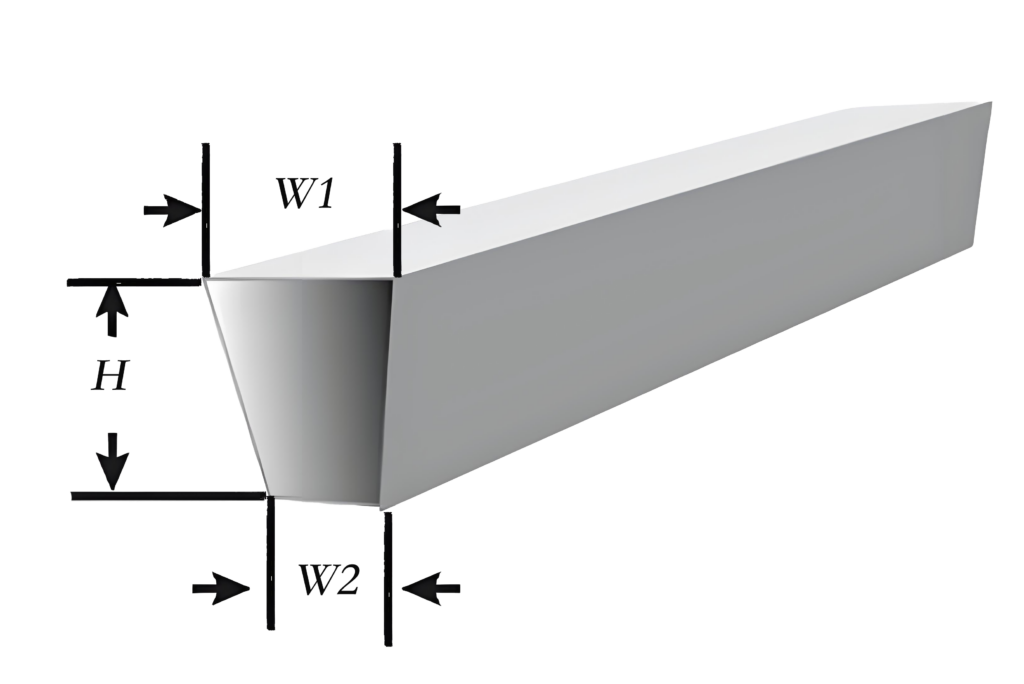
![]() | Size | Material | Type | Base Width W1 (mm) | Height H (mm) | Top Width W2 (mm) |
| K6 | PVC/PU | Solid/Notched | 6 | 4 | 4 | |
| K8(Z) | 8 | 5 | 4 | |||
| K10(O) | 10 | 6 | 6 | |||
| K13(A) | 13 | 8 | 7 | |||
| K17(B) | 17 | 11 | 10 | |||
| K22(C) | 22 | 13 | 11 |

Perforated Conveyor Belt Fabrication
Perforation introduces holes or defined hole patterns into a conveyor belt for specialized conveying functions.
Compared with standard conveying, perforated belts are often used where vacuum, airflow, drainage or controlled product positioning is required.
Perforation Parameters
Hole configurations can be specified according to:
- Hole diameter
- Hole shape
- Hole spacing
- Hole pitch
- Hole arrangement
- Hole position
- Number of holes
- Distance from belt edges
For vacuum applications, the perforation pattern should be coordinated with the vacuum chamber, suction area and product-contact area.
Conveyor Belt Splicing & Joining
Splicing is used to create an endless conveyor belt or prepare a belt for installation.
Depending on belt material, thickness and operating conditions, joining options may include:
- Finger splice
- Z-splice
- Endless splice
- Hot vulcanized splice
- Mechanical joining
- Application-specific joining methods
Splicing Considerations
The appropriate joining method depends on:
- Belt material
- Belt thickness
- Pulley diameter
- Installation space
- Operating temperature
- Load
- Belt speed
- Cleaning requirements
For replacement belts, an existing belt sample or detailed dimensions can help determine the appropriate splice configuration.
Conveyor Belts Suitable for Fabrication
Fabrication options depend on the base belt material, construction, thickness and surface characteristics. TRANDVOX supports customized fabrication for different conveyor belt constructions according to application and equipment requirements.
| Conveyor Belt Type | Fabrication Compatibility |
|---|---|
| PU Conveyor Belts | Suitable for a range of custom fabrication configurations according to belt construction and application requirements. |
| PVC Conveyor Belts | Available with application-specific fabrication options according to belt specification and conveyor requirements. |
| Silicone Conveyor Belts | Selected fabrication configurations are available according to belt construction, surface requirements and operating conditions. |
| Sponge Conveyor Belts | Fabrication options can be configured according to the base belt, sponge layer, surface construction and product-contact requirements. |
| Positive Drive Belts | Selected fabrication options are available according to belt construction, tooth profile, sprocket position and conveyor geometry. |
Conveyor Belt Fabrication Parameters
Accurate fabrication requires three groups of information: belt specifications, fabrication specifications and operating conditions.
Belt Specifications
- Belt material
- Belt width
- Belt length
- Belt thickness
- Number of plies
- Surface type
- Belt color
- Tensile requirements
Fabrication Specifications
- Cleat type
- Cleat height
- Cleat pitch
- Sidewall height
- Sidewall pitch
- V-guide profile
- V-guide position
- Coating material
- Coating thickness
- Hole diameter
- Hole pattern
- Groove dimensions
- Splicing method
Operating Conditions
- Conveyor speed
- Product weight
- Product dimensions
- Conveyor angle
- Operating temperature
- Oil exposure
- Chemical exposure
- Cleaning method
- Pulley diameter
- Loading conditions
- Conveyor structure
How to Order a Custom Conveyor Belt
1. Send Your Belt Information
You can provide:
- Existing belt sample
- Belt photographs
- Technical drawing
- Belt dimensions
- Equipment photographs
- Conveyor specifications
2. Confirm the Belt Construction
The belt material, surface, reinforcement, thickness, width and overall construction are confirmed according to the application.
3. Define Fabrication Requirements
Specify the required:
- Cleats
- Sidewalls
- V-guides
- Coatings
- Perforations
- Surface profiles
- Grooves
- Splicing
4. Review the Technical Specification
Key belt dimensions and fabrication details are reviewed before supply.
5. Quality Inspection
The finished belt is checked against the agreed specifications and fabrication requirements.
6. Supply & Delivery
TRANDVOX coordinates qualified belt manufacturing and fabrication resources and supports supply for OEMs, distributors, replacement applications and industrial conveying systems.
Standard Conveyor Belt vs. Fabricated Conveyor Belt
| Requirement | Standard Conveyor Belt | Fabricated Conveyor Belt |
|---|---|---|
| Basic conveying | ✓ | ✓ |
| Inclined conveying | Limited | ✓ Cleats / sidewalls |
| Product separation | Limited | ✓ Cleats |
| Product retention | Limited | ✓ Cleats + sidewalls |
| Improved tracking | Standard structure | ✓ V-guide |
| Vacuum conveying | Limited | ✓ Perforation |
| Increased grip | Standard surface | ✓ Coating / profiles |
| Specialized product handling | Limited | ✓ |
| Equipment-specific configuration | Limited | ✓ |
FAQ
Yes. Conveyor belts can be fabricated with different cleat shapes, heights, widths, spacing and pitches for product separation, positioning and inclined conveying.
Yes. Sidewalls can be added to improve product retention and support inclined, steep-angle or high-capacity conveying.
Yes. Cleats and sidewalls can be combined to create compartments and reduce product movement or spillage.
Yes. Conveyor belts can be perforated according to specified hole diameters, patterns and spacing for vacuum conveying, drainage, airflow or specialized handling.
Yes. V-guides can be added to improve tracking and belt alignment according to the conveyor structure.
Yes. Technical drawings can be used to specify belt dimensions, cleat geometry, sidewall configuration, guide positions, hole patterns, surface profiles and other fabrication requirements.
Provide the belt dimensions, material, application, conveyor speed, product information and fabrication requirements. A drawing, sample or photograph of the existing belt can also help.
Related Cases
Application: Inclined or guided conveying where surface grip and wedge positioning both matter Component Type: Supergrip PVC belt with thermal joint, underside […]


