







Your Reliable Partner for Industrial Belt Solutions

Flat Belt Supplier

TRANDVOX provides flat belt solutions for industrial power transmission, precision feeding, and machine drive applications. Our product range includes nylon flat belts, flat transmission belts, feeder belts, tangential belts, and other machine-specific flat belt solutions.

Different belt constructions and flat contact surfaces can be selected according to the required friction, flexibility, running speed, pulley configuration, and machine function. Custom dimensions, surface options, joining configurations, guides, and selected processing are available according to application requirements.

Flat Belt Types

Flat belts use a flat running or contact surface for power transmission, feeding, machine driving, and other machine-specific functions. Different belt constructions and surface materials provide the friction, flexibility, tensile performance, and running characteristics required for different equipment.

For power transmission, nylon-reinforced flat belts are commonly used where tensile strength, flexibility, and stable running are required. In these applications, they may also be referred to as flat transmission belts or flat drive belts.

For feeding and material transfer, the flat contact surface can be selected with suitable friction characteristics to provide the grip required for controlled product movement. Machine-specific flat belts can also be configured for roller driving, tangential drive systems, and other specialized functions.

The appropriate flat belt type should be selected according to the machine function, drive or feeding requirements, pulley system, and operating conditions.

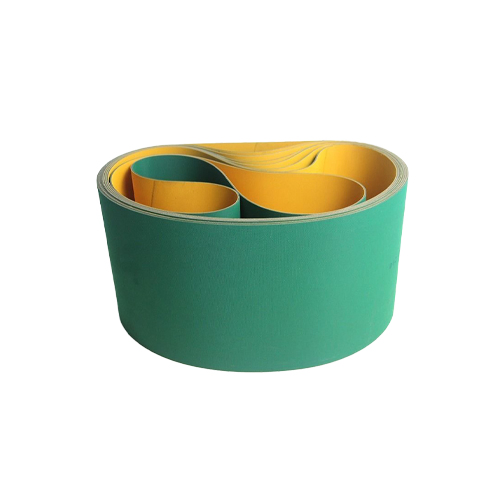
Nylon Flat Belt
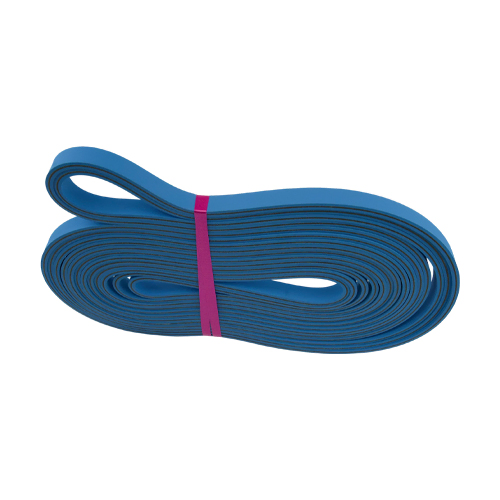
Folder Gluer Belt
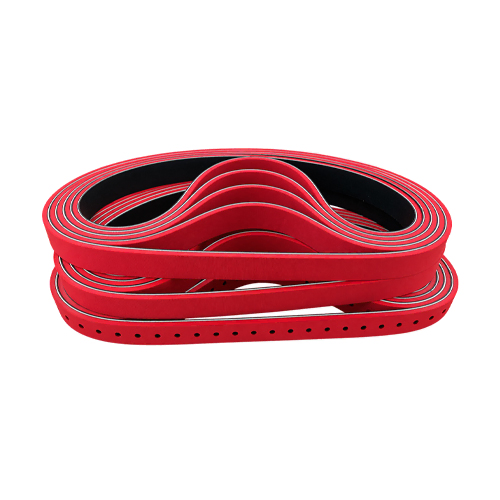
Feeder Belt
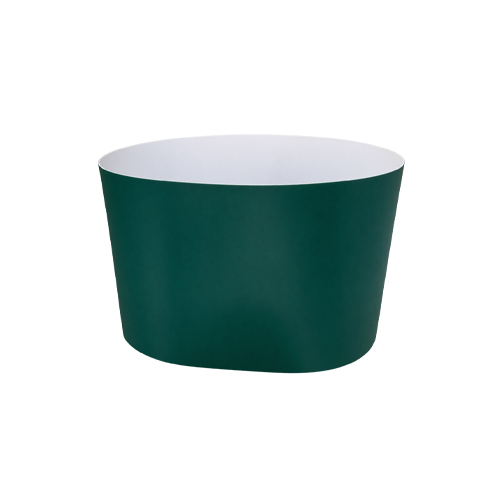
Coil Wrapper Belt

Flat Belt Advantages

High Transmission Efficiency Icon
Smooth Power Transmission

Flat belt constructions designed for drive applications support smooth and stable power transmission across a wide range of industrial machinery.
Excellent Flexibility Icon
Excellent Flexibility

Flexible belt constructions allow smooth movement around pulleys and support reliable operation in compact and demanding machine layouts.
High Friction Performance Icon
Application-Specific Friction

Different surface materials and friction layers can be selected according to power transmission, feeding, and machine-contact requirements.

High Speed Low Noise Operation Icon
High-Speed & Low-Noise Operation

Flat belts can support high-speed machinery with stable running characteristics and reduced vibration and noise under suitable operating conditions.

Send Inquiry Now
Contact Form

Why Choose TRANDVOX as Your Flat Belt Supplier?

TRANDVOX supports OEMs, distributors, machinery companies, and industrial buyers with flat belt selection, specification matching, customization, and replacement support. Based on machine requirements, operating conditions, drawings, or existing samples, we help identify suitable belt constructions and specifications while supporting custom configurations, batch orders, and repeat supply for different industrial applications.

Flat Belt Applications

Flat Belt For Packaging Machinery And Automated Packaging Systems
Packaging Machinery

Flat belts are used in packaging machinery for power transmission, precision feeding, and machine drive functions. Different surface materials and belt constructions can be selected according to the required grip, running speed, pulley arrangement, and operating conditions.

Industrial Flat Belt For Woodworking Machinery And Power Transmission
Woodworking Machinery

Flat transmission belts can be used in selected woodworking machinery and cutting equipment for smooth power transmission and stable machine operation. Their flexible construction and suitable friction surfaces support reliable operation under continuous working conditions.

Industrial Flat Belt Used In Printing Machines For Paper Feeding
Printing Machinery

Flat belts are used in printing and paper-processing equipment for paper feeding, material transfer, and machine drive functions. Appropriate surface friction helps reduce slipping and supports consistent feeding and material movement during continuous operation.
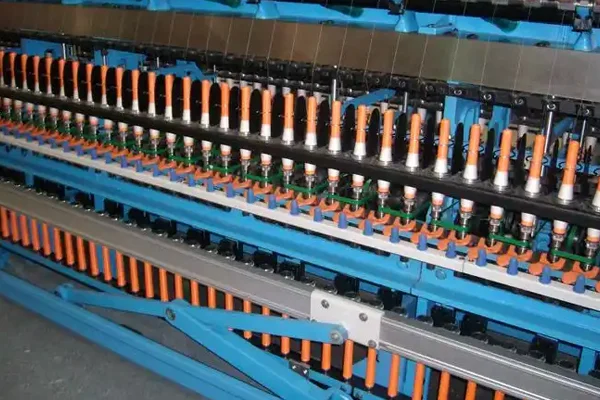
Tangential Belt For Textile Machinery And High Speed Spindle Drive Systems
Textile Industry

Tangential belts and spindle tapes are used for high-speed drive systems in textile and spinning machinery, supporting stable power transmission and continuous operation.


Flat Belt FAQs

1. What is a flat belt used for?

Flat belts are used for power transmission, feeding, machine driving, roller driving, and other machine-specific functions. Typical applications include packaging machinery, printing and paper-processing equipment, textile machinery, woodworking equipment, and industrial automation systems.

2. What are the different types of flat belts?

Flat belts can be classified according to their function, construction, and surface characteristics. Depending on the machine, they may be designed for power transmission, feeding, roller driving, material transfer, or other machine-specific functions.

3. What is the difference between a flat belt and a flat transmission belt?

Flat belt is a broader product term covering belts used for power transmission, feeding, machine driving, and other machine-specific functions. A flat transmission belt specifically refers to a flat belt designed to transmit mechanical power between pulleys or other driven components.

Therefore, a flat transmission belt is a type of flat belt, but not every flat belt is used primarily for power transmission.

4. How do I select the right flat belt?

Start by identifying the required belt function, such as power transmission, feeding, roller driving, or material transfer. Then consider the belt construction, surface friction, width, thickness, length, pulley dimensions, operating speed, load, and working conditions.

For replacement applications, providing the existing belt specifications, markings, photographs, drawings, or a sample can help with specification matching.

5. Can flat belts be customized for existing machinery?

Yes. Flat belts can be customized according to existing machine and application requirements. Depending on the belt construction, customization can include belt dimensions, surface materials, coatings, guides, perforations, joining configurations, and selected special processing.

Existing belt samples, drawings, machine information, or application specifications can be used to evaluate the required configuration.

Scroll to Top

Send Your Inquiry Now !

Contact Form