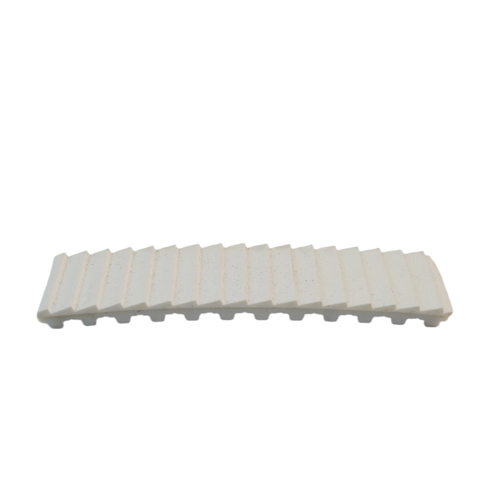
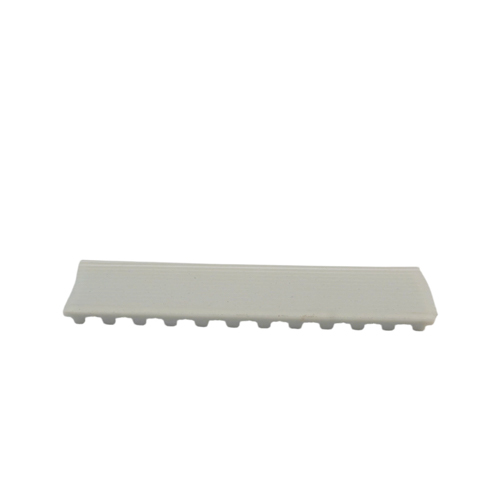
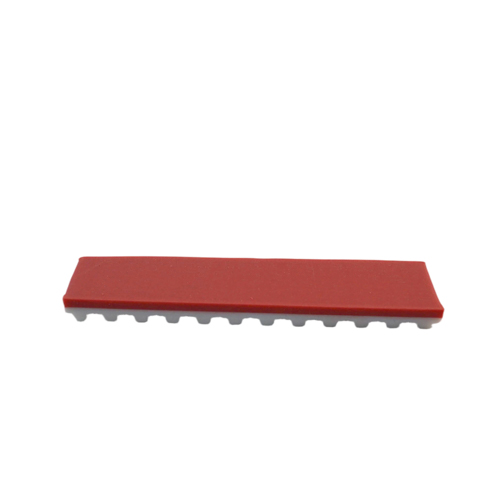
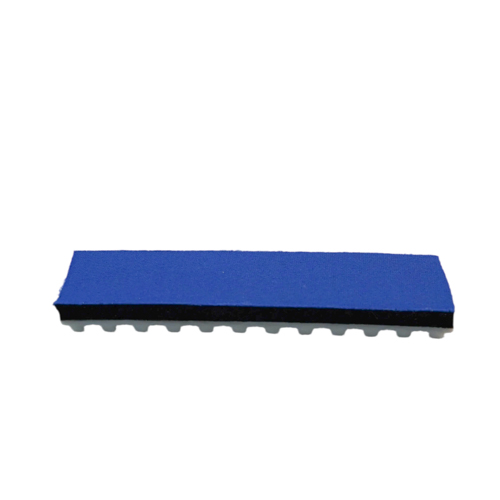
– Custom timing belt fabrication for machine-specific conveying, positioning, tracking, gripping and product-handling requirements
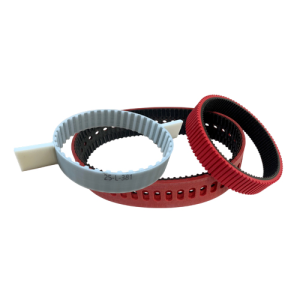
– Available modifications include cleats, coatings, V-guides, perforations, vacuum holes, grooves, special profiles and selected joining options
– Fabrication can be applied to suitable PU, rubber, silicone-coated, open ended and endless timing belt constructions according to belt specifications and application requirements
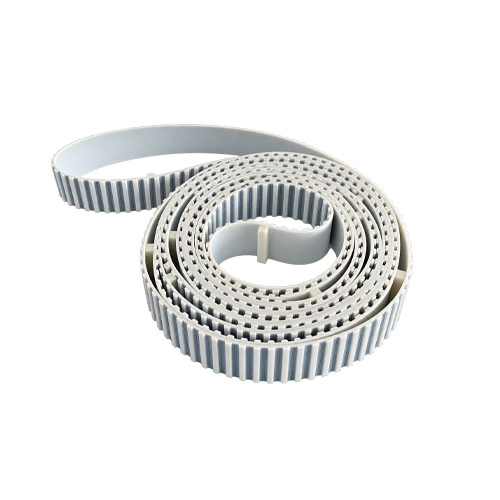
Timing belt fabrication, or timing belt modification, refers to modifying a standard timing belt to meet specific machine, conveying, tracking, gripping, or product-handling requirements.
Fabrication may involve adding components to the belt surface, machining the belt, modifying its surface properties, or preparing a suitable belt construction for specific installation requirements.
Fabrication Option
Typical Purpose
Common Requirements
Cleats
Product positioning, separation and inclined conveying
Height, width, pitch, shape, position
Coatings
Improve grip, friction, wear resistance or product contact
Material, thickness, hardness, surface texture
V-Guides
Improve tracking and belt alignment
Guide profile, dimensions, position
Perforation
Vacuum conveying, positioning or component mounting
Hole diameter, pattern, spacing, position
Grooves
Improve product handling or accommodate mechanical structures
Groove shape, depth, width, spacing
Special Profiles
Match product geometry or equipment design
Profile shape, dimensions, location
Joining
Prepare belts for installation or application-specific connection requirements
Belt construction, joining method, installation requirements
Timing Belt Cleat Fabrication
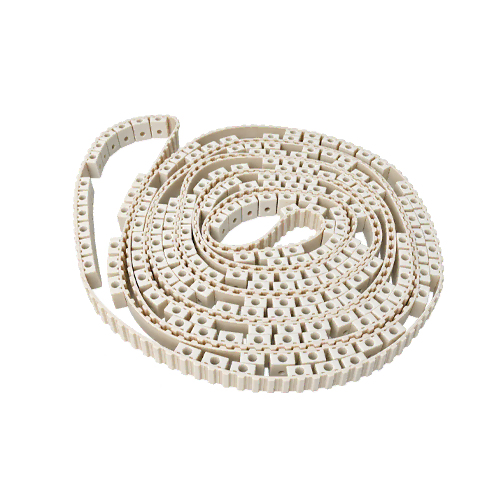
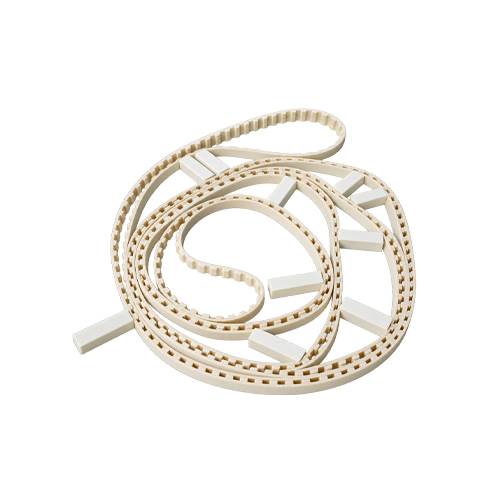
Cleats are attached to the belt surface to help convey, separate, position or retain products. They are particularly useful when products must be transported at an incline or maintained at a defined position during repeated movement.
Cleat Types
Depending on the conveying requirement, available configurations may include:
Straight cleats
Inclined cleats
Trapezoidal cleats
Scoop-type cleats
Finger-type cleats
Custom-profile cleats
Cleat Configuration
The cleat design can be specified according to the product and machine geometry, including:
Cleat height
Cleat width
Cleat thickness
Cleat shape
Cleat angle
Cleat pitch
Cleat spacing
Cleat position
Number of cleats
Distance from belt edges
For applications involving precise product positioning, cleat placement should be considered together with the belt tooth pitch and machine indexing requirements.
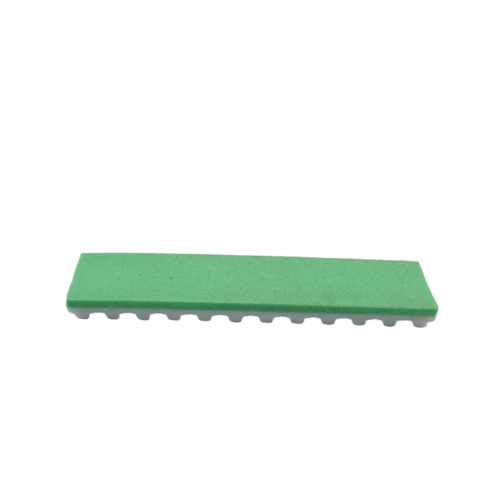
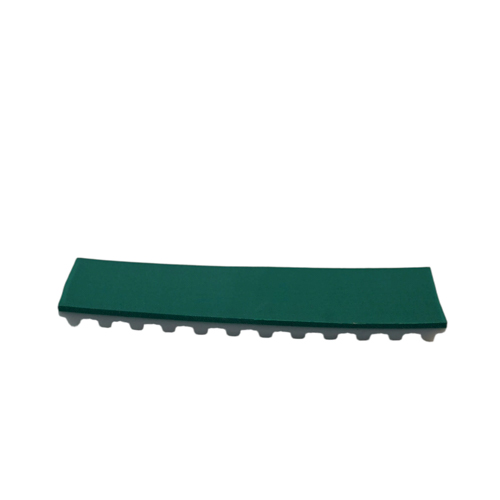
Coatings can be applied to timing belts when the standard belt surface does not provide the required grip, friction, wear resistance or product-contact characteristics.
Common coating options may include:
PU coatings
PVC coatings
Rubber coatings
Silicone coatings
Fabric coverings
Other application-specific surface materials
Coating Parameters
The appropriate coating configuration can be selected according to:
Required friction level
Product contact surface
Wear resistance
Surface hardness
Coating thickness
Temperature conditions
Oil or chemical exposure
Cleaning requirements
Conveying speed
Coating selection should be considered together with the belt core, tensile reinforcement and operating environment rather than as an isolated modification.
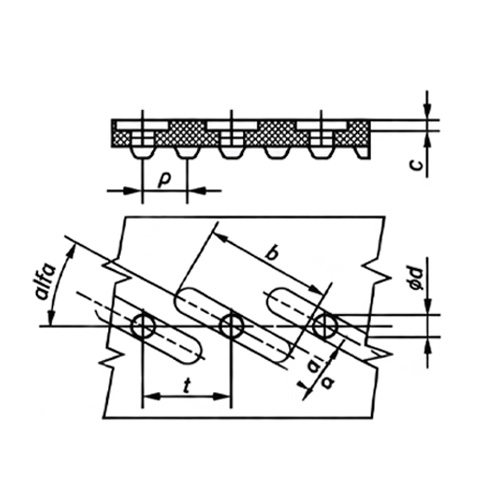
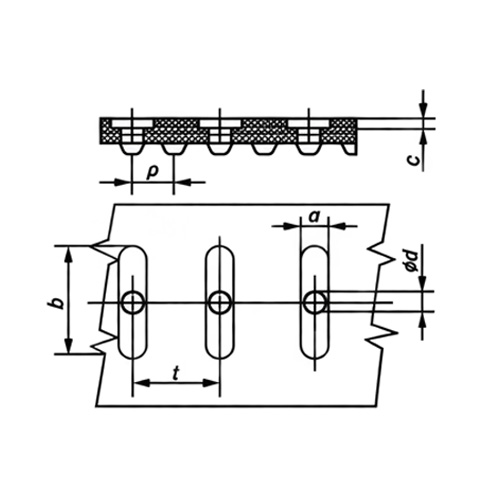
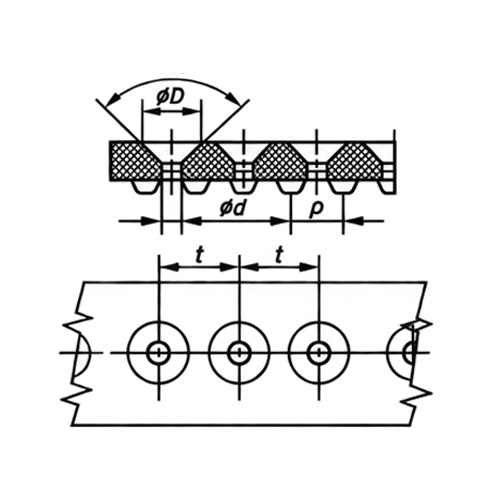
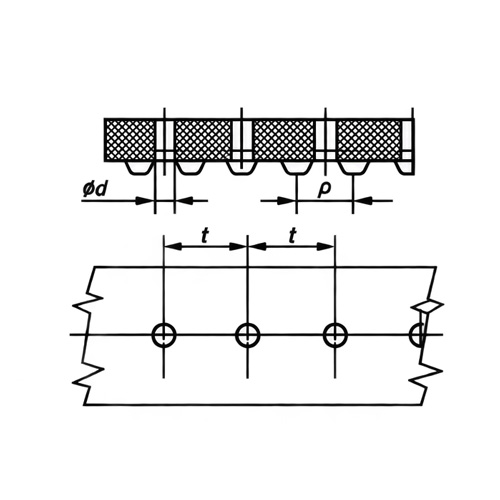
Timing belt perforation allows holes or specific hole patterns to be incorporated into a belt according to equipment or product-handling requirements.
Perforation may be used for:
Vacuum conveying
Product positioning
Airflow or suction applications
Component attachment
Mechanical alignment
Specialized handling systems
Perforation Specifications
Custom perforation can be defined by:
Hole diameter
Hole shape
Hole spacing
Hole pitch
Hole pattern
Hole position
Number of holes
Distance from belt edges
Relationship between holes and belt teeth
For applications requiring precise synchronization between the perforation pattern and belt teeth, the hole position should be specified relative to the tooth pitch and reference point.
Some machinery requires a belt surface or belt body to accommodate a particular mechanical structure. TRANDVOX can support timing belt machining and fabrication involving grooves, profiles, recessed sections, and other application-specific modifications.
Possible requirements include:
Longitudinal grooves
Transverse grooves
Recessed sections
Special surface profiles
Product positioning profiles
Custom-machined sections
These modifications can be specified according to the required width, depth, spacing, location and geometry.
For non-standard profiles, technical drawings or physical samples are recommended to ensure accurate specification matching.
Timing Belt Joining Options
Depending on the belt construction and installation requirements, selected timing belts can be supplied with joining configurations such as pin joints, mechanical connections, or other compatible joining methods.
The appropriate joining configuration should be confirmed according to the belt construction, installation space, timing pulley arrangement, and equipment requirements.
Surface and selected fabrication configurations for suitable silicone-coated constructions
Custom Timing Belt Fabrication Parameters
To select and configure the appropriate belt, Trandvox evaluates both the basic belt specification and the required fabrication details.
Belt Specification
Belt type
Belt material
Tooth profile
Pitch
Belt width
Belt length
Number of teeth
Tensile reinforcement
Fabrication Specification
Cleat type and dimensions
Coating material and thickness
V-guide profile and position
Hole diameter and pattern
Groove dimensions
Surface profile
Joining method
Special machining requirements
Operating Conditions
Operating speed
Load
Temperature
Product weight
Conveyor angle
Contact conditions
Oil or chemical exposure
Cleaning requirements
Pulley dimensions
Machine installation constraints
Providing these details helps reduce specification errors and improves the efficiency of belt selection and fabrication.
Timing Belt Fabrication Process
TRANDVOX follows a specification-matching process to confirm the base belt construction and required fabrication details before supply.
1. Send Your Requirements
Customers can provide:
Belt drawings
Existing belt samples
Product photographs
Equipment information
Belt dimensions
Technical specifications
2. Confirm Belt Construction
We identify the appropriate:
Belt material
Tooth profile
Reinforcement
Belt dimensions
Surface configuration
3. Define Fabrication Requirements
The required cleats, coating, V-guide, perforation, groove, profile or joining method are confirmed based on the application.
4. Review Specifications
Key dimensions and fabrication details are reviewed before order confirmation and supply.
5. Quality Inspection
The finished belt is checked against the agreed specifications and fabrication requirements before shipment.
6. Supply & Delivery
Trandvox coordinates the qualified manufacturing and fabrication supply chain and supports international delivery for OEM, distributor, replacement and industrial applications.
When Is Timing Belt Fabrication Needed?
A standard timing belt may be suitable when the equipment only requires synchronous power transmission. Fabrication becomes valuable when the belt must also perform a specific conveying, positioning, tracking or product-handling function.
Requirement
Standard Timing Belt
Fabricated Timing Belt
Synchronous Transmission
✓
✓
Product Positioning
Limited
✓
Inclined Conveying
Limited
✓ with cleats
Additional Belt Guidance
Standard configuration
✓ with V-guide
Vacuum Conveying
Limited
✓ with perforation
Increased Surface Grip
Standard surface
✓ with coating
Special Product Handling
Limited
✓
Equipment-Specific Configuration
Limited
✓
The right solution depends on the machine design, belt construction and operating requirements.
FAQ
1. Can timing belts be customized with cleats?
Yes. Timing belts can be fabricated with different cleat profiles, dimensions, spacing and positions according to product-handling and machine requirements.
2. Can you add holes to a timing belt?
Yes. Timing belts can be perforated with specified hole diameters, patterns, spacing and positions. The hole layout can be coordinated with the belt tooth pitch when precise synchronization is required.
3. Can a timing belt have both cleats and a V-guide?
Yes. A timing belt may combine multiple fabrication features, such as cleats, V-guides and coatings, provided the configuration is compatible with the belt construction and equipment.
4. What information is needed for a custom timing belt?
Useful information includes belt type, tooth profile, pitch, width, length or tooth count, reinforcement, fabrication requirements and application conditions. A drawing or existing belt sample is particularly helpful.
5. Can you fabricate timing belts according to drawings?
Yes. Drawings can be used to define belt dimensions, cleat geometry, hole patterns, guide positions, coating areas and other fabrication requirements.
6. Can PU timing belts be fabricated?
Yes. Depending on the belt construction, PU timing belts can be fabricated with cleats, coatings, V-guides, perforations, grooves and other application-specific modifications.
7. How do I request a quotation?
Send your belt drawing, sample, dimensions, photographs or equipment information together with the required fabrication details. Trandvox can review the specification and provide a suitable supply solution.
Application: Synchronized conveying equipment requiring repeatable cleat positioning Component Type: Drawing-based PU T1/2 inch belt with Kevlar cord and welded […]
Application: Industrial conveying and automated material handling system Component Type: Custom polyurethane H200 timing belt with cleats and pin-joint connection The Core […]
Application: Vertical Form Fill Seal (VFFS) Packaging Machine Component Type: Custom Silicone-Coated Rubber Timing Belt The Core Issue: Coating delaminated […]