
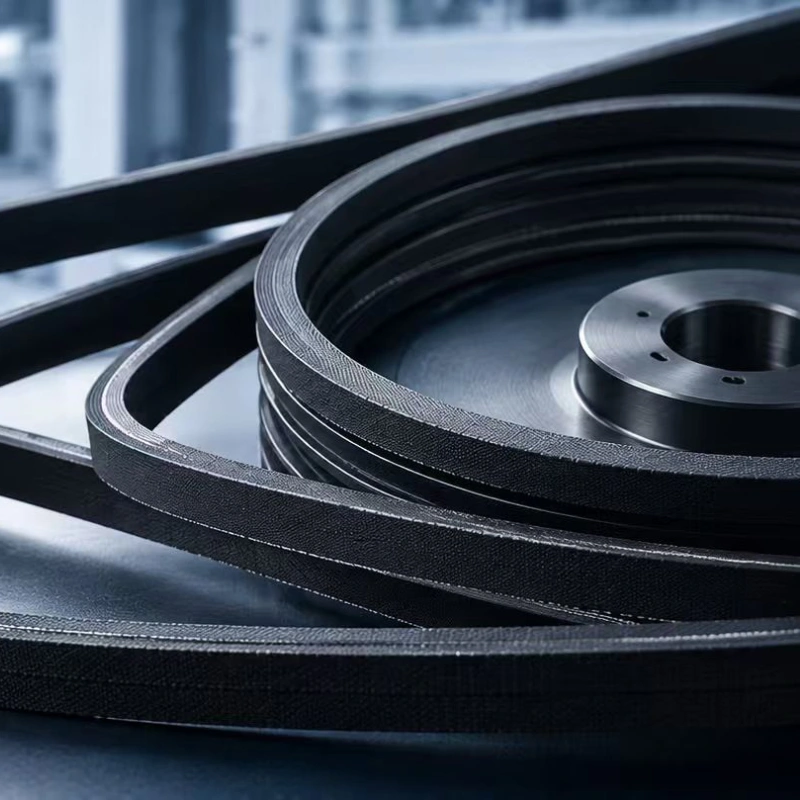

Your Reliable Partner for Industrial Belt Solutions

Industrial Timing Belt Supplier

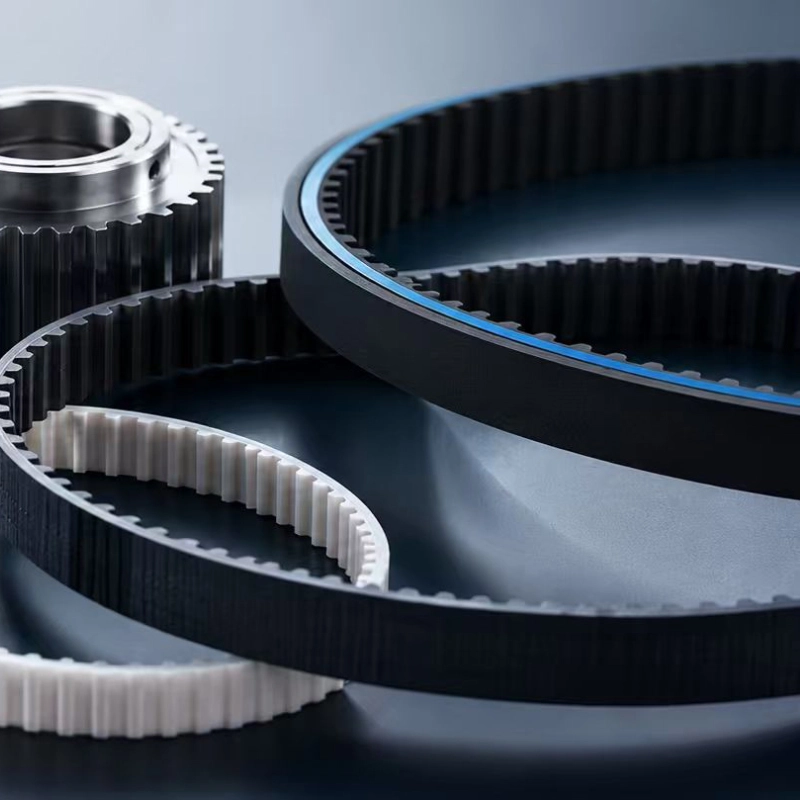
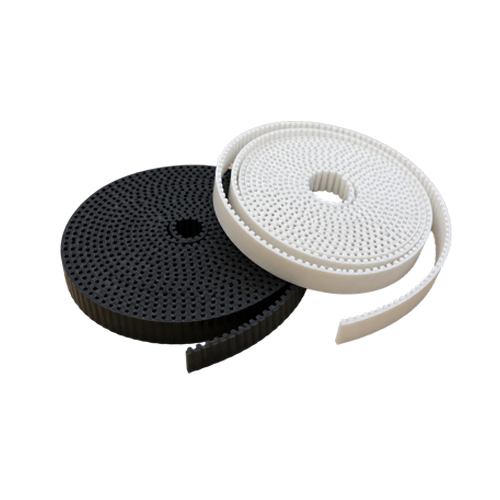
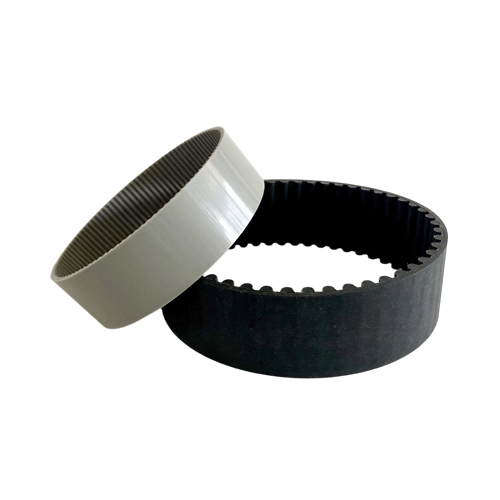
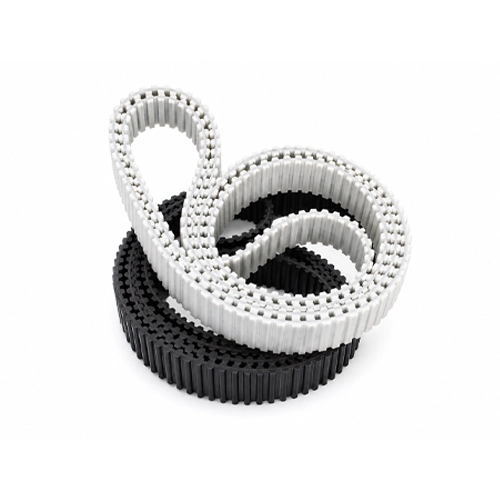
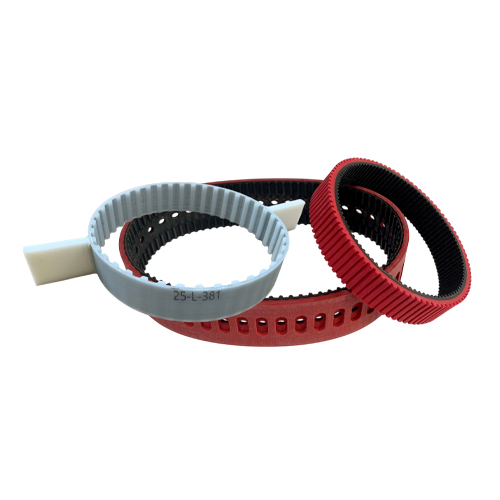
TRANDVOX supplies industrial timing belts for synchronous power transmission, precision positioning, indexing, and automated motion systems. Our timing belt range includes PU timing belts, rubber timing belts, silicone timing belts, double-sided timing belts, endless timing belts, open-ended timing belts, and customized timing belt solutions for specialized applications.

Timing belts are toothed belts that use positive engagement with matching pulleys to maintain synchronized movement between drive components. Belt selection depends on the tooth profile, pitch, belt dimensions, reinforcement, material, belt construction, operating conditions, and motion requirements.

Industrial Timing Belt Types

Industrial timing belts are available in different materials, constructions, and configurations for synchronous transmission, positioning, indexing, and coordinated machine motion. Depending on the application, belt selection may involve PU or rubber constructions, specialized surface properties, open-ended or endless configurations, and single- or double-sided tooth arrangements.

The appropriate timing belt type should be selected according to the pulley system, motion requirements, operating conditions, and required belt configuration.

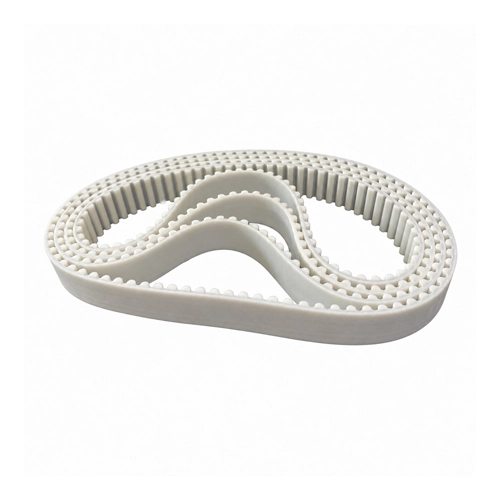
PU Timing Belt
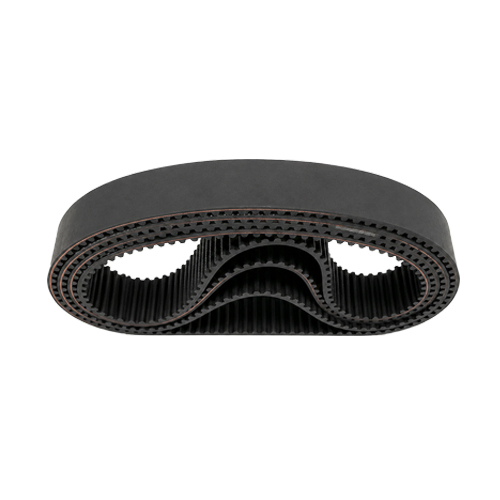
Rubber Timing Belt
Silicone Timing Belt
Open Ended Timing Belt
Endless Timing Belt
Double Sided Timing Belt
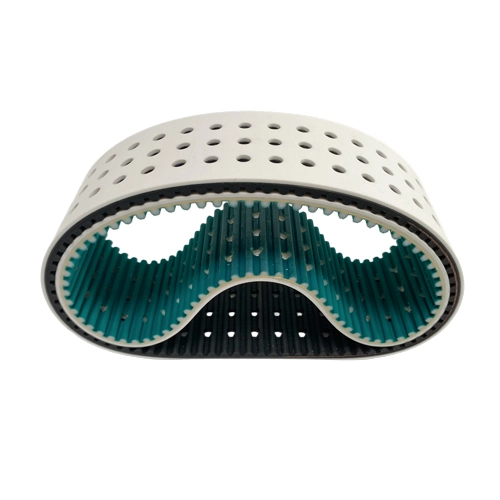
Timing Belt Fabrication

Timing Belt Tooth Profiles

The tooth profile is one of the most important factors when selecting a timing belt because the belt teeth must correctly engage with the corresponding pulley grooves.

Timing belt tooth profiles can generally be grouped into trapezoidal and curvilinear families, with different profiles designed for different transmission, positioning, and load requirements.

T Series

T-series profiles use a trapezoidal tooth geometry and are available in metric pitches such as T5, T10, and T20.

Typical applications include general automation, positioning, indexing, and synchronous transmission.

AT Series

AT profiles use a modified trapezoidal tooth geometry and are commonly selected for applications requiring higher transmission force and precise linear movement.

Common profiles include:

  • AT5
  • AT10
  • AT20

HTD Series

HTD profiles use a curvilinear tooth design for applications requiring higher torque transmission and stable tooth engagement.

Common profiles include:

  • HTD3M
  • HTD5M
  • HTD8M
  • HTD14M

STD Series

STD profiles are curvilinear synchronous belt profiles used in selected precision and mechanical transmission applications.

Common profiles include:

  • STD5M
  • STD8M
  • STD14M

RPP Series

RPP profiles use a rounded tooth geometry designed for stable tooth engagement in synchronous power transmission applications.

Common profiles include:

  • RPP5M
  • RPP8M
  • RPP14M

Imperial Profiles

Common imperial timing belt profiles include:

  • MXL
  • XL
  • L
  • H
  • XH

Timing Belt Materials & Reinforcement

The selection of belt material and reinforcement directly affects tensile strength, wear resistance, dimensional stability, flexibility, and overall belt performance. TRANDVOX supports different material and reinforcement options according to timing belt construction, operating conditions, and application requirements.

1. Base Materials

Base Material Key Features & Advantages Primary Applications
Polyurethane (PU) Good abrasion resistance, dimensional stability, and resistance to many oils and industrial operating conditions Precision automation, packaging machinery, food processing, and cleanroom conveying
Rubber (Neoprene) Good flexibility, vibration damping, and reliable dynamic performance Heavy-duty industrial drives, high-torque power transmission, and general machinery

2. Tensile Reinforcement Cords

Reinforcement Cord Key Performance & Properties Application Suitability
Steel Cord High tensile strength, low elongation, and good dimensional stability Precision positioning, linear motion, and higher-load transmission applications
Fiberglass Cord


Good dimensional stability, low elongation, and flexibility for synchronous power transmission. Commonly used in rubber timing belt constructions for general industrial drives and repeated dynamic operation.
Kevlar (Aramid) Cord Lightweight, low elongation, non-metallic, and suitable for dynamic applications High-speed motion, frequent start-stop operation, and applications where non-metallic reinforcement is preferred

Timing Belt Specifications

When specifying an industrial timing belt, the main parameters include:

Specification Key Consideration
Belt Material PU, rubber, silicone-coated or other suitable construction
Tooth Profile T, AT, HTD, STD, RPP, imperial and other profiles
Pitch Must match the pulley
Belt Width Selected according to load and machine design
Belt Length Based on pulley arrangement and center distance
Number of Teeth Related to pitch length and belt circumference
Reinforcement Steel, fiberglass, aramid, or other construction
Belt Configuration Single-sided, double-sided, open ended, endless
Surface Standard, coated, covered, or fabricated
Application Synchronous transmission, positioning, indexing, automated motion

Timing Belt Advantages

Stable Synchronous Transmission Icon
Stable Synchronous Transmission

Meshing between the belt teeth and matching pulley grooves helps maintain synchronized motion with minimal slippage, supporting accurate and reliable power transmission.
Low Maintenance Icon
Low Maintenance

Timing belts do not require lubrication during normal operation, helping simplify routine maintenance compared with lubricated chain drive systems.
Low noise Operation Icon
Low-noise Operation

Compared with chain drives, timing belts generally provide smoother and quieter operation with reduced vibration, making them suitable for equipment where stable and low-noise transmission is important.
Flexible Drive Design Icon
Flexible Drive Design

Timing belts are available in a wide range of tooth profiles, pitches, widths, lengths, materials, and constructions, allowing them to match different pulley systems and machine layouts.
Products Categories
Get A Free Quote
Contact Form

Why Choose TRANDVOX as Your Timing Belt Supplier?

TRANDVOX supports standard, replacement, and customized timing belt requirements through technical coordination, specification verification, quality control, and supply management. We help review key belt and application parameters, verify replacement specifications against drawings, samples, belt markings, and pulley information, and coordinate sourcing, customization, inspection, and delivery according to confirmed order requirements. This integrated support helps OEMs, distributors, maintenance companies, and industrial buyers reduce specification mismatches and manage timing belt procurement more efficiently.

Timing Belt Applications

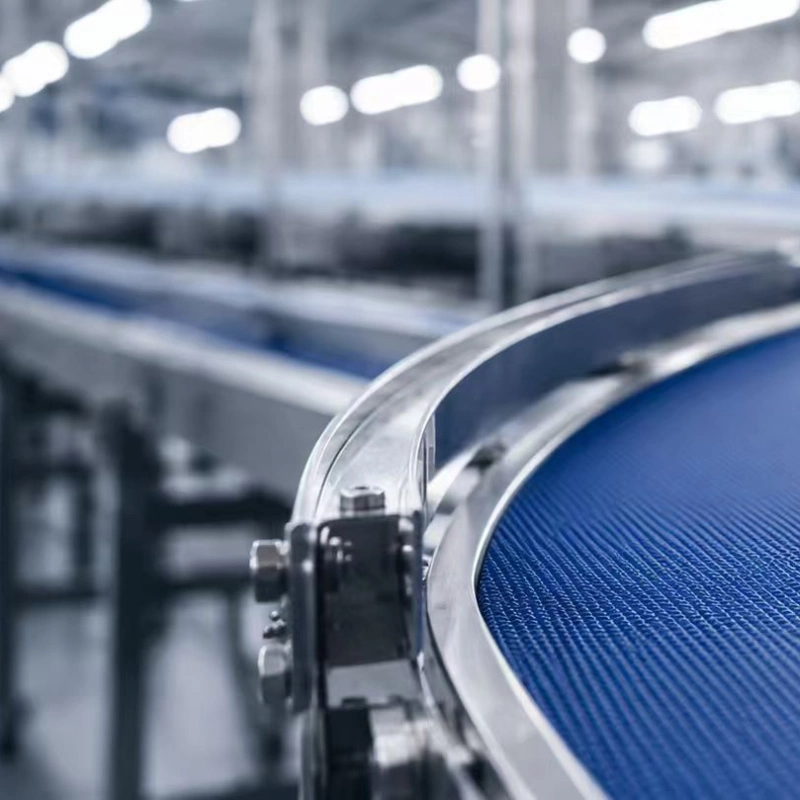
Industrial timing belts are used in machinery requiring synchronized power transmission, precise positioning, indexing, controlled conveying, or repeatable motion. Belt material, tooth profile, reinforcement, and surface configuration can be selected according to equipment and operating requirements.

Timing Belt For Food Processing
Food Processing

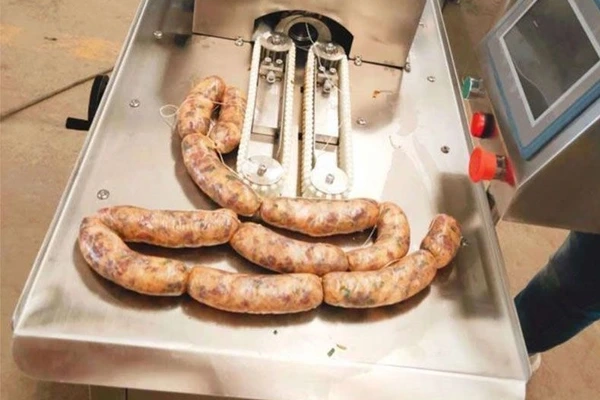
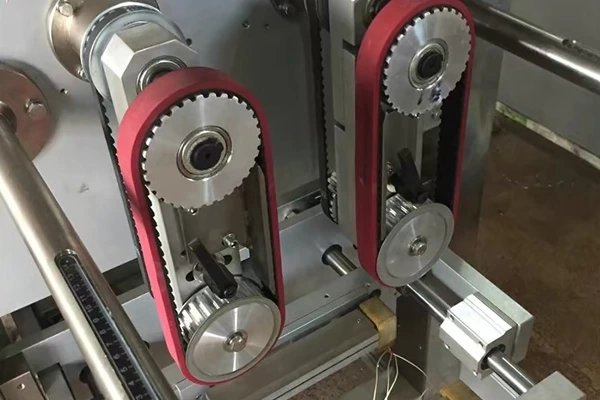
In food processing equipment, timing belts can support synchronized conveying, controlled positioning, and repeatable product movement. Applications such as sausage processing may require suitable belt materials and surface properties to accommodate repeated operation, oil exposure, cleaning, and hygiene requirements.
Timing Belt For Packaging Machine
Packaging Machinery

Packaging equipment such as VFFS machines, filling systems, and labeling equipment relies on synchronized motion, indexing, and precise positioning throughout automated production. Depending on the machine function, suitable belt surface properties can also support controlled film or product handling.
Timing Belt For Printing Machine
Printing & Paper Handling Machinery

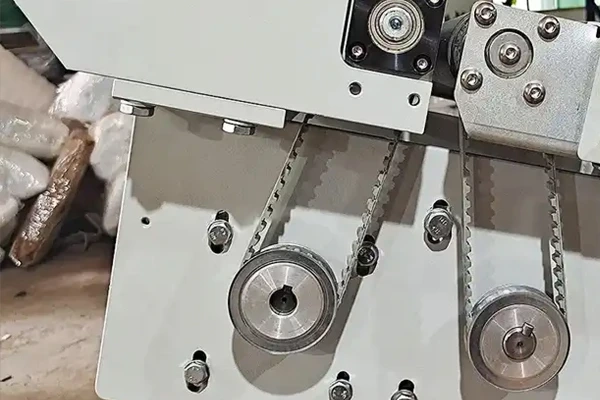
Timing belts provide synchronized motion in printing, folding, feeding, and paper-handling equipment where repeatable positioning and stable movement are required. Appropriate belt construction and surface properties can be selected according to machine speed, paper handling, and drive requirements.
Timing Belt For Textile Industry
Textile & Spinning Machinery

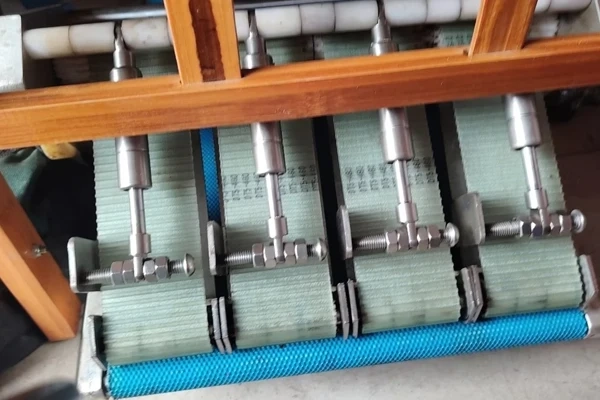
Textile, spinning, weaving, and related production equipment may use synchronous belts for coordinated transmission and repeated motion. Belt construction can be selected according to operating speed, continuous running requirements, environmental conditions, and machine configuration.


Timing Belt Selection Guide

After identifying the appropriate timing belt type, the belt specifications should be matched to the existing pulley system, transmission requirements, operating conditions, and machine design.

Tooth Profile & Pitch

The tooth profile and pitch must match the corresponding timing pulley. Common profiles include T, AT, HTD, STD, RPP, and imperial profiles. For replacement applications, confirm the existing belt marking or pulley profile before selecting the belt.

Belt Length & Width

Belt length should be determined according to the pulley arrangement, center distance, or required travel distance. Belt width should be selected according to the transmitted load, belt construction, and available installation space.

Load, Torque & Speed

Operating load, required torque, rotational or linear speed, acceleration, and start-stop frequency affect the required belt construction and dimensions. More demanding operating conditions may require stronger reinforcement or a different belt width.

Reinforcement

Steel, fiberglass, and aramid reinforcement provide different combinations of tensile strength, flexibility, elongation control, and dynamic performance. The appropriate reinforcement depends on the belt material, load, speed, pulley diameter, and motion requirements.

Pulley Configuration

Check pulley tooth profile, pitch, diameter, number of teeth, alignment, and overall drive arrangement. Proper belt-to-pulley compatibility is essential for stable tooth engagement and synchronous operation.

Operating Environment

Temperature, oil exposure, moisture, dust, chemicals, cleaning requirements, and product-contact conditions should be considered when selecting the belt material and surface construction.

For customized applications, any required belt modifications should be confirmed together with the belt material, tooth profile, pulley system, motion requirements, and operating conditions.

Timing Belt Quality Control

Quality control is an important part of the TRANDVOX supply process. We focus on specification conformity, dimensional accuracy, product consistency, and fabrication quality according to order requirements.

For standard and customized products, inspection requirements are determined according to product specifications, customer drawings, samples, and agreed technical requirements. Key inspection items may include belt dimensions, tooth profile and pitch, construction, reinforcement specification, and customized processing details.

Dimensional Accuracy Inspection

Belt length, width, thickness, pitch, and other specified dimensions are checked against the required specifications to support proper belt-to-pulley compatibility and installation.

Tooth Profile & Pitch Verification

The specified tooth profile and pitch are verified to help ensure compatibility with the corresponding timing pulley and reduce the risk of incorrect belt selection or improper tooth engagement.

Reinforcement & Belt Construction Verification

Reinforcement type and belt construction are checked against the required specification. Depending on the belt type, reinforcement may include steel, fiberglass, aramid, or other suitable tensile members.

Custom Fabrication Inspection

For customized timing belts, the finished configuration can be checked against customer drawings, approved specifications, and confirmed order requirements. Relevant dimensions, positions, surface conditions, and processing details are verified as applicable to help ensure that the delivered belt corresponds to the agreed configuration.

Specification Matching Before Delivery

For replacement and non-standard orders, TRANDVOX also checks key product information against available drawings, samples, belt markings, pulley information, and confirmed order specifications. This helps reduce specification mismatches before delivery.

Industrial Timing Belt FAQs

1. What types of industrial timing belts do you supply?

TRANDVOX supplies a range of industrial timing belts, also known as synchronous belts, including PU timing belts, rubber timing belts, silicone timing belts, double-sided timing belts, open ended timing belts, endless timing belts, and application-specific customized timing belt solutions. The appropriate belt type depends on the required synchronous motion, pulley system, operating conditions, and equipment design.

2. How do I select the correct timing belt profile?

The timing belt tooth profile and pitch must match the corresponding timing pulley. Common profiles include T, AT, HTD, STD, RPP, MXL, XL, L, H, and other profiles. For replacement applications, the existing belt marking, pulley profile, pitch, and dimensions should be confirmed before selecting a replacement.

3. What information is needed for a replacement timing belt?

For an industrial timing belt replacement, provide as much information as possible about the existing belt, including tooth profile, pitch, length, width, number of teeth where applicable, belt material, reinforcement, and surface construction. Belt markings, photos, samples, pulley specifications, machine information, or technical drawings can also help with specification matching.

4. What timing belt materials and reinforcement options are available?

Common timing belt materials include polyurethane and rubber, with additional surface materials or coatings available for specific applications. Depending on the belt construction, reinforcement options may include steel, fiberglass, aramid, or other suitable tensile members.

5. Can timing belts be customized for specific machines?

Yes. Depending on the belt construction and application, timing belts can be customized according to machine, positioning, tracking, product-handling, and installation requirements. Drawings, samples, existing belt specifications, or equipment information can be used to evaluate the required configuration.

6. What information should I provide for a timing belt quotation?

For quotation and specification matching, provide the belt type, tooth profile and pitch, length, width, material, reinforcement, quantity, and application requirements where available. For replacement or customized timing belts, drawings, photos, existing belt markings, samples, pulley information, and machine details can help confirm the required configuration.

Scroll to Top

Send Your Inquiry Now !

Contact Form