Your Reliable Partner for Industrial Belt Solutions
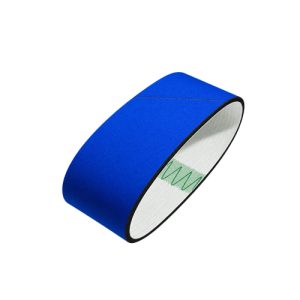
Sponge Conveyor Belt

Sponge Conveyor Belt

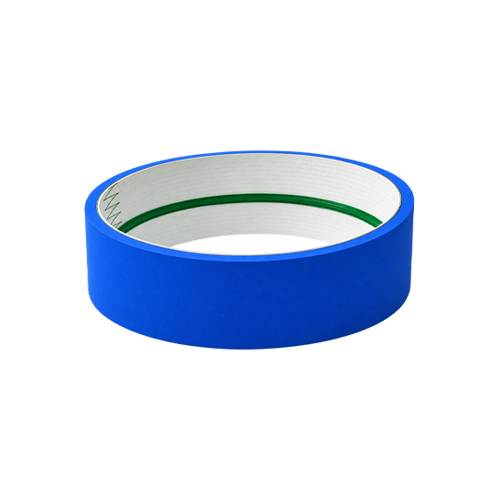
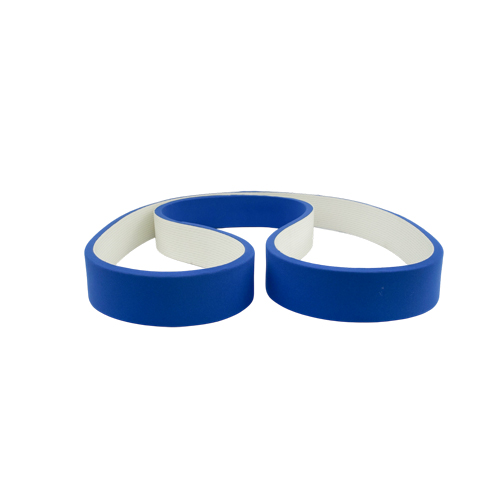
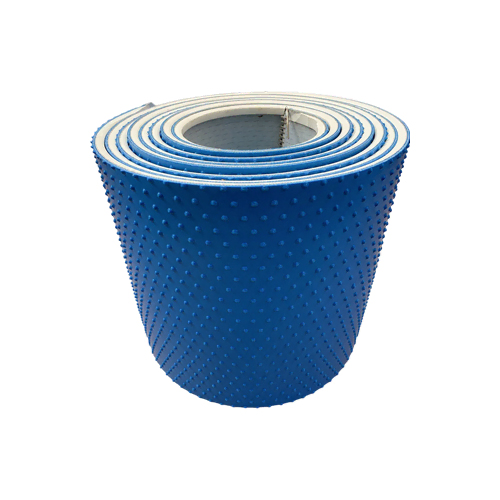
– Soft and cushioning sponge conveyor belts designed for gentle product contact, cushioning and product stabilization in labeling, packaging, glass handling and other applications

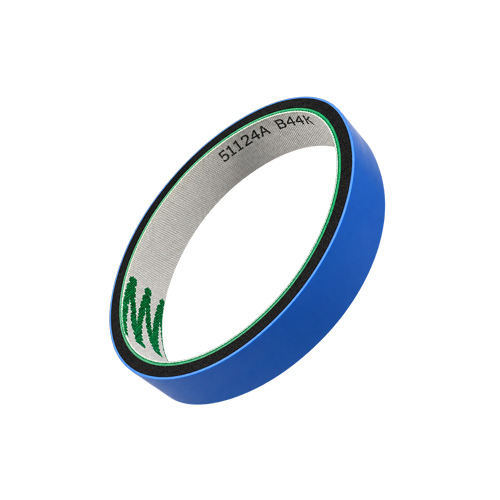
– Available with PVC or PU base belts and different sponge or foam layers, with options for thickness, hardness, surface configuration and fabric covering

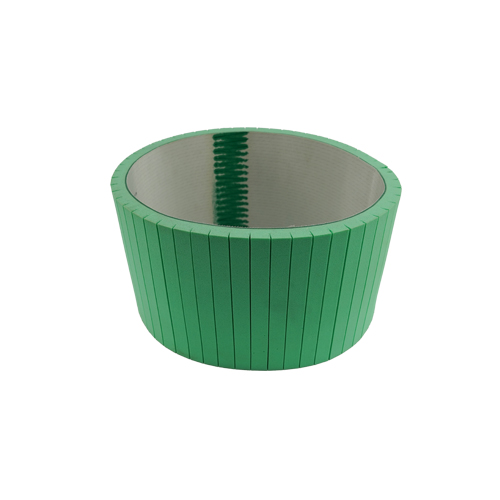
– Custom sponge conveyor belt solutions with options for guides, edge covering, grooves, profiles and customized dimensions to meet specific conveyor and machine requirements

Sponge Conveyor Belt Construction

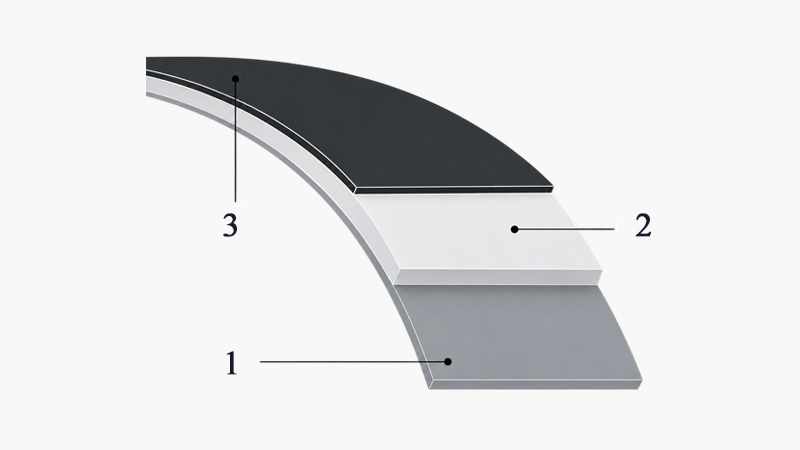
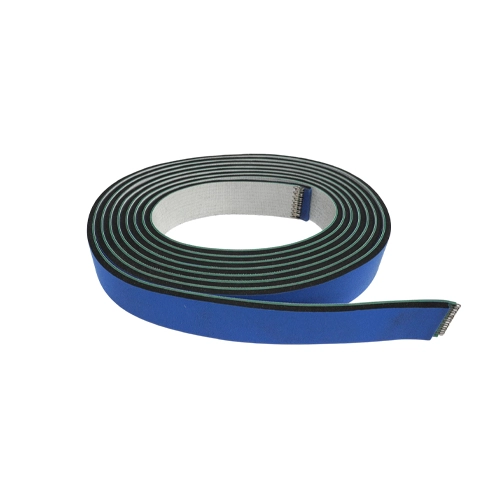
A sponge conveyor belt consists of a fabric reinforcement layer, a PVC or PU base layer, and a sponge or foam layer. The fabric reinforcement provides tensile strength and dimensional stability, the PVC or PU layer forms the main belt body, and the sponge layer provides a soft, compressible product-contact surface.

Sponge Conveyor Belt Structure Diagram
  1. Fabric Reinforcement Layer: Provides tensile strength, dimensional stability, and structural support for stable belt operation.
  2. PVC / PU Base Layer: Forms the main belt body and provides flexibility and support for the sponge layer.
  3. Sponge / Foam Layer: Provides a soft, compressible contact surface for cushioning, controlled contact, and product stabilization.

Custom Sponge Conveyor Belt Solutions

TRANDVOX supports customized sponge conveyor belt solutions according to conveyor dimensions, product characteristics, contact pressure, and machine requirements. Sponge hardness, layer thickness, surface configuration, guides, edge treatment, and joining method can be selected to achieve the required belt contact and conveying performance, with additional conveyor belt fabrication options matched to the equipment design where needed.

Sponge Conveyor Belt Specifications

Available specifications can be selected according to conveyor design, product characteristics, and operating conditions.

Specification Available Options
Base Belt PVC / PU
Top Layer Sponge / Foam
Sponge Hardness Customized
Sponge Thickness Customized
Belt Width Customized
Belt Length Customized
Surface Flat / Fabric Covered / Grooved
Guide Available
Edge Covering Available
Profiles Customized
Belt Joining Endless or Open Belt
Color Customized

Actual specifications should be selected according to conveyed product, required compression, belt speed, pulley diameter, conveyor dimensions, operating temperature, and working environment.

Get Free Quote of Sponge Conveyor Belt

Looking for a reliable sponge conveyor belt supplier for labeling, packaging, glass handling, or specialized conveying applications?  TRANDVOX provides soft-surface conveyor belts with PVC or PU base constructions, different sponge thicknesses, surface configurations, and fabrication options for B2B industrial applications.

As an industrial belt supplier, TRANDVOX coordinates product sourcing, specification confirmation, fabrication requirements, and quality checks with qualified belt suppliers. This helps customers obtain belts that match their approved technical and purchasing requirements.

Whether you need a flat sponge belt, foam-coated belt, belt with guide profiles, or a customized solution for a labeling or packaging machine, TRANDVOX supports the sourcing process from specification review to final supply.

Contact TRANDVOX for a quote and discuss your belt dimensions, base material, sponge requirements, application, and B2B sourcing needs.


Sponge Conveyor Belt Applications

Bottle Labeling

A sponge belt for labeling machines can help maintain controlled contact with bottles and containers during conveying and labeling. The soft, compressible surface makes this type of labeling machine conveyor belt suitable for applications requiring stable product contact and accommodation of minor variations in container shape.

Bottle and Container Conveying

These belts can be used to transport bottles, containers, and packaged products where a softer contact surface is required. The sponge layer provides a compliant conveying surface for selected product-handling applications.

Glass Handling

For selected glass-handling applications, a suitably constructed sponge conveyor belt can provide a softer contact surface for bottles, glass containers, and other fragile products. Belt hardness, thickness, and surface construction should be selected according to the product and conveying conditions.

Packaging Equipment

Sponge belts can be integrated into packaging machinery for product transfer, pressing, or controlled conveying where a compressible contact surface is required.

Paper and Carton Handling

Sponge-coated belts can be used in selected paper and carton handling systems where controlled contact or light pressing is required during conveying, transfer, or positioning.

Product Positioning and Stabilization

Sponge belts can support product positioning and stabilization in equipment where products need to remain in controlled contact with the belt surface. Sponge hardness and thickness can be selected according to product weight, contact pressure, and machine requirements.

Sponge Conveyor Belt vs PU Conveyor Belt

Sponge conveyor belts and conventional PU conveyor belts are designed for different product-contact requirements. A standard PU conveyor belt provides a relatively firm conveying surface, while a sponge conveyor belt incorporates a soft, compressible layer for applications where cushioned or more compliant product contact is required.

Feature Sponge Conveyor Belt PU Conveyor Belt
Conveying Surface Sponge or foam layer PU working surface
Surface Contact Soft and compressible Relatively firm
Typical Requirement Cushioned or compliant product contact Firmer product-contact surface
Construction Base belt with sponge/foam layer PU conveyor belt construction
Customization Sponge thickness, hardness, surface, guides, profiles Width, thickness, surface, guides, profiles

Sponge conveyor belts may be considered for applications involving soft product contact, cushioning, or product stabilization. Conventional PU conveyor belts may be selected for applications requiring a firmer conveying surface. The appropriate belt construction should be determined according to the conveyed product, belt design, operating conditions, and specific application requirements.

FAQ

1. What is a sponge conveyor belt?

A sponge conveyor belt is a conveyor belt with a sponge or foam layer applied to a PVC, PU, or other suitable base belt. The soft surface provides cushioned product contact during conveying.

2. What are sponge conveyor belts used for?

Sponge conveyor belts are commonly used for labeling machines, bottle and container conveying, glass handling, packaging equipment, paper and carton handling, and product positioning applications where softer product contact is required.

3. What materials are used for sponge conveyor belts?

Sponge conveyor belts typically use a PVC or PU base belt combined with a sponge or other suitable foam-based soft layer. The specific materials and construction depend on the application requirements.

4. What is the difference between a sponge conveyor belt and a foam conveyor belt?

Sponge conveyor belt is a common product term for a conveyor belt with a soft sponge layer, while foam conveyor belt is a broader term that may refer to conveyor belts using different types of foam materials or constructions. The actual material, density, hardness, thickness, and belt structure should be confirmed according to the specific product specification.

5. Can sponge conveyor belts be customized?

Yes. Sponge conveyor belts can be customized in belt width, length, sponge thickness, hardness, surface configuration, guide profiles, edge covering, grooves, and other fabrication requirements.

6. Can sponge conveyor belts be used for labeling machines?

Yes. Sponge belts are commonly used in labeling systems where a soft surface helps maintain contact with bottles or containers during conveying and labeling operations.

7. How do I choose a sponge conveyor belt?

Selection should begin with the conveyed product and required contact characteristics, followed by sponge hardness and thickness, base belt material, belt width and length, required compression, conveyor speed, pulley diameter, surface configuration, and operating environment. These factors should be matched with the conveyor design and application requirements to determine a suitable belt construction.

Send Inquiry Now
Contact Form

Related Products

Related Cases

Scroll to Top

Send Your Inquiry Now !

Contact Form