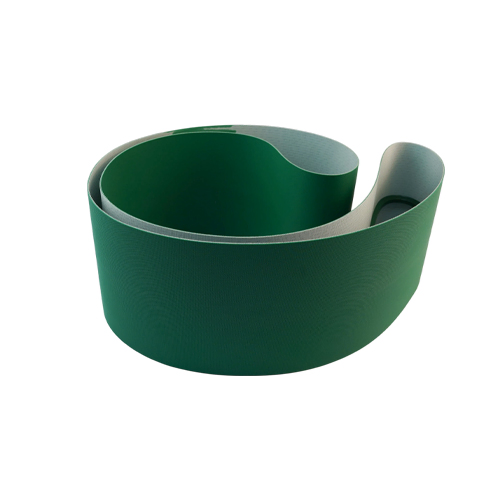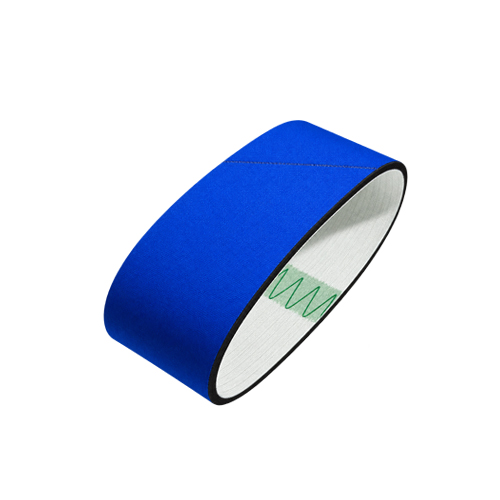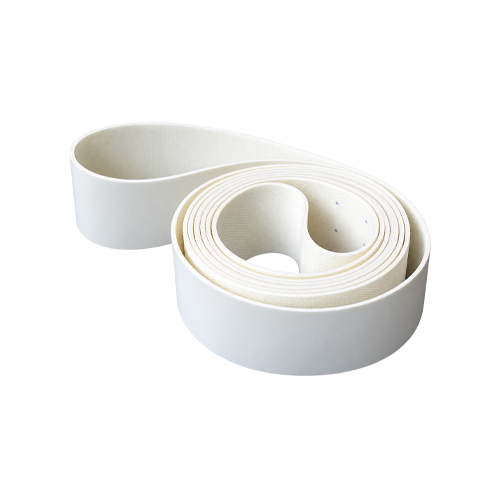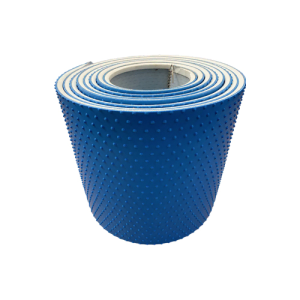
PU Conveyor Belt
– Lightweight, flexible and wear-resistant PU conveyor belts for reliable conveying in food processing, packaging, pharmaceuticals, electronics and other industrial applications
– Available in different thicknesses, surface designs and fabric-reinforced constructions, with good abrasion resistance and resistance to oils and grease for different operating requirements
– Configurable belt constructions and customization options allow PU belts to be matched to specific equipment, product-handling and conveying requirements
PU Conveyor Belt Structure
Fabric-reinforced PU conveyor belts typically combine a thermoplastic polyurethane (TPU/PU) conveying layer with polyester fabric reinforcement. The polyurethane surface provides abrasion resistance, flexibility, and resistance to oils and grease, while the fabric reinforcement supports tensile strength, dimensional stability, and stable belt tracking.
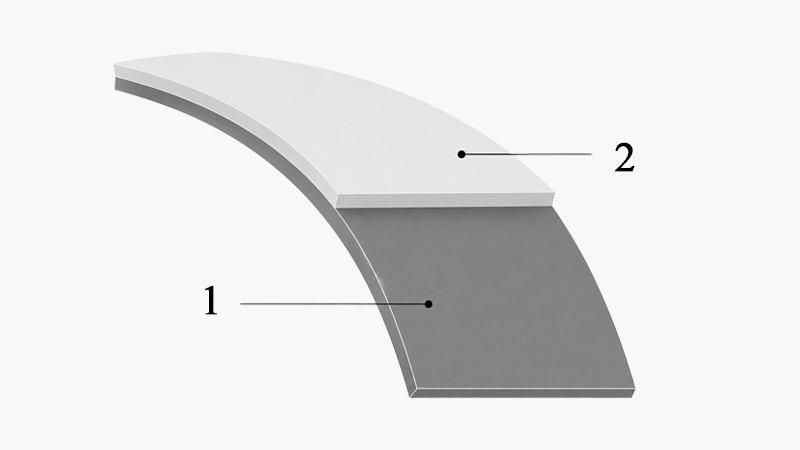
- Polyester Fabric Reinforcement: Provides tensile strength, dimensional stability, and resistance to elongation to support stable belt tracking and continuous operation.
- TPU / PU Conveying Layer: Provides good abrasion resistance, flexibility, and resistance to oils and grease for reliable material conveying.
Custom PU Conveyor Belt Options
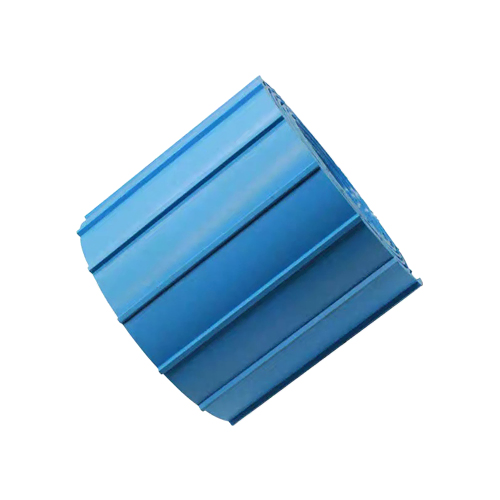
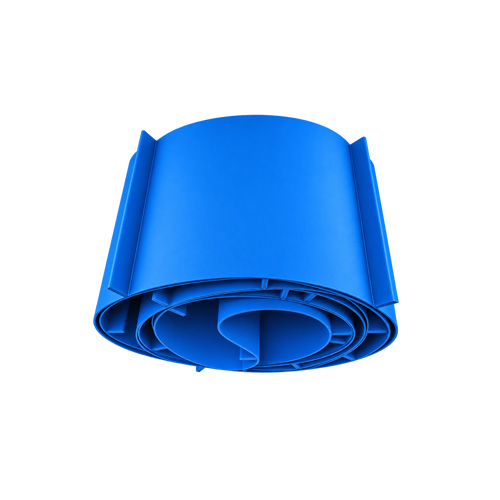
PU conveyor belts can be fabricated with cleats, V-guides, sidewalls, perforations, vacuum holes, grooves, and special surface profiles according to conveyor and product-handling requirements.
Suitable conveyor belt fabrication options depend on belt construction, thickness, surface material, pulley diameter, and operating conditions.
Polyurethane Conveyor Belt Data Sheet
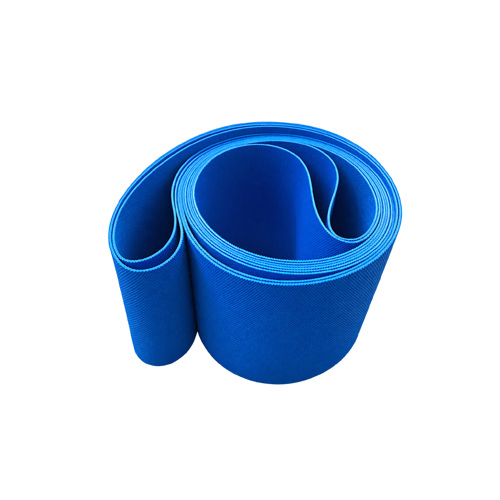
TRANDVOX provides polyurethane conveyor belt specifications covering different belt materials, reinforcement structures, surface designs, dimensions, and fabrication options. This technical overview helps customers select suitable polyurethane belting according to their conveyor equipment and operating requirements.
| Specification | Available Options |
| Belt Material | Thermoplastic Polyurethane (TPU / PU) |
| Reinforcement | Polyester Fabric, Fabric Reinforced |
| Belt Structure | Multi-layer, Reinforced Construction |
| Belt Width | Customized according to equipment requirements |
| Belt Length | Customized according to conveyor specifications |
| Belt Thickness | Available in different thicknesses and constructions |
| Surface Options | Smooth, Matte, Rough Top, Patterned |
| Color Options | White, Blue, Green, Transparent, Custom Colors |
| Belt Hardness | Available in different Shore hardness grades |
| Joint Options | Endless, Finger Joint, Welded Joint, Mechanical Joint |
| Profile &Fabrication Options | Cleats, V-Guides, Sidewalls, Perforations, Vacuum Holes, Grooves, Special Profiles |
| Performance Options | Food Grade, Oil Resistant, Abrasion Resistant, Anti-Static |
| Application | Food Processing, Packaging, Logistics, Pharmaceutical, Printing, Textile, General Material Handling |
Why Choose TRANDVOX as Your PU Conveyor Belt Supplier?
TRANDVOX supports OEMs, distributors, and industrial users with PU conveyor belt sourcing, specification matching, customization coordination, quality inspection, and replacement support. Through qualified production partners and flexible supply coordination, we help customers source standard and custom PU conveyor belts according to equipment, application, and order requirements.
Polyurethane Conveyor Belt Applications
Polyurethane conveyor belts are used across a wide range of conveying and material handling applications where flexibility, wear resistance, stable running, and suitable surface performance are required. Depending on the belt construction, material grade, and fabrication options, PU belts can be configured for different products and operating conditions.
Food Processing & Meat Handling
Food processing lines may involve moisture, oils, fats, frequent cleaning, and continuous conveying. PU conveyor belts can be selected with suitable food-grade materials and easy-to-clean surface constructions for applications where hygiene and reliable material handling are important. Different belt surfaces and fabrication options can also be specified according to the product and conveying process. For applications requiring mechanical sprocket engagement instead of conventional friction-driven conveying, a positive drive belt may be considered.
Bakery & Dough Processing
Bakery conveying systems handle products such as dough, baked goods, and packaged food, where stable conveying and appropriate surface grip are important. PU conveyor belts can be supplied with suitable surface finishes and belt constructions to support product transfer, reduce unnecessary slippage, and maintain reliable operation during continuous conveying.
Pharmaceutical & Medical Packaging
Pharmaceutical and medical packaging lines require controlled material handling and surfaces that are suitable for routine cleaning. PU conveyor belts with appropriate material grades and smooth surface constructions can provide stable conveying performance for packaging and product handling applications. Belt construction should be selected according to the cleaning process, operating environment, and applicable requirements.
Logistics & Distribution Centers
Logistics and sorting systems require conveyor belts that can operate continuously while maintaining stable tracking and reliable package handling. PU conveyor belts offer good abrasion resistance, flexibility, and dimensional stability, making them suitable for package transport, sorting, transfer, and other automated material handling processes.
Electronics & Precision Manufacturing
Electronics and precision manufacturing applications often require stable conveying and careful product handling. Polyurethane conveyor belts can be supplied with suitable surface finishes and, where required, specialized constructions such as anti-static options. The appropriate belt should be selected according to product sensitivity, conveying speed, and equipment requirements.
Packaging & Automated Production
Packaging machinery requires consistent product movement, stable belt tracking, and reliable operation under continuous production conditions. PU conveyor belts can be configured with different surfaces, profiles, cleats, and guide structures to support product positioning, transfer, and automated conveying requirements.
PU Conveyor Belt vs PVC Conveyor Belt
PU and PVC conveyor belts are both widely used for light and medium-duty conveying, but their material properties and suitable operating conditions are different. PU conveyor belts are generally preferred when higher abrasion resistance, flexibility, oil resistance, and hygiene performance are required, while PVC conveyor belts can be a practical choice for general conveying where cost efficiency is a primary consideration.
| Feature | PU Conveyor Belt | PVC Conveyor Belt |
| Abrasion Resistance | Generally very good to excellent | Generally good |
| Oil & Grease Resistance | Generally good to excellent | Varies by formulation |
| Flexibility | Generally excellent | Generally good |
| Surface Options | Smooth, matte, rough-top, patterned | Smooth, rough, patterned |
| Food Applications | Food-grade options available | Food-grade options available |
| Durability | Generally high | Generally good |
| Cost | Generally higher | Generally more economical |
Choose a PU belt when the application requires better wear resistance, flexibility, oil and grease resistance, or a durable conveying surface. PU belts are also a suitable option when belt cleanliness and long-term running stability are important considerations.
For general material conveying where the operating conditions are less demanding and initial cost is a major consideration, a PVC belt may provide a more economical solution.
PU Conveyor Belt Replacement
TRANDVOX provides polyurethane conveyor belt replacement solutions for existing conveyor systems and equipment. Whether replacing a worn belt, matching an original belt, or upgrading an existing conveying system, we help customers identify suitable belt specifications based on the original belt structure and operating conditions.
Customers can provide belt samples, drawings, dimensions, photos, equipment information, or existing belt specifications for product matching. We can assist with confirming belt width, length, thickness, surface design, reinforcement, joint type, and fabrication requirements.
Replacement PU conveyor belts can be supplied with suitable surface and fabrication configurations to match the original belt and existing conveyor equipment. Additional modifications can also be considered when the replacement belt needs to meet updated conveying requirements.
Information Required for PU Conveyor Belt Replacement
For faster belt selection and quotation, customers can provide:
- Existing belt width and length
- Belt thickness
- Surface type or belt pattern
- Joint or endless connection type
- Conveyor equipment model
- Operating speed and load
- Material being conveyed
- Photos or drawings of the existing belt
- Belt sample, if available
When exact specifications are unavailable, TRANDVOX can help identify a suitable replacement PU conveyor belt based on available samples, images, dimensions, and application information.
PU Conveyor Belt Selection Guide
Selecting the right PU conveyor belt requires more than matching belt dimensions. Belt material, reinforcement, surface design, operating conditions, and fabrication requirements should all be considered to ensure stable running and suitable service life.
1. Confirm Belt Width and Length
The belt width and length should match the conveyor structure and pulley configuration. For replacement belts, providing the dimensions of the existing belt or a physical sample can help ensure accurate matching.
2. Select the Appropriate Belt Thickness
Belt thickness affects flexibility, load capacity, pulley compatibility, and overall durability. Thinner belts are generally suitable for lighter conveying applications, while thicker constructions may be preferred for higher loads or more demanding operating conditions.
3. Select the Appropriate Surface Type
Surface selection should be based on the material being conveyed, required grip, cleaning requirements, and conveying angle.
- Smooth Surface— suitable for general material conveying and applications requiring easy cleaning.
- Matte Surface— provides a low-gloss contact surface for specific conveying requirements.
- Rough-Top Surface— increases friction and grip for inclined conveying or products requiring improved traction.
- Patterned Surface— provides additional surface texture for specific product handling requirements.
4. Consider the Reinforcement Structure
The reinforcement layer affects tensile strength, dimensional stability, and resistance to elongation. Polyester fabric reinforcement is commonly used for PU conveyor belts and can be selected according to belt dimensions and operating requirements.
5. Consider the Operating Environment
Temperature, oil, grease, chemicals, moisture, and continuous operating conditions can affect belt performance. The belt material and construction should therefore be selected according to the actual working environment.
6. Determine the Required Fabrication
Consider whether the application requires cleats, sidewalls, V-guides, perforations, vacuum holes, grooves, or other fabrication features. The required processing should be selected according to product handling, belt tracking, conveyor layout, and equipment requirements.
These modifications can improve product positioning, belt tracking, incline conveying, vacuum handling, and material containment.
7. Confirm the Joint Type
The appropriate joining method depends on the conveyor design and operating requirements. Common options include endless belts, finger joints, welded joints, and mechanical connections.
8. Provide Equipment or Application Information
If the exact belt specification is unknown, customers can provide the belt sample, drawing, photos, dimensions, conveyor model, or application details. TRANDVOX can use this information to help identify a suitable PU conveyor belt and corresponding fabrication solution.
FAQ
A PU conveyor belt typically uses thermoplastic polyurethane (TPU) as the conveying surface material and is designed for stable and continuous material handling. It is known for good flexibility, abrasion resistance, dimensional stability, and resistance to oils and grease, making it suitable for a wide range of conveying requirements.
The service life of a polyurethane belt depends on belt construction, load, speed, temperature, material being conveyed, and operating conditions. With suitable selection and proper maintenance, a PU conveyor belt can provide reliable long-term performance.
A PU conveyor belt typically consists of a polyurethane (PU/TPU) conveying layer and a high-strength polyester fabric reinforcement layer. The polyurethane layer provides the required surface and material performance, while the fabric reinforcement improves tensile strength, dimensional stability, and resistance to elongation. Different constructions can be selected according to belt size and operating requirements.
Polyurethane conveyor belts offer excellent abrasion resistance, flexibility, dimensional stability, and resistance to oil, grease, and common chemicals. They can also be supplied with different surface designs and fabrication options for specific conveying requirements.
Yes, food-grade PU conveyor belts are available for applications requiring hygienic conveying and suitable materials for food contact. The specific belt grade should be selected according to the applicable food safety requirements and operating conditions.
Polyurethane conveyor belts generally provide better abrasion resistance, flexibility, and resistance to oils and grease than standard PVC conveyor belts. PVC belts can be a more economical option for general conveying applications, while PU belts are often selected for more demanding operating conditions.
Yes, Polyurethane provides good resistance to many oils and greases. However, resistance can vary depending on the specific PU formulation, concentration, temperature, and exposure conditions. The belt should be selected according to the actual operating environment.
Yes. Custom PU conveyor belts can be supplied according to specific equipment and application requirements. Customization options include belt width, length, thickness, hardness, surface design, color, reinforcement, joint type, and additional fabrication.
PU conveyor belts are available with different surface finishes, including smooth, matte, rough-top, and patterned surfaces. The appropriate option depends on grip, product handling, cleaning requirements, and conveying conditions.
Yes. TRANDVOX provides PU conveyor belt replacement solutions for existing conveyor systems. Customers can provide belt samples, drawings, dimensions, photos, or equipment information, and we can help identify suitable replacement specifications and fabrication options.