







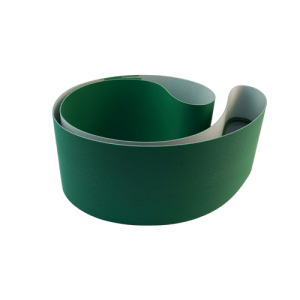
PVC Conveyor Belt
– Durable, flexible and easy-maintenance PVC conveyor belts for reliable conveying in packaging, logistics, material handling and general industrial applications
– Available with smooth, matte, patterned and rough-top surfaces, with 1–3 ply polyester fabric reinforcement for different conveying requirements
– Custom PVC conveyor belts are available in different widths, thicknesses, surface designs and belt configurations to match specific conveyor systems and operating conditions
PVC Conveyor Belt Construction
PVC conveyor belts typically combine a PVC conveying layer with polyester fabric reinforcement. The PVC surface provides wear resistance and stable product contact, while the polyester fabric reinforcement supports tensile strength, dimensional stability, and resistance to elongation. Available in 1–3 ply constructions, the belt can be selected according to required strength, flexibility, pulley diameter, conveying load, and application conditions.
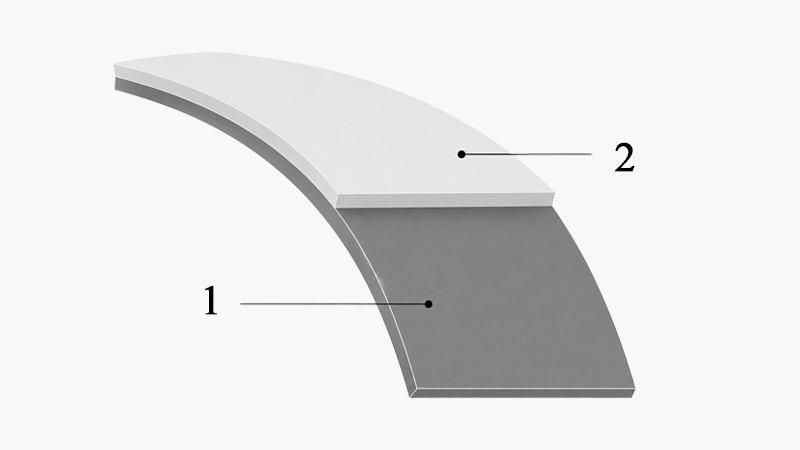
- PVC Conveying Layer: Provides a durable working surface with good wear resistance for reliable product conveying.
- Polyester Fabric Reinforcement: Provides tensile strength, dimensional stability, and resistance to elongation for stable belt operation.
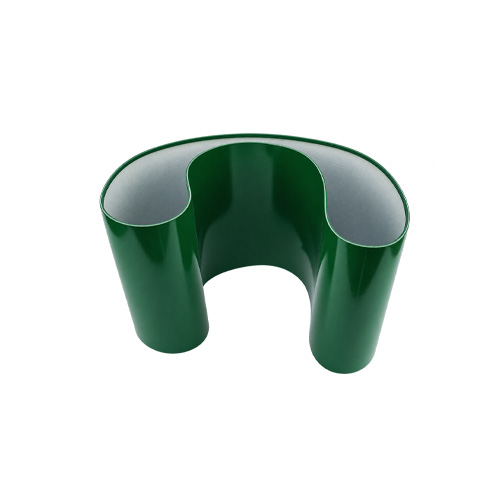
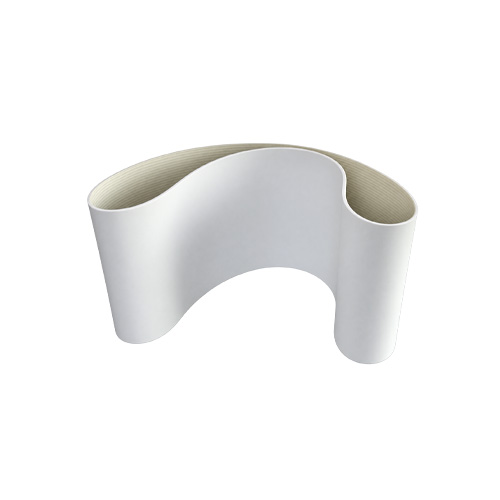
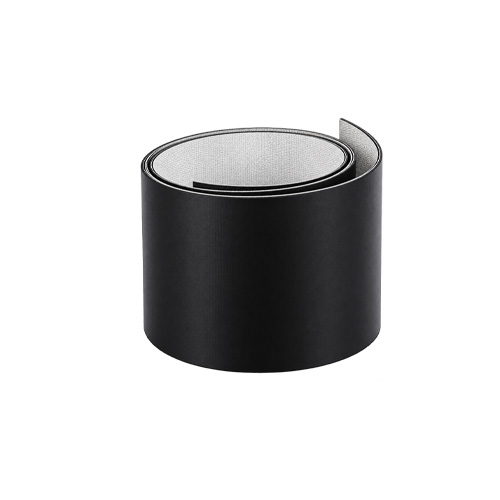
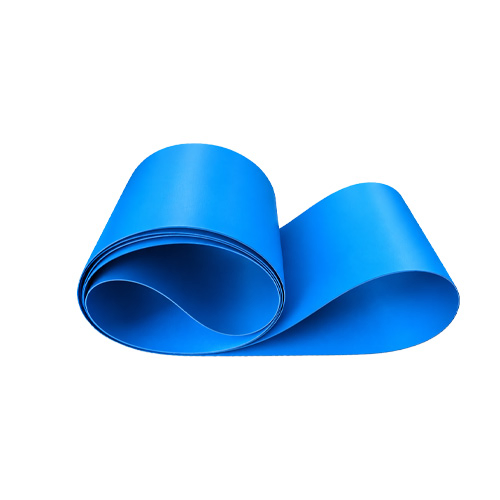
PVC Conveyor Belt Colors
PVC Conveyor Belt Surface Patterns
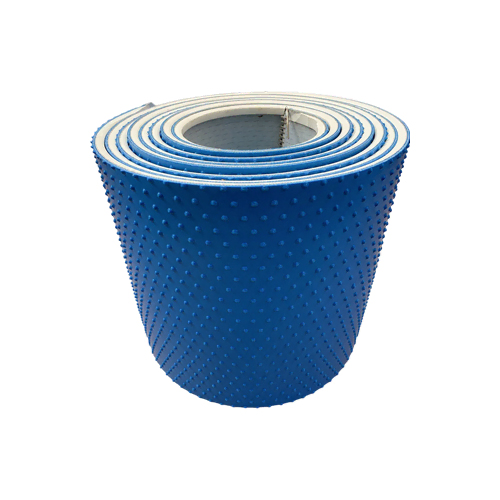
PVC conveyor belts are available with a wide range of surface patterns to meet different product-handling and conveying requirements. Surface selection can be matched to the required grip, friction, conveying angle, product characteristics, and operating conditions.
Custom PVC Conveyor Belt Options
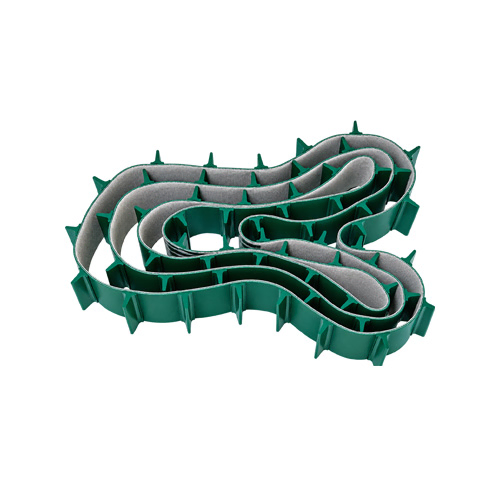
PVC conveyor belts can be customized with cleats, sidewalls, V-guides, perforations, grooves, and other modifications for different product-handling and conveyor configurations. The appropriate conveyor belt fabrication options can be selected according to the belt surface, equipment layout, and application requirements.
PVC Conveyor Belt Specifications
PVC conveyor belting is available in different specifications, surface designs, and fabric constructions according to conveyor and application requirements.
| Specification | Available Options |
|---|---|
| Belt Material | PVC |
| Reinforcement | Polyester Fabric |
| Belt Surface | Smooth, Matte, Patterned, Rough Top |
| Fabric Construction | 1–3 Ply Polyester |
| Belt Width | Customized |
| Belt Thickness | Customized |
| Cleats | Available |
| V Guides | Available |
| Perforations | Available |
| Profiles | Customized |
| Belt Joining | Open-Ended or Endless |
| Color | Green / White / Black / Blue |
Actual belt specifications should be selected according to conveyor dimensions, pulley diameter, conveying load, operating speed, temperature, product characteristics, and working environment.
Get Free Quote of PVC Conveyor Belt
Looking for a reliable PVC conveyor belt supplier? TRANDVOX supports OEMs, distributors and industrial users with PVC conveyor belt sourcing, specification matching, customization coordination and replacement requirements.
Send us your belt dimensions, surface requirements, application information, drawings, photos or existing belt sample for product matching and quotation.
PVC Conveyor Belt Applications
PVC conveyor belts are widely used in packaging, logistics, material handling, electronics, and general industrial production. Different belt constructions can be selected according to conveyor layout, product characteristics, load, and operating conditions.
Packaging
PVC conveyor belts are commonly used in packaging lines for transporting cartons, boxes, bags, packaged goods, and other products between filling, sealing, labeling, inspection, and packing processes. Different surface patterns can be selected according to product handling and conveying requirements.
Logistics and Sorting
These belts support parcel handling, package transfer, distribution, and sorting operations in logistics systems. Their stable running performance and flexible construction make them suitable for continuous conveying of cartons, parcels, and other unit loads.
Material Handling
PVC conveyor belts are used for general material handling in warehouses, production facilities, and industrial conveyor systems. They can transport components, packaged products, cartons, and other materials through horizontal or inclined conveying sections.
Manufacturing and Assembly
These belts can be integrated into manufacturing and assembly lines for product transfer, inspection, positioning, and intermediate conveying. They are suitable for applications requiring consistent product movement between different production stages.
Electronics
PVC conveyor belts are used in electronics manufacturing and assembly environments for transporting components, products, and packaged electronic goods. Suitable belt surfaces can provide stable product contact while supporting continuous conveying operations.
General Industrial Conveying
These belts are suitable for a wide range of general industrial conveying applications where practical durability, flexibility, stable operation, and easy maintenance are required. They can be configured for different conveyor layouts, product loads, and operating conditions.
Selected Food Handling Applications
Selected PVC belt constructions can be supplied for selected food handling and processing applications when the belt material, construction, and applicable compliance requirements are suitable. Food-contact suitability should always be confirmed according to the specific belt specification and intended operating environment.
PVC Conveyor Belt vs PU Conveyor Belt
PVC and PU conveyor belts are both widely used for light and medium-duty conveying, but their material properties and typical applications are different.
| Feature | PVC Conveyor Belt | PU Conveyor Belt |
| General Conveying | Well suited | Well suited |
| Abrasion Resistance | Generally good | Generally very good to excellent |
| Oil & Grease Resistance | Varies by formulation | Generally good to excellent |
| Flexibility | Generally good | Generally excellent |
| Surface Options | Wide range of textured and patterned surfaces | Smooth, matte, rough-top and patterned |
| Food Applications | Selected compliant grades available | Food-contact grades widely available |
| Cost | Generally more economical | Generally higher |
Choose a PVC conveyor belt for packaging, logistics, general material handling and other applications where practical durability, versatile surface options and cost efficiency are important.
Consider a PU conveyor belt when higher abrasion resistance, flexibility, oil and grease resistance, or specific food-contact requirements are important.
PVC Conveyor Belt Replacement
TRANDVOX provides PVC conveyor belt replacement solutions for existing conveyor systems and equipment. Replacement belts can be matched according to the original belt dimensions, construction, surface pattern, reinforcement, joint type and operating requirements.
Customers can provide belt samples, drawings, dimensions, photos, equipment information or existing belt specifications to support accurate product matching.
Information Required for PVC Conveyor Belt Replacement
- Existing belt width and length
- Belt thickness
- Surface pattern
- Fabric ply or reinforcement information
- Joint or endless configuration
- Conveyor equipment information
- Material being conveyed
- Photos, drawings or belt sample
When exact specifications are unavailable, TRANDVOX can help identify a suitable replacement PVC conveyor belt based on the available belt sample, dimensions, photos and application information.
PVC Conveyor Belt Selection Guide
1. Confirm Belt Width and Length
Belt width and length should match the conveyor dimensions and pulley arrangement. For replacement belts, existing belt dimensions or a physical sample can support accurate specification matching.
2. Select Belt Thickness and Ply
Belt thickness and fabric ply should be selected according to conveying load, pulley diameter, belt flexibility and operating requirements.
3. Select the Surface Type
Choose smooth, matte, patterned or rough-top surfaces according to the conveyed product, required grip and conveying angle.
4. Consider Load and Operating Speed
Conveyor load and operating speed affect the required belt construction, tensile strength and overall specification.
5. Check Pulley Diameter
The belt construction and thickness should be compatible with the conveyor pulley diameter to support suitable belt flexing and operation.
6. Consider the Operating Environment
Consider temperature, moisture, oils, chemicals, cleaning conditions and other environmental factors when selecting the belt specification.
7. Determine Required Fabrication
Consider whether cleats, sidewalls, V-guides, perforations, grooves or other fabrication features are required according to the conveyor and product-handling requirements.
8. Confirm Joint Configuration
Select an endless or open-belt configuration according to conveyor design, installation requirements and maintenance conditions.
FAQ
A fabric-reinforced PVC conveyor belt combines a PVC working surface with polyester fabric reinforcement for continuous product and material conveying.
They are commonly used in packaging, logistics, material handling, electronics, manufacturing, assembly, and selected food processing applications.
Typical constructions combine a PVC cover layer with polyester fabric reinforcement. The exact construction varies according to belt specification and application.
Yes. Belt specifications can be customized in width, thickness, surface pattern, profiles, joining configuration, and other fabrication requirements.
Certain PVC conveyor belts can be supplied for food-processing applications when the belt construction and material meet the applicable requirements. Food-contact suitability should be confirmed for the specific belt specification.
PVC belts are commonly used for general conveying, packaging, logistics, and material handling, while PU belts are often selected when specific requirements for abrasion, oil, chemical resistance, hygiene, or food processing need to be addressed.
Yes. TRANDVOX supports replacement PVC conveyor belt matching based on existing belt dimensions, surface pattern, construction, joint type, photos, drawings, equipment information, or available belt samples.
The best surface depends on the conveyed product and conveyor conditions. Smooth PVC conveyor belts are suitable for general conveying, while matte, patterned, or rough-top surfaces can provide additional grip or traction for specific products and inclined conveying.
Related Products
Related Cases
Application: Inclined or guided conveying where surface grip and wedge positioning both matter Component Type: Supergrip PVC belt with thermal joint, underside […]

