Link V Belt
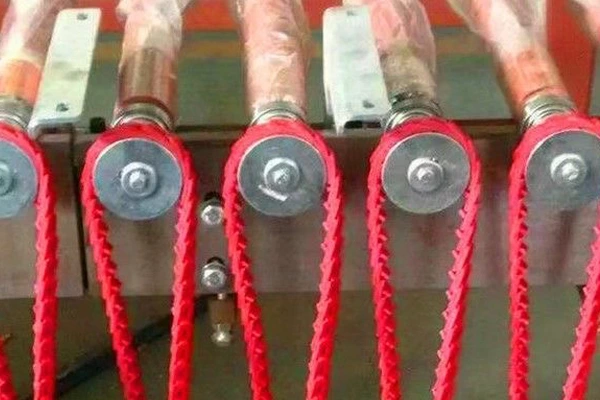
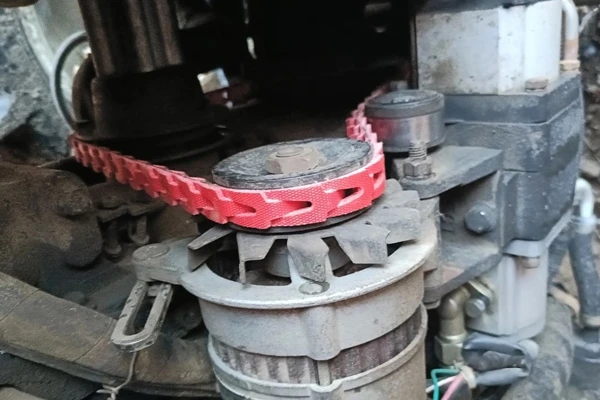
A link V belt is a segmented power transmission belt with interconnected links that can be assembled to the required length. Unlike conventional endless V-belts, it can be installed around existing pulleys without extensive equipment disassembly, making it ideal for restricted-access drives and maintenance applications.
TRANDVOX supplies adjustable link V belts for industrial power transmission and replacement applications, with different profiles and specifications available to match pulley requirements, drive conditions, and operating needs.
Link V Belt Description
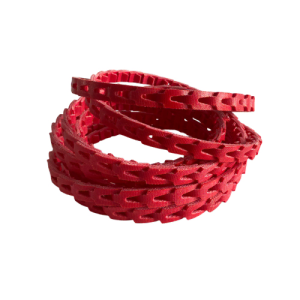
A link V belt also referred to as a linked V belt or segmented V belt, is a power transmission belt made from interconnected links. It is also commonly described as an adjustable V belt or adjustable link V belt because its installed length can be changed by adding or removing links.
This segmented construction allows the belt to be assembled around an existing pulley system, which is particularly useful when access to the drive is restricted or removing a motor, shaft, guard, or other components would increase maintenance time. Once assembled, the belt operates in a matching V-belt pulley groove and transmits power through frictional contact between the belt sidewalls and pulley grooves.
For polyurethane-based link V belt constructions, the elastomer provides flexibility and abrasion resistance, while woven polyester reinforcement supports belt strength and dimensional stability during operation. The belt profile and construction should be selected according to the pulley geometry, drive load, operating speed, and working environment.
Link V Belt Types
TRANDVOX supplies two Link V Belt types based on the link construction: without nuts and with nuts. Both types are available in Z10, A13, B17, and C22 profiles.
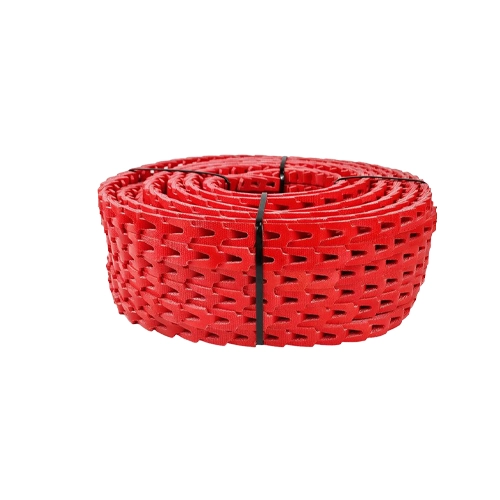
The link V belt without nuts is available in Z10, A13, B17, and C22 profiles. This type is supplied in red and is selected according to the required belt profile, pulley dimensions, and drive conditions.
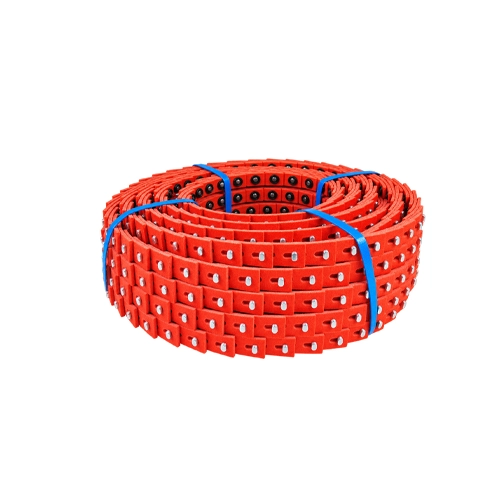
The link V belt with nuts is available as Nut Z10, Nut A13, Nut B17, and Nut C22. This type is supplied in orange and features additional nuts in the link construction. Selection depends on the required profile and connection design.
Link V Belt Specifications
| Model | Width(mm) | Minimum Pulley Diameter (mm) | Maximum Tension(N) | Color | Length per Roll(M) |
|---|---|---|---|---|---|
| Z10 | 10 | 45 | 800 | Red | 30 |
| A13 | 13 | 100 | 1200 | Red | 30 |
| B17 | 17 | 110 | 1600 | Red | 30 |
| C22 | 22 | 125 | 2100 | Red | 30 |
| Nut Z10 | 10 | 45 | 900 | Orange | 20 |
| Nut A13 | 13 | 100 | 1300 | Orange | 20 |
| Nut B17 | 17 | 110 | 1700 | Orange | 20 |
| Nut C22 | 22 | 125 | 2200 | Orange | 20 |
Get Free Quote of Link V Belt
TRANDVOX is a link V belt supplier supporting OEMs, distributors, maintenance teams, and industrial users with specification matching and replacement sourcing.
Send us your belt profile, required length, pulley information, or an existing belt sample. Our team will help confirm a suitable link V belt for your application.
Key Advantages of Adjustable V Belts
Adjustable Length
Links can be added or removed to achieve the required installed length, reducing dependence on fixed-length endless belts. This adjustable V belt design is particularly useful when the required belt length is difficult to determine or when replacement must be completed around an existing drive.
Fast Installation
The belt can be assembled around the existing drive, helping reduce the need for extensive equipment disassembly during replacement.
Ideal for Restricted-Access Drives
Link construction is particularly useful where access to the belt path is limited or moving the motor and other components is inconvenient.
Reduced Maintenance Downtime
Flexible installation and length adjustment can simplify belt replacement and help maintenance teams return equipment to operation more efficiently.
Link V Belt Applications
Link V belts are a type of link drive belt used in industrial power transmission systems where conventional endless V-belts can be difficult to replace or maintain. Their interconnected-link construction allows the belt to be assembled to the required length at the installation location, helping simplify replacement where equipment access, maintenance conditions, or production requirements make conventional belt installation inconvenient.
Fans & Blowers
Fan and blower drives are often located behind guards or inside confined drive assemblies, making access for conventional endless V-belt replacement difficult. A link V belt can be assembled around the existing pulley system, helping reduce the need to remove guards or reposition surrounding components during maintenance.
Pumps
Pump drives can have limited access around the motor, shaft, or coupling, making belt replacement more labor-intensive. A link V belt can be assembled to the required length around the existing drive, helping simplify replacement where removing or moving drive components is inconvenient.
For pump applications, the belt section, load, speed, and operating environment should be matched to the existing pulley system.
HVAC Equipment
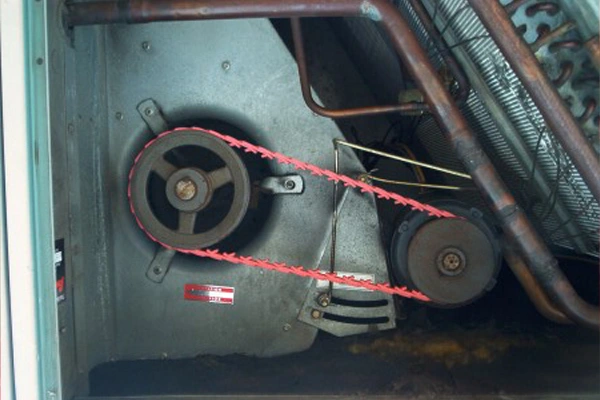
HVAC fans and air-handling equipment often place belt drives inside compact equipment housings or enclosed service areas. Limited working space can make installation of a fixed-length endless belt inconvenient during routine maintenance.
A link V belt provides an adjustable replacement option that can be assembled around the existing drive, helping reduce maintenance effort in compact HVAC installations.
Agricultural Machinery
Agricultural machinery is frequently serviced in field conditions where dust, dirt, and limited maintenance facilities can make conventional belt replacement more difficult. A link V belt can be assembled to the required length on site, providing a practical replacement solution when quick field maintenance is important.
Belt construction and profile should be selected according to the machine’s load, speed, contamination, and operating environment.
Woodworking Machinery
Woodworking machinery and dust-collection systems can expose belt drives to sawdust and other airborne debris while placing the drive inside confined machine structures. Replacing a conventional endless belt may require additional access to the drive.
A link V belt can be assembled around the existing pulley arrangement, helping simplify belt replacement on woodworking and dust-collection equipment.
Industrial Machinery
Industrial equipment may incorporate guards, frames, shafts, and other structural components around the belt drive, making conventional belt replacement more time-consuming. A link V belt provides a flexible installation option for suitable drives where access to the belt path is limited.
Its adjustable length can also be useful for maintenance teams handling replacement requirements across different industrial drive configurations.
Glass Tempering Furnaces
Glass tempering production lines depend on continuous operation, and unexpected belt failures in auxiliary drive systems can interrupt production. Fans, blowers, and other belt-driven equipment around the tempering line may also be installed in locations where maintenance access is limited or affected by elevated temperatures.
A link V belt can be assembled to the required length at the maintenance location, helping reduce equipment disassembly and shorten replacement time. For drives exposed to heat-affected areas, the appropriate belt construction and temperature capability should be confirmed based on the actual installation location and operating conditions.
Conveying & Material Handling Equipment
Material-handling systems may use V-belt drives for auxiliary equipment installed behind guards or within machine frames. Limited access can make replacement of a fixed-length endless belt inconvenient and increase service time.
A link V belt can be assembled around the existing pulley arrangement and adjusted to the required length, providing a practical replacement option for suitable auxiliary drives.
Adjustable V Belt Selection Guide
Selecting the right adjustable V belt requires consideration of the existing drive system, pulley requirements, required assembled length, operating conditions, and maintenance requirements. TRANDVOX can assist customers in confirming suitable belt specifications based on existing belts, equipment information, drawings, photographs, or application requirements.
1. Confirm the Drive Requirements
Start by identifying the basic information of the existing drive system, including:
- Pulley dimensions
- Center distance
- Drive arrangement
These details provide the basic parameters needed to determine a suitable Link V Belt for the existing equipment.
2. Select the Correct Belt Profile
The link V belt profile must match the pulley groove and existing belt section.
Important factors include:
- Cross-sectional dimensions
- Pulley groove width
- Pulley groove angle
- Number of belts used in the drive
Using the correct profile helps ensure proper pulley engagement and reduces the risk of slippage, abnormal wear, and unstable operation.
3. Determine the Required Belt Length
Once the drive and belt profile are confirmed, determine the required assembled belt length.
Consider:
- Existing belt length
- Required assembled length
- Required adjustment range
- Number of links required
The final belt length can be adjusted by adding or removing links according to the required installed length.
4. Consider Drive Load and Speed
Select the Link V Belt according to the mechanical requirements of the drive.
Important factors include:
- Motor power
- Driven load
- Operating speed
- Start-stop frequency
- Shock loading
- Duty cycle
For demanding applications, the belt profile and construction should be selected according to the required transmission capacity.
5. Consider Operating Conditions
The working environment can affect belt performance and service life.
Important factors include:
- Operating temperature
- Oil exposure
- Chemical exposure
- Moisture
- Dust and contamination
- Indoor or outdoor operation
Suitable belt materials and constructions should be selected according to the expected operating environment.
6. Provide Information for Fast Selection
To help TRANDVOX recommend a suitable link V belt, customers can provide:
- Existing belt photos
- Belt markings
- Belt profile
- Belt dimensions
- Pulley information
- Required or approximate belt length
- Motor power
- Operating speed
- Working environment
- Application requirements
If the exact specification is unavailable, customers can provide an existing belt sample, equipment photographs, or technical drawings. TRANDVOX can assist with belt identification and specification confirmation.
Link V Belt Installation
A link V belt can be assembled to the required length and installed around existing pulleys without extensive equipment disassembly. The installation process consists of assembling the required links, completing the belt loop, and checking the final belt installation before operation.
1. Determine the Required Belt Length
Determine the required assembled length based on the existing belt, pulley diameters, center distance, and drive arrangement. The required length determines the number of links needed for assembly.
2. Assemble the Required Links
Join the individual links sequentially according to the specific belt design and orientation. Continue adding links until the required assembled length is reached, ensuring that each connection is fully engaged.
3. Complete the Belt Loop
Connect the two ends of the assembled belt to form a continuous loop. Check the completed loop to ensure all links are properly connected and the belt maintains a consistent V-belt profile.
4. Install Around the Pulleys
Position the completed link V belt around the matching pulleys and make sure the belt is properly seated in the pulley grooves. Avoid twisting or forcing the belt during installation.
5. Check Alignment and Tension
Check pulley alignment and adjust belt tension according to the equipment and belt requirements. Before full operation, run the drive and verify smooth tracking, proper seating, and normal operation.
Installation Considerations
- Use the correctbelt profile for the pulley groove.
- Make sure every link is fully engaged before operation.
- Avoid excessive tension or twisting during installation.
- Recheck belt position and tension after initial operation.
Link V Belt vs. Standard V Belt
Link V belts and standard endless V-belts are both used for power transmission, but their construction and installation methods are different.
| Comparison | Link V Belt | Standard V Belt |
|---|---|---|
| Construction | Interconnected links | Endless molded loop |
| Length | Adjustable | Fixed |
| Installation | Can be assembled around the drive | Requires access to the belt path |
| Replacement | Convenient for restricted-access applications | Requires exact replacement length |
| Maintenance | Flexible for field replacement | Conventional replacement process |
| Installation Access | Suitable for limited access | More dependent on machine access |
| Typical Use | Maintenance, replacement, difficult-access drives | Standard power transmission |
| Belt Length Adjustment | Add or remove links | Not adjustable |
A link V belt can be a practical alternative to a conventional V-belt in suitable applications, but the pulley profile, power capacity, speed, alignment, and operating conditions should be checked before replacement.
FAQ
A link V belt can replace a standard V belt in suitable applications when the belt profile, pulley groove, load, speed, and operating conditions are compatible. The correct belt section and assembled length should be confirmed before replacement.
The link V belt profile should match the existing pulley groove and belt section. Customers can provide the original belt marking, belt dimensions, pulley information, or photographs to help confirm the appropriate profile.
The required link V belt length can be determined from the existing belt, pulley diameters, center distance, and drive arrangement. Because the belt is assembled from individual links, the final length can be adjusted by adding or removing links.
Connect the individual links sequentially according to the belt’s specific connection design and orientation. Add or remove links to reach the required length, then connect the two ends to form a continuous belt loop. All links should be fully engaged before operation.
Assemble the belt to the required length, install it around the matching pulleys, and make sure it is properly seated in the pulley grooves. After installation, check pulley alignment and belt tension before running the equipment.
Yes. TRANDVOX supports link V belt replacement for industrial maintenance and power transmission applications. Customers can provide the original belt designation, dimensions, photographs, pulley information, or an existing belt sample for specification confirmation.
Yes. TRANDVOX can support link V belt sourcing based on customer samples, drawings, photographs, belt markings, or equipment information. This can help confirm the required belt profile, dimensions, assembled length, and application requirements.
Send us the belt profile or marking, required length, pulley information, operating conditions, and quantity. Photos, drawings, or an existing belt sample can also be provided. TRANDVOX will review the requirements and recommend a suitable link V belt specification.
Related Cases
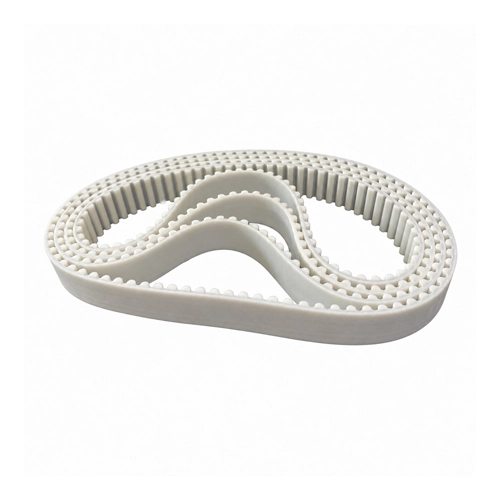
Application: Synchronized conveying equipment requiring repeatable cleat positioning Component Type: Drawing-based PU T1/2 inch belt with Kevlar cord and welded […]