Application: Synchronized conveying equipment requiring fixed product spacing
Component Type: PU T1/2 inch timing belt with Kevlar cord and welded cleats
The Core Issue: The customer needed a long PU timing belt with 180 cleats installed in a repeating sequence, based on drawings and dimensional requirements.
1. The Customer Challenge and Background
The customer required a customized timing belt for a conveying system where the belt did more than transmit motion. The cleats also had to carry or separate products at defined positions, so the belt body, pitch, cleat geometry and cleat sequence all needed to match the machine layout.
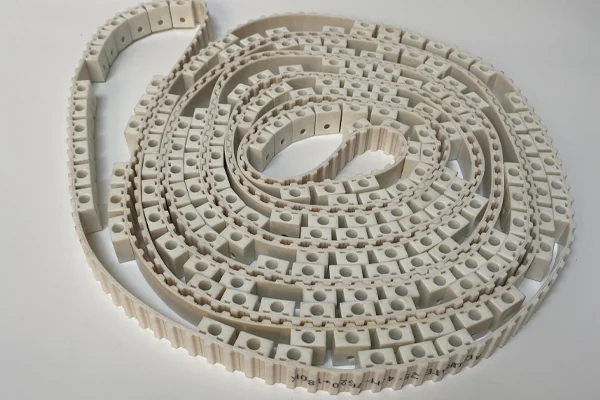
This was not a standard catalog item. The customer provided drawings and key parameters for a PU T1/2 inch timing belt with Kevlar cord, 45 Shore A cleats, 180 cleats in total and a 7620 mm belt length. The repeated cleat arrangement was the most important detail because incorrect spacing could change product timing and create interference with other parts of the equipment.
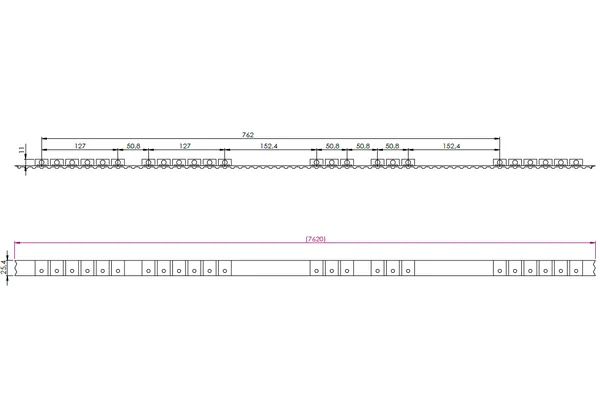
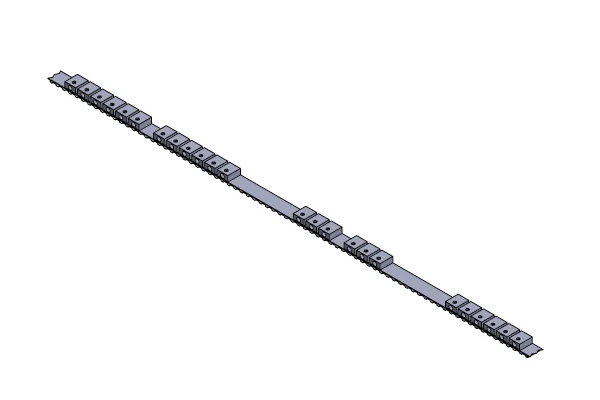
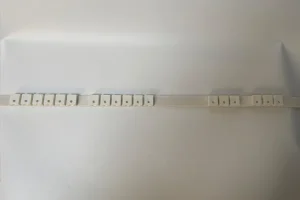
The customer specified the following sequence: 6 cleats, 3 free teeth, 6 cleats, 11 free teeth, 3 cleats, 3 free teeth, 3 cleats, 11 free teeth, then repeat. For a belt with many attachments, this type of pattern must be checked as a complete layout instead of counting only the total number of cleats.
2. Supplied Technical Requirements
| Item | Customer Requirement |
|---|---|
| Belt Type | PU T1/2″ Timing Belt |
| Reinforcement | Kevlar Cord |
| Belt Length | 7,620 mm |
| Belt Width | 25.4 mm |
| Cleat Quantity | 180 Cleats |
| Cleat Hardness | 45 Shore A |
| Cleat Height | 11 mm |
| Cleat Layout | Repeating sequence of grouped cleats and free teeth |
3. Engineering Review of the Drawing
After receiving the drawings, TRANDVOX reviewed the belt as a complete conveying component. For this type of cleated timing belt, the key risk is not only selecting the correct belt profile. The cleat pitch, free-tooth sections, cleat bonding position and hole orientation must also follow the drawing so the belt can work with the customer’s existing machine.
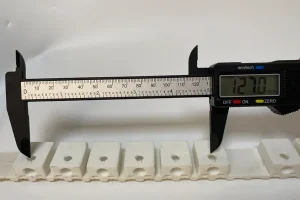
The T1/2 inch tooth profile was checked as the base for synchronous engagement. The 7620 mm total length and 25.4 mm width were treated as fixed dimensions. The cleat layout was then reviewed against the repeated sequence so that the 180 cleats would be distributed consistently along the full belt.
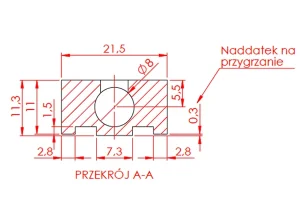
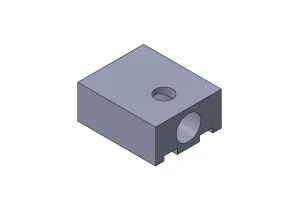
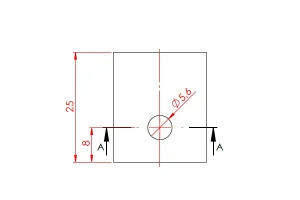
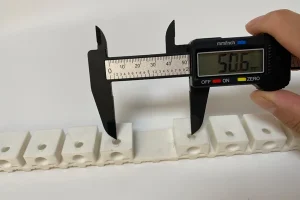
TRANDVOX also reviewed the cleat structure. The drawing showed an 11 mm cleat height, a top hole and a side hole. These features affect both installation and product handling, so the cleat was not treated as a simple rectangular attachment.
4. The Customized Solution
Based on the drawing review, TRANDVOX supplied a customized PU T1/2 inch timing belt with Kevlar cord and welded 45 Shore A cleats. The solution focused on matching the customer’s existing equipment requirements rather than changing the belt into a general-purpose product.
The customized belt configuration included:
- PU T1/2 inch timing belt body with Kevlar tensile cord.
- 7620 mm total length and 25.4 mm width according to the customer drawing.
- 180 cleats with 45 Shore A hardness and 11 mm height.
- Repeated cleat sequence: 6 cleats, 3 free teeth, 6 cleats, 11 free teeth, 3 cleats, 3 free teeth, 3 cleats, 11 free teeth, then repeat.
- Cleat hole details checked against the drawing before production confirmation.
5. Production Focus and Inspection Points
During production, TRANDVOX focused on the parameters that directly affect installation and running stability. The cleats had to be positioned according to the drawing sequence, and the bonded areas had to remain visually consistent across the belt length. Because the belt used many repeated attachments, a small counting error at the start could accumulate into a layout mismatch later in the belt.
The finished belt was checked for the following points before delivery:
- overall belt length and width
- T1/2 inch tooth profile and belt direction
- total cleat quantity
- cleat sequence and free-tooth intervals
- cleat height, hardness requirement and hole position
- visual consistency of welded cleats along the full belt
Quality Inspection Photos
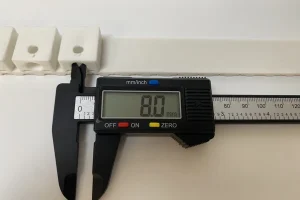
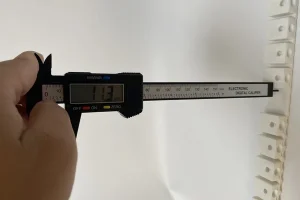
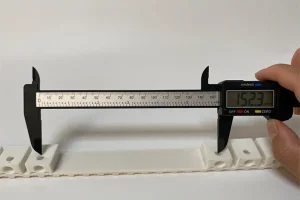
The following inspection photos show key dimensional checks during production review, including cleat grouping, reference intervals, hole diameter and cleat height.
6. Video
7. Result and Buyer Value
The completed belt matched the customer’s supplied requirements for belt type, length, width, cleat count and cleat arrangement. By confirming the drawing details before production, TRANDVOX helped reduce the risk of receiving a belt that looked similar but could not match the customer’s conveying sequence.
This project shows the practical value of clear technical communication in customized timing belt sourcing. When buyers can provide drawings, photos, samples or machine requirements, TRANDVOX can help translate those details into a more accurate belt specification for quotation and production coordination.
8. Engineering Insight
For cleated timing belts, the total number of cleats is only one part of the specification. Buyers should also confirm the start point, tooth count between cleat groups, cleat height, hardness, hole orientation, belt width, belt length and reinforcement type. These details determine whether the belt can work with the existing pulleys, guides, sensors and product transfer positions.
9. Customer CTA
Need a customized timing belt with cleats based on a drawing or sample? Provide your belt profile, belt length, width, cleat quantity, cleat drawing, cleat sequence and working conditions. TRANDVOX can review the information and help prepare a suitable sourcing and production specification for your application.