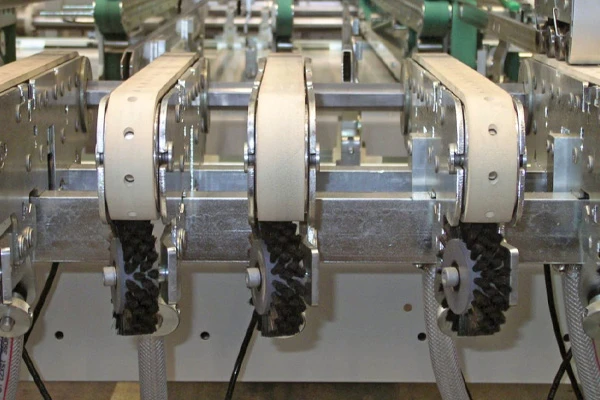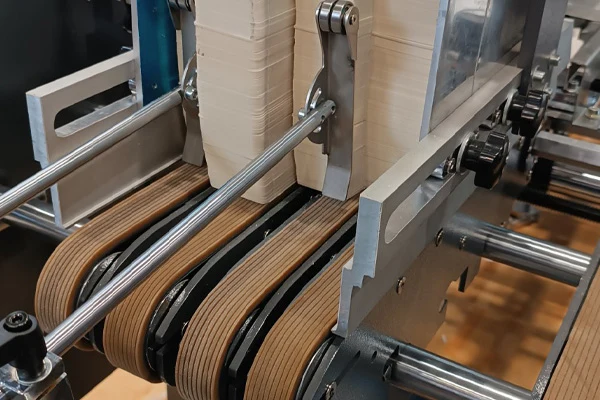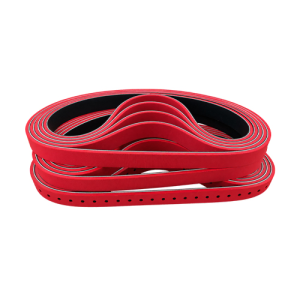
Feeder Belt
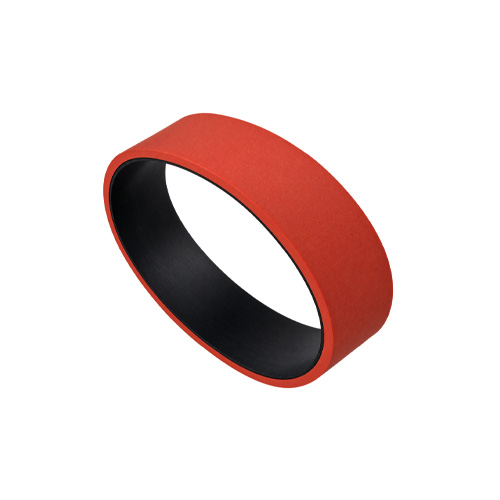
TRANDVOX supplies feeder belts for industrial machines that require reliable feeding, separation, and transfer of paper, cardboard, sheets, panels, packaging materials, and other products into the next processing section.
Unlike a belt defined by one specific material or construction, a feeder belt is selected according to its feeding function. Different machines may require different belt constructions, surface materials, friction levels, thicknesses, perforations, grooves, and endless configurations.
As an industrial feeder belt supplier, TRANDVOX supports OEMs, distributors, and industrial users with standard and custom solutions based on machine specifications, belt samples, drawings, and operating requirements.
Feeder Belts for Industrial Feeding Systems
A feeder belt is an industrial belt used in the feeding section of a machine to grip, separate, position, or transfer materials at a controlled rate.
The belt surface must provide suitable contact with the handled material while the belt construction needs to maintain stable running during repeated feeding cycles. Depending on the equipment, feeder belts may operate individually or as multiple parallel belts.
Common requirements include:
- Reliable grip during feeding and acceleration
- Consistent material transfer and positioning
- Good wear resistance under repeated contact
- Stable dimensions during continuous operation
- Suitable flexibility for the pulley arrangement
- Consistent surface properties across the belt
- Compatibility with vacuum or mechanical feeding systems
Common Feeder Belt Constructions
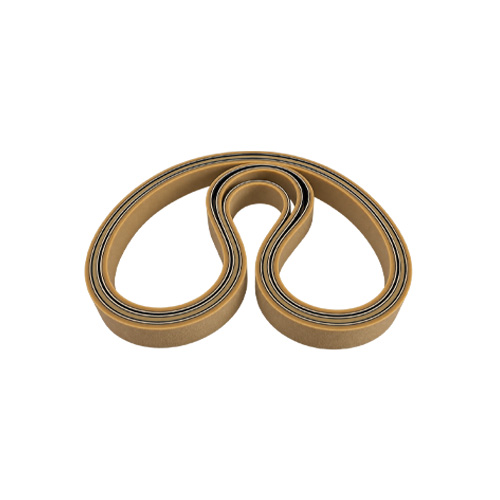
Feeder belts can use different base constructions and endless configurations depending on the feeding system. Common options include seamless, fabric-reinforced, and polyamide-core constructions.
Seamless Feeder Belt
Seamless feeder belts use a continuous endless construction without a conventional splice. This helps maintain consistent belt thickness and surface contact during repeated feeding cycles.
They are commonly selected for high-cycle feeding applications where smooth running and uniform contact with the handled material are important.
Fabric-Reinforced Feeder Belt
Fabric-reinforced feeder belts use one or more textile layers to provide the required strength, flexibility, and dimensional stability.
Different running and feeding surfaces can be combined with the reinforcement structure according to the required grip, wear resistance, pulley arrangement, and operating conditions.
Polyamide-Core Feeder Belt
Surface friction can be selected according to the material being handled, feeding speed, and contact requirements. For applications where the same type of belt construction is used primarily for power transmission, nylon flat belt options are available.
Feeder Belt Surface Options
Depending on the belt construction and application, feeder surfaces may use rubber, polyurethane, or other elastomeric materials with different hardness, friction, texture, and wear characteristics.
| Surface Characteristic | Main Function | Typical Feeding Requirement |
|---|---|---|
| High-Friction Surface | Improves grip | Fast acceleration and positive material feeding |
| Smooth Surface | Provides controlled contact | Applications requiring moderate friction |
| Textured Surface | Changes contact and grip characteristics | Paper, board, panels, and similar materials |
| Soft Surface | Provides compliant contact | Delicate or irregular products |
| Wear-Resistant Surface | Extends service life | High-cycle industrial feeding |
The correct surface should be selected according to the material, feeding speed, acceleration, pressure, and operating environment rather than simply choosing the highest possible friction.
Custom Feeder Belt Options
Feeder belts can be modified according to the feeding mechanism and machine configuration.
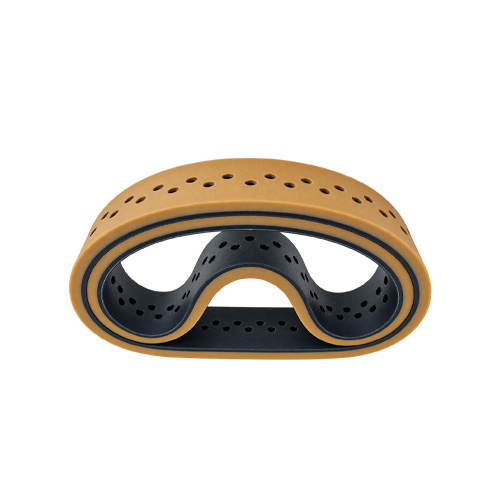
Perforations
Hole diameter, spacing, number of rows, and perforation layout can be configured according to the feeding pattern and machine requirements.
Grooves
Longitudinal or transverse grooves can modify surface contact, grip, or airflow depending on the feeder design.
Surface Grinding
Grinding can be used to control belt thickness, surface condition, or local belt geometry according to application requirements.
Custom Dimensions
Feeder belts can be supplied according to machine dimensions, existing belt specifications, samples, or technical drawings.
Custom belt features should be confirmed together with the base belt construction and machine requirements to ensure compatibility with the intended feeding system.
Feeder Belt Feeding Methods
The feeding method determines how the belt contacts and controls the material, making it an important factor when selecting a feeder belt.
Friction Feeding
Friction feeding relies on contact between the belt surface and the material to grip, separate, or accelerate individual products. Surface friction, hardness, wear resistance, and contact pressure are important selection factors.
Vacuum Feeding
Vacuum feeding uses suction through holes or slots in the belt to help hold materials during feeding and positioning. The belt construction and perforation pattern should be matched to the machine’s vacuum system and product dimensions.
Continuous Feeding and Transfer
Some machines use feeder belts to continuously introduce products or materials into the next processing section rather than separating individual items from a stack.
For these applications, belt surface, dimensional stability, running speed, pulley arrangement, and material characteristics should be considered together.
Get Free Quote of Feeder Belts
Looking for a feeder belt supplier for a new machine or replacement application?
Send us your belt dimensions, machine model, existing belt code, photos, drawings, or samples. TRANDVOX will help evaluate the feeding requirement and identify a suitable belt construction and specification.
Feeder Belt Applications
Feeder belts are used wherever products or materials must be introduced into a machine in a controlled and repeatable manner.
Paper and Sheet Feeding
Feeder belts help separate individual sheets from stacks and transfer them into the next machine section. Suitable surface grip and stable belt movement help reduce slipping, double feeding, and inconsistent material transfer.
Carton and Packaging Material Feeding
In packaging equipment, feeder belts can grip individual carton blanks, cardboard pieces, or packaging materials and move them from a stack or feeding station into the next processing section.
In folder-gluer machines, feeder belts grip and transfer carton blanks from the feeding station into the folding process. Other folder gluer belts support folding, transfer, compression, and delivery operations throughout the machine.
Printing and Paper Converting
Printing and converting machines use feeder belts to introduce paper, board, labels, envelopes, and other flat materials into downstream processing sections.
The required surface friction and belt construction depend on material properties, machine speed, and feeding mechanism.
Mail and Document Handling
Feeder belts can be used in mail sorting, document handling, inserting, and related equipment where individual items must be separated and transported consistently.
Wood and Panel Processing
Feeder belts, also commonly referred to as feed belts in woodworking applications, are used to move boards, panels, and workpieces through sanding, planing, brushing, and other processing stages.
These applications may require wear-resistant surfaces and suitable grip for heavier materials.
Feeder Belt Selection
Selecting a feeder belt starts with understanding how the material is fed, rather than choosing a belt only by material name.
The following factors should be checked:
| Selection Factor | What to Confirm |
|---|---|
| Material Being Fed | Paper, carton, sheet, panel, film, envelope, workpiece, etc. |
| Feeding Method | Friction feeding, vacuum feeding, continuous transfer, etc. |
| Belt Dimensions | Length, width, and thickness |
| Surface Requirement | Friction, texture, hardness, and wear resistance |
| Belt Construction | Seamless, fabric-reinforced, polyamide-core, or other construction |
| Pulley Arrangement | Pulley diameter and belt path |
| Operating Speed | Feeding speed and cycle frequency |
| Perforation Requirement | Hole size, pattern, rows, and position for vacuum feeding |
| Operating Environment | Temperature, contamination, dust, oil, or moisture |
| Existing Belt | Brand, code, sample, drawing, or specification |
Feeder Belts Replacement
A replacement feeder belt should match the functional requirements of the existing feeding system rather than only matching its approximate dimensions.
TRANDVOX can review:
- Existing belt length, width, and thickness
- Belt surface and friction characteristics
- Base belt construction
- Seamless or joined configuration
- Hole or slot pattern
- Groove dimensions and position
- Pulley arrangement
- Machine model and feeder section
- Existing belt code or manufacturer reference
When the original belt specification is unavailable, customers can provide photos, drawings, samples, and machine information for further evaluation.
FAQ
A feeder belt is an industrial belt used to grip, separate, position, or transfer materials through the feeding section of a machine. Feeder belts are defined primarily by their feeding function rather than by one specific belt material or construction.
Feeder belts may use rubber, polyurethane, or other elastomeric materials on the feeding surface, while the belt construction may incorporate fabric reinforcement, polyamide traction layers, or other supporting structures. The appropriate combination depends on the required friction, flexibility, wear resistance, dimensions, and operating conditions.
A feeder belt is defined by its function, while a nylon flat belt is defined mainly by its belt construction. Some nylon or polyamide-core flat belts can be used as feeder belts, but feeder belts can also use other constructions.
Yes. Feeder belts are commonly used in the feeder section of folder-gluer machines to grip and transfer carton blanks into subsequent processing sections. However, a folder gluer also uses other belts for folding, transfer, compression, and delivery functions.
A vacuum feeder belt contains holes or slots that allow suction to hold materials against the belt during feeding. The perforation pattern is normally matched to the machine’s vacuum system and product dimensions.
Yes. Belt dimensions, construction, surface characteristics, perforations, grooves, and other features can be evaluated from an existing sample together with machine and operating information.
Useful information includes belt length, width, thickness, surface type, machine model, material being fed, pulley arrangement, existing belt code, perforation pattern, operating speed, and photos or drawings of the existing belt.
Related Products
Related Cases
Application: Carton feeding and transport on a Vega 850 machine Component Type: Feeder belt inquiry and narrow intermediate-section folder gluer […]