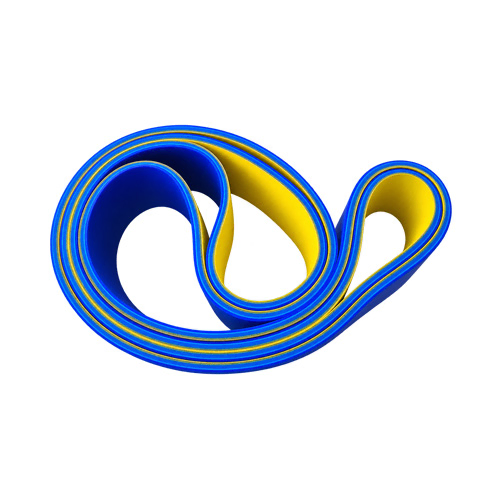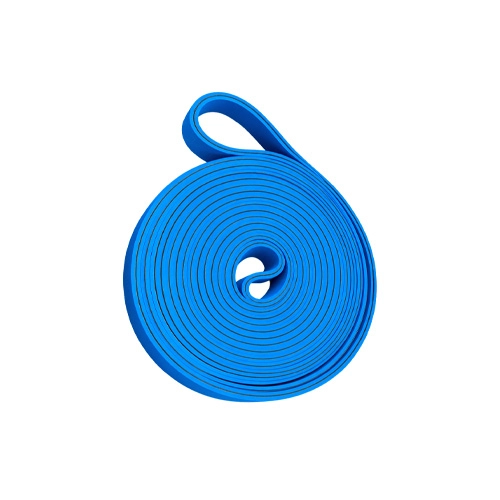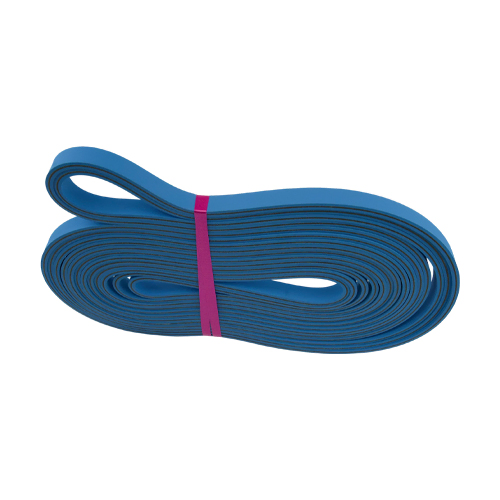
Nylon Flat Belt
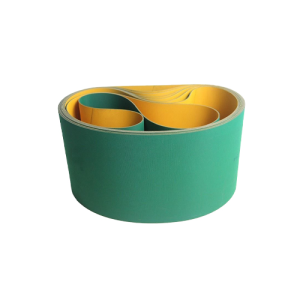
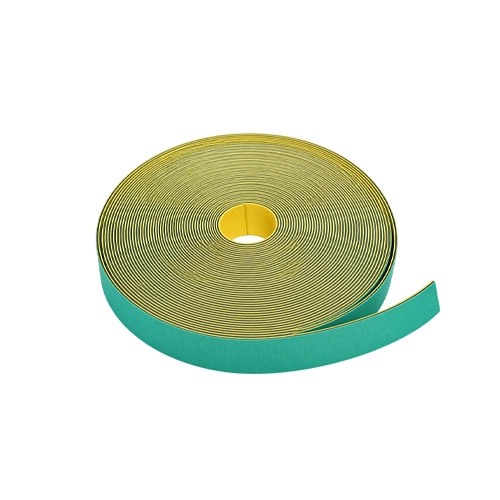
TRANDVOX supplies nylon flat belts for industrial drive systems and power transmission applications. As a type of flat power transmission belt, these belts use high-strength nylon reinforcement combined with NBR rubber or leather friction layers, providing a balance of tensile strength, flexibility, dimensional stability, wear resistance, and reliable pulley contact.
Different belt widths, thicknesses, lengths, friction-layer combinations, and open-ended or endless configurations can be supplied according to machine specifications and operating conditions. Custom processing such as perforations, guide strips and other modifications is also available for specific equipment requirements.
Nylon Flat Belt Construction
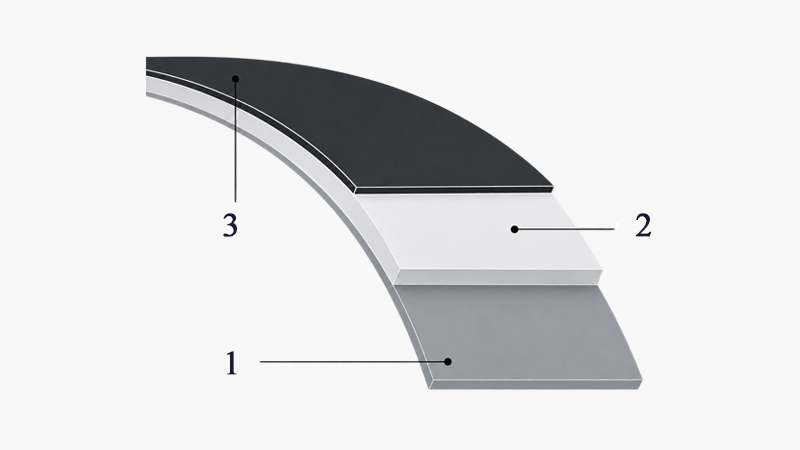
Nylon flat belts use high-strength nylon (polyamide) reinforcement as the main tensile layer, combined with NBR rubber or leather friction surfaces. Each layer performs a different function in maintaining tensile strength, flexibility, and reliable contact with the pulley system.
Nylon Reinforcement
High-strength nylon reinforcement forms the main tensile structure of the belt. It provides tensile strength, flexibility, and dimensional stability while allowing the belt to withstand transmission tension and repeated bending around pulleys.
NBR Rubber Friction Layer
NBR rubber can be used as a friction layer to provide good wear resistance, consistent friction, and reliable contact with pulley surfaces. It is suitable for industrial transmission applications requiring stable grip and continuous operation.
Leather Friction Layer
Leather can also be used as a friction surface where different friction, flexibility, and pulley-contact characteristics are required. It provides an alternative to NBR rubber for machinery with specific transmission requirements.
- NBR Rubber(Leather) Friction Layer
- Nylon Reinforcement
- NBR Rubber(Leather) Friction Layer
Types of Nylon Flat Belts
Nylon flat belts can be supplied with different friction-layer combinations according to the required surface characteristics, pulley contact, and operating conditions.
This type combines nylon reinforcement with NBR rubber friction layers on both sides. The NBR surfaces provide good wear resistance and consistent friction for general industrial power transmission applications.
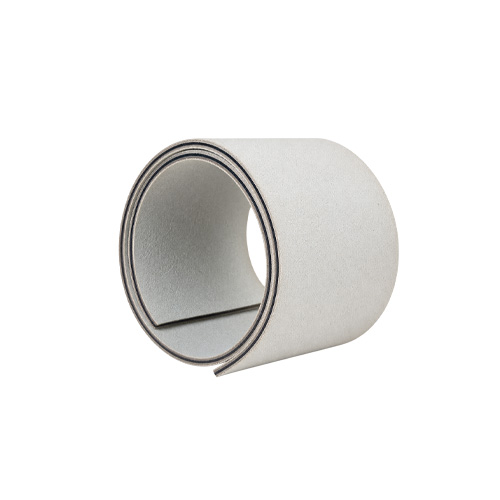
This type combines nylon reinforcement with leather friction layers on both sides. The leather surfaces provide specific friction and contact characteristics for machinery where leather-faced transmission belts are preferred.
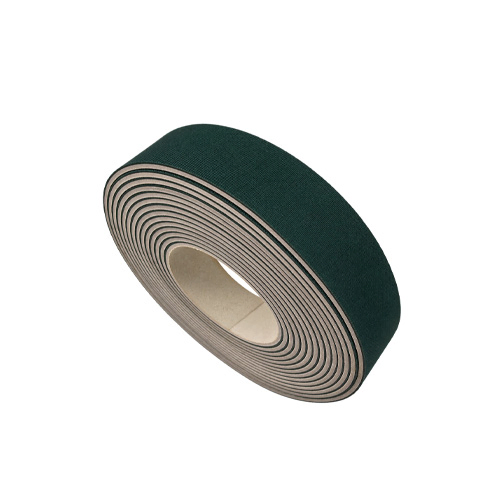
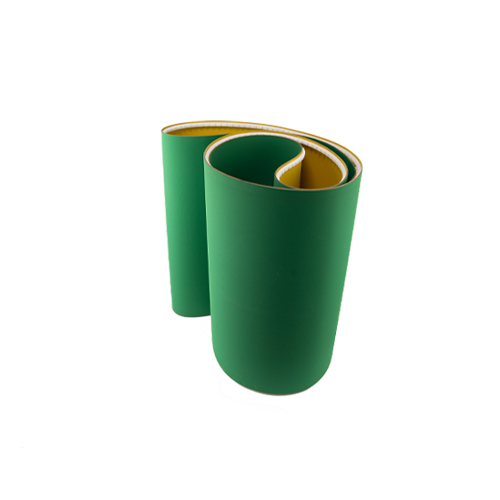
This construction uses NBR rubber on one side and leather on the other side of the nylon reinforcement, providing different friction characteristics on the two belt surfaces. It is suitable for transmission systems where each side has different contact or friction requirements.
Custom Nylon Flat Belt Solutions
Standard belt dimensions or constructions do not always match the sting machinery. TRANDVOX provides custom nylon flat belt solutions based on belt specifications, equipment configuration, drawings, samples, and operating conditions.
In addition to custom width, thickness, length, and friction surface, additional processing can be supplied for specific machine requirements.
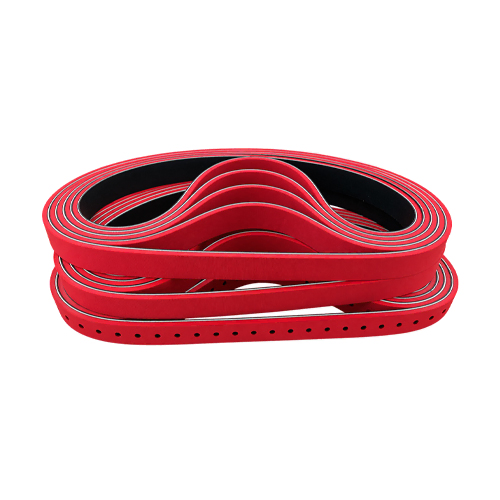
Perforated Nylon Flat Belts
Holes can be processed according to specified diameter, spacing, quantity, and layout. Customers can provide drawings or samples to confirm the required perforation pattern.
Nylon Flat Belts with Guide Strips
Guide strips can be added according to the belt and machine configuration to support belt guidance and help maintain the required running position.
Other modifications can be evaluated according to drawings, samples, equipment design, and application requirements.
Nylon Flat Belt Specifications
Nylon flat belts can be supplied in different constructions and dimensions according to the transmission system and equipment requirements.
| Specification | Available Options |
|---|---|
| Product Type | Nylon Flat Belt |
| Tensile Layer | Nylon Reinforcement |
| Friction Layer | NBR Rubber / Leather |
| Surface Combination | NBR/NBR, Leather/Leather, NBR/Leather |
| Belt Width | Custom |
| Belt Thickness | Custom |
| Belt Length | Custom |
| Configuration | Open-Ended / Endless |
| Custom Processing | Perforations, Guide Strips and Other Modifications |
Actual specifications should be confirmed according to belt construction, pulley dimensions, transmission load, operating speed, and machine requirements.
Get Free Quote of Nylon Flat Belt
Send us your nylon flat belt specifications, application requirements, and required quantity for quotation.
For replacement or customized belts, you can also provide existing belt photos, drawings, samples, or other technical details.
Nylon Flat Belt Applications
Nylon flat belts are used as power transmission belts and flat drive belts in industrial equipment requiring flexible, stable, and reliable transmission between pulleys and rotating components.
Textile Machinery
Nylon flat belts are used in selected textile and yarn-processing machinery where high-speed operation, repeated bending, and stable power transmission are required.
Printing and Paper Processing Machinery
They can be used in printing, paper processing, and converting machinery for driving rollers and other rotating components requiring consistent transmission.
Packaging Machinery
Nylon flat belts can support compact transmission arrangements in packaging machinery and other equipment requiring continuous running.
Material Handling Equipment
Selected handling systems use nylon flat belts to transmit power to rollers, pulleys, and other driven components.
Nylon Flat Belt Selection
Selecting the correct nylon flat belt requires matching the belt construction to the transmission system rather than considering belt dimensions alone.
1. Friction Layer
Select NBR rubber, leather, or a suitable combination according to pulley contact, required friction, wear conditions, and the function of each belt surface.
2. Belt Dimensions
Confirm the required belt width, thickness, and length. These dimensions affect belt compatibility, flexibility, load capacity, and installation.
3. Pulley Diameter
Pulley diameter affects belt bending during operation. The belt construction and thickness should be compatible with the pulley arrangement of the machine.
4. Operating Speed and Load
Operating speed, transmission load, start-stop frequency, and running hours should be considered when selecting the appropriate belt construction.
5. Working Environment
Temperature, contamination, abrasion, contact materials, and other environmental conditions can influence the selection of the belt and friction surface.
6. Belt Configuration
Confirm whether the application requires an open-ended or endless belt and whether any specific joining requirements apply.
7. Additional Processing
Confirm any required perforations, guide strips or other modifications, including their dimensions and positions.
Nylon Flat Belt Replacement
For replacement applications, the objective is to match the existing belt and machine requirements as closely as possible rather than selecting a replacement based only on the product name.
Customers can provide:
- Existing belt width
- Belt thickness
- Belt length
- Belt markings or model information
- Surface material
- Pulley diameter
- Machine application
- Photographs of the existing belt
- Drawings or technical specifications
- Existing belt sample, if available
If the existing belt includes perforations, guide strips, or other special processing, the dimensions, positions, layout, and other relevant details of these features should also be provided.
When complete specifications are unavailable, photographs, samples, machine information, and existing belt measurements can be used for preliminary specification matching.
FAQ
A nylon flat belt is an industrial drive belt that uses nylon reinforcement with friction layers such as NBR rubber or leather. The nylon reinforcement provides tensile strength, flexibility, and dimensional stability, while the outer surfaces provide the friction required for reliable pulley contact.
Nylon flat belts are used in textile machinery, printing and paper equipment, packaging machinery, material handling equipment, and other industrial power transmission applications.
NBR rubber and leather provide different friction, wear, flexibility, and pulley-contact characteristics. The appropriate surface material should be selected according to the machine configuration, pulley conditions, operating speed, and required friction.
Yes. Nylon flat belts can be customized with perforations, guide strips and other processing according to equipment requirements. Drawings or samples are recommended for confirming the dimensions and positions of customized features.
Yes. Replacement belts can be evaluated according to an existing belt sample, dimensions, markings, photographs, drawings, or machine information. Special features on the original belt should also be included when confirming the replacement specification.
Yes. Endless configurations can be supplied depending on the belt construction, dimensions, and application requirements.
Please provide the belt width, thickness, length, friction surface, configuration, pulley information, machine application, operating conditions, and quantity. For belts with perforations, guide strips, or other processing, drawings or detailed dimensions should also be provided.
Yes. A nylon flat belt is a type of flat power transmission belt used to transfer mechanical power between pulleys. It typically uses nylon (polyamide) reinforcement as the tensile layer, combined with NBR rubber, leather, or other suitable friction surfaces according to the drive requirements.