Rubber Timing Belt
– Rubber timing belts are designed for reliable synchronous power transmission in industrial machinery, OEM equipment and replacement applications
– CR rubber construction with fiberglass reinforcement provides flexibility, dimensional stability and controlled elongation for repeated mechanical drive operation
– Multiple tooth profiles, dimensions and belt configurations are available to match existing timing pulleys, machine layouts and specific operating requirements
Rubber Timing Belt Structure
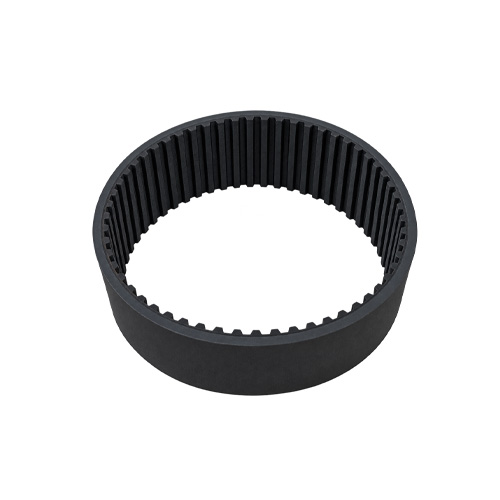
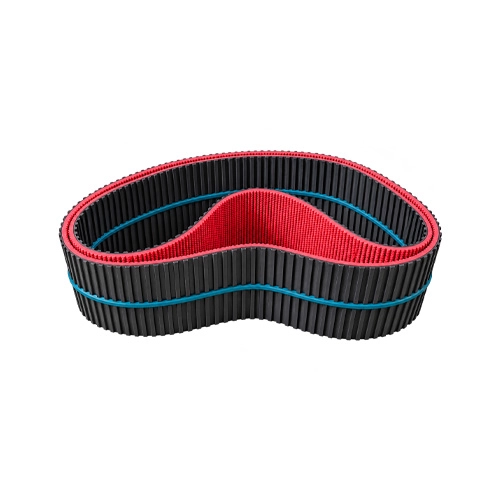
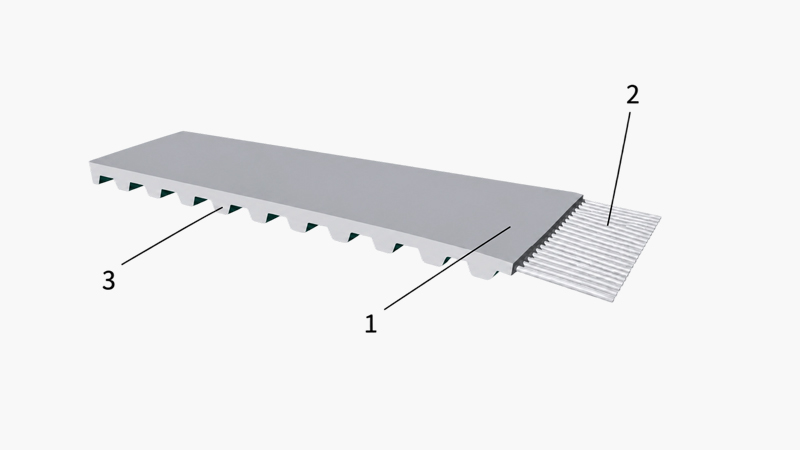
A rubber timing belt consists of a CR rubber belt body, fiberglass reinforcement, and precision-molded teeth designed to engage with a matching timing pulley. The belt and timing pulley work together as a synchronous drive system, with the tooth profile and pitch determining compatibility between the belt and pulley. The CR rubber compound provides flexibility and durability, while the fiberglass cord supports dimensional stability and controlled elongation during operation..
When selecting a rubber timing belt, key factors include transmitted load, operating speed, pulley dimensions, temperature, and working environment, which help determine the appropriate rubber compound, tooth profile, and belt configuration for the application.
- CR Rubber Outer Layer: Chloroprene rubber (CR), also commonly referred to as neoprene rubber, provides a balance of flexibility, durability, and resistance to wear and aging for general mechanical transmission applications.
- Fiberglass Reinforcement Core: Provides dimensional stability and controlled elongation to support consistent belt performance and reliable synchronous transmission during operation.
- Precision Tooth Profile: Ensures accurate engagement with matching timing pulleys for reliable synchronous transmission and precise positioning.
Rubber Timing Belt Configurations
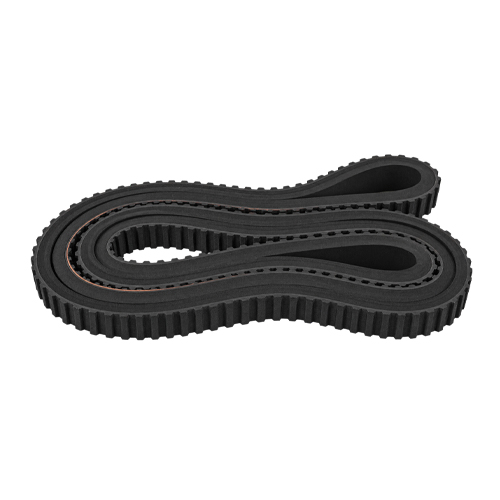
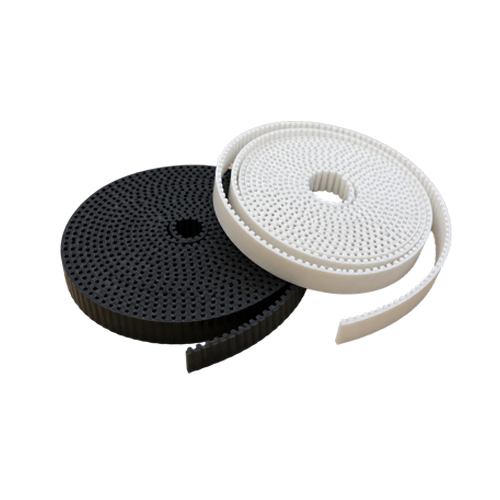
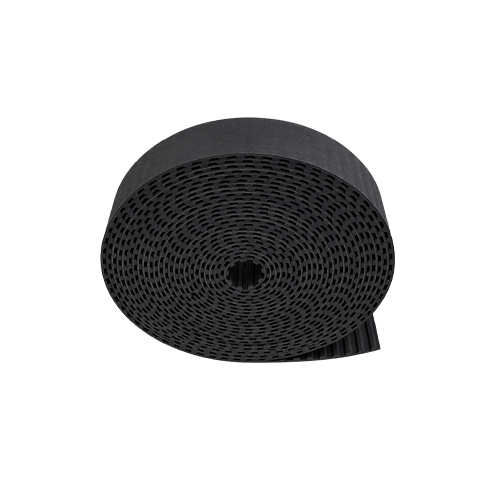
Open-ended timing belts are supplied in continuous lengths for suitable linear motion, customized installation, and other application requirements.
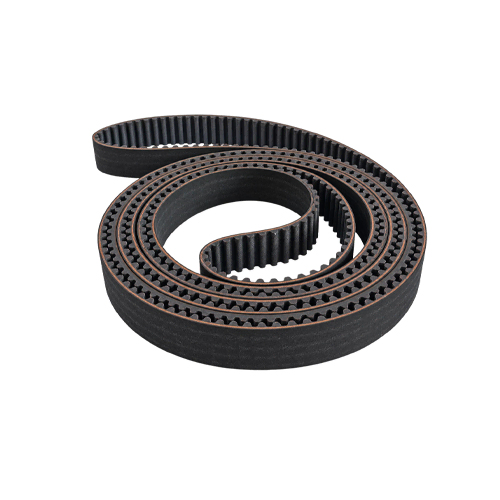
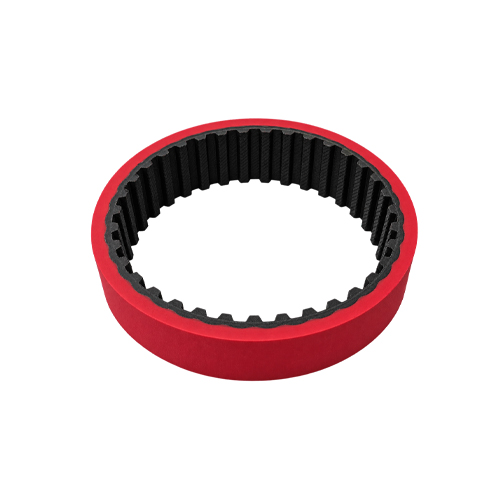
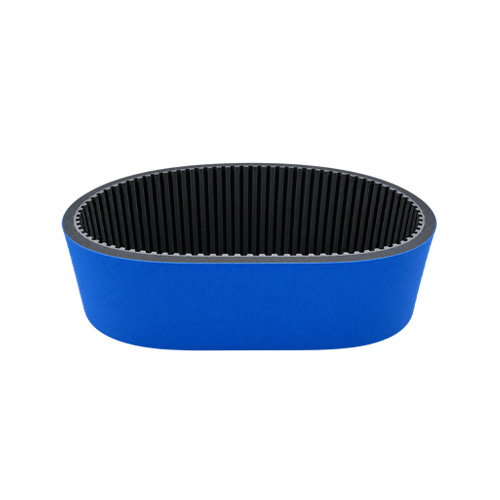
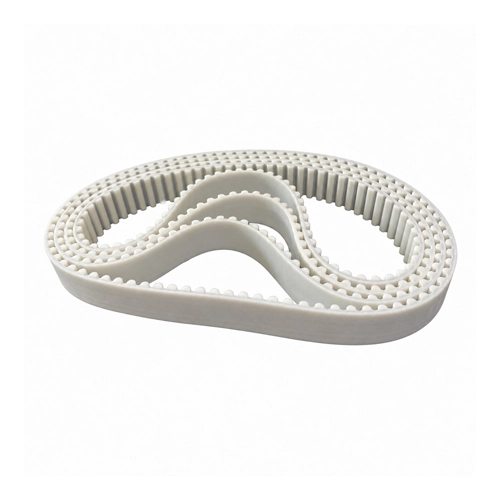
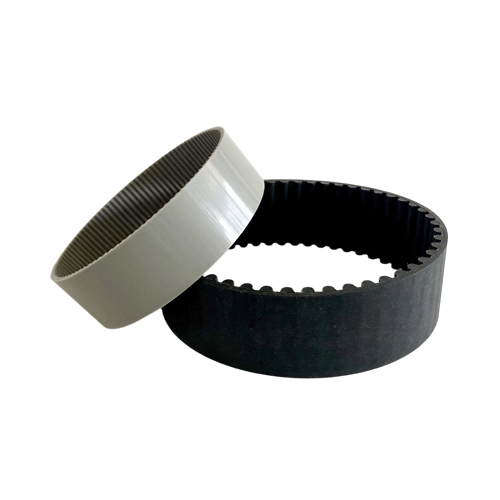
Endless timing belts are supplied as continuous closed-loop belts for suitable synchronous transmission applications.
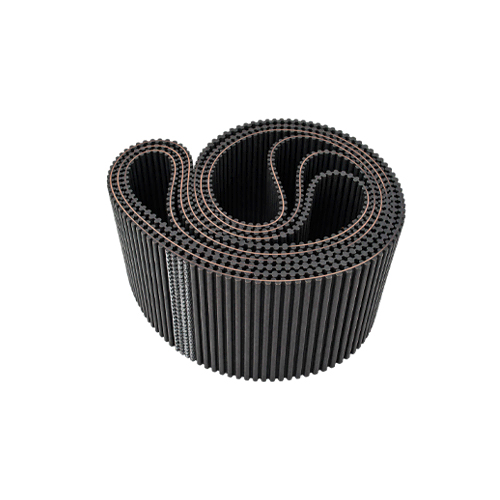
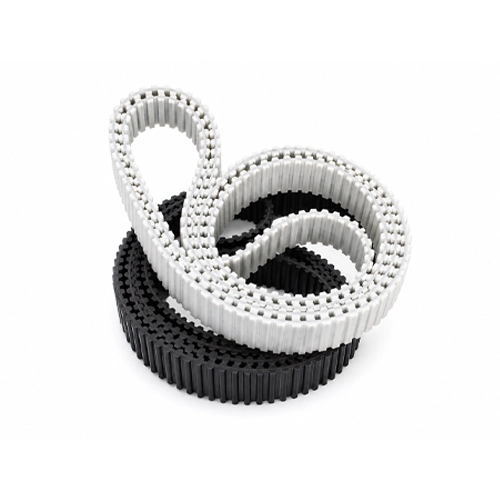
Double-sided timing belts have teeth on both belt surfaces for selected synchronous transmission systems.
Rubber Timing Belt Customization
Rubber Timing Belt Specifications
| Specification | Available Options |
|---|---|
| Belt Material | CR (Chloroprene Rubber) |
| Reinforcement | Fiberglass Cord |
| Tooth Profiles | T / HTD / STD / RPP / MXL / XL / L / H |
| Belt Width | Standard or customized |
| Belt Length | Standard or customized |
| Tooth Arrangement | Single-sided or double-sided, according to construction |
| Surface | Standard rubber options |
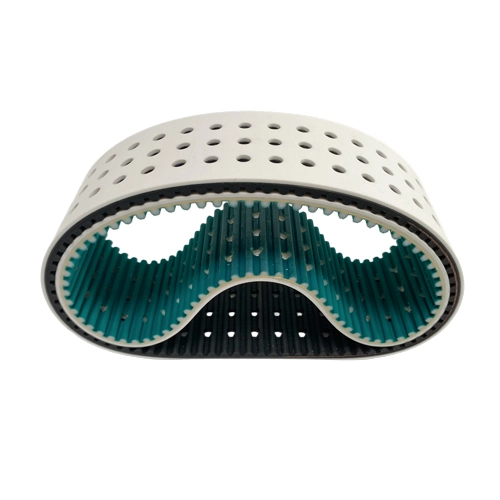
| Fabrication | Grooves / coatings / perforations / profiles, where applicable |
Get Free Quote of Rubber Synchronous Belt
As a rubber timing belt supplier, TRANDVOX provides rubber synchronous belt solutions for machinery replacement, OEM equipment, automation systems, packaging machinery, printing equipment, textile machinery, and other industrial drive applications.
With professional OEM support, TRANDVOX assists equipment manufacturers and industrial customers with rubber timing belt selection, specification confirmation, and customized supply solutions. Based on drive layout, timing pulley specifications, operating conditions, and equipment requirements, our team can help identify suitable belt profiles, dimensions, reinforcement structures, and configurations for new machine development, equipment upgrades, and recurring production needs.
To receive an accurate quotation, please provide available belt information, including belt profile, width, length, number of teeth, timing pulley details, operating conditions, machine model, existing belt marking, drawings, or belt samples.
Our team will review the provided technical details and recommend a suitable rubber timing belt configuration according to the confirmed belt specifications and application requirements.
Rubber Timing Belt Applications
Mechanical Arms and Robots
On automated assembly lines, mechanical arms and robots are commonly used for transporting, assembling, or processing items. Rubber synchronous belts can be used to connect the joints and actuators of the mechanical arms, enabling precise position control and motion synchronization.
Industrial Machinery
Rubber timing belts are suitable for machinery drives, auxiliary transmission systems, pumps, compressors, and other mechanical equipment where flexible and durable synchronous transmission is required.
Packaging Machinery
Rubber timing belts can synchronize shafts, rollers, and mechanical components in packaging equipment where repeatable motion and reliable transmission are required.
Elevators and Escalators
In equipment such as elevators and escalators, rubber synchronous belts are used to transfer power and control movement, ensuring the safety and stable operation of the equipment.
Printing & Paper Machinery
Rubber timing belts support synchronized movement between rollers, shafts, and feeding components in printing and paper-processing equipment.
Woodworking and Metalworking Equipment
In woodworking and metalworking equipment, rubber synchronous belts can be used to transfer power and control movement, such as in the transmission systems of sawing machines, milling machines, drilling machines, and other equipment.
Rubber Timing Belt Replacement
Rubber timing belts are widely used as replacement belts for industrial machinery and mechanical transmission systems. Correct replacement requires more than simply matching belt width or outside dimensions.
Important identification parameters include:
- Tooth profile
- Pitch
- Number of teeth
- Belt length
- Belt width
- Cords
- Pulley dimensions
- Operating speed
- Load requirements
When the original belt marking or part number is unavailable, a replacement timing belt can often be identified from the existing belt, timing belt dimensions, tooth profile, pitch, number of teeth, and pulley information.
Rubber Timing Belt vs PU Timing Belt
Rubber timing belts are commonly selected for flexible mechanical power transmission or where has heat requirements, while polyurethane timing belts are often selected where abrasion resistance, dimensional stability, or application-specific surface configurations are important. The appropriate belt material should be selected according to the pulley system, load, operating conditions, and equipment requirements.
How to Select a Rubber Timing Belt
1. Confirm the Tooth Profile
Match the belt tooth profile and pitch to the existing timing pulley.
2. Determine Belt Length and Width
Confirm the required belt dimensions based on the pulley arrangement, center distance, transmitted load, and available installation space.
3. Confirm the Fiberglass Reinforcement
Fiberglass cord provides dimensional stability and controlled elongation for rubber timing belt applications. Confirm the required belt construction according to load, speed, flexibility, and operating conditions.
4. Select the Rubber Compound
Consider temperature, oil exposure, environmental conditions, flexibility, and required service performance.
5. Check Pulley Compatibility
The belt and timing pulley must have compatible tooth profile and pitch for proper tooth engagement.
6. Confirm Replacement or Customization Requirements
For replacement belts, provide the original belt or pulley information whenever possible.
For customized belts, provide drawings, samples, dimensions, or equipment information.
FAQ
A rubber timing belt, also referred to as a rubber synchronous belt or rubber toothed belt, is a synchronous transmission belt made from a CR rubber compound and reinforced with fiberglass cord. Its toothed profile engages with a matching timing pulley to transmit synchronized motion.
Rubber timing belts are commonly used for industrial power transmission, machinery drives, packaging equipment, textile machinery, printing equipment, and other mechanical systems requiring synchronized movement.
TRANDVOX supplies rubber timing belts using CR (Chloroprene Rubber), which provides a balance of flexibility, durability, and resistance for general mechanical transmission applications.
Rubber timing belts supplied by TRANDVOX use fiberglass cord reinforcement to provide dimensional stability and controlled elongation during synchronous transmission.
Yes. Rubber timing belts are widely used for industrial machinery replacement when the replacement belt matches the original belt and pulley requirements.
Generally if the ordered rubber synchronous belt has stock, we can ship it next day, if the stock has used up, generally production time is about 5-7 days.
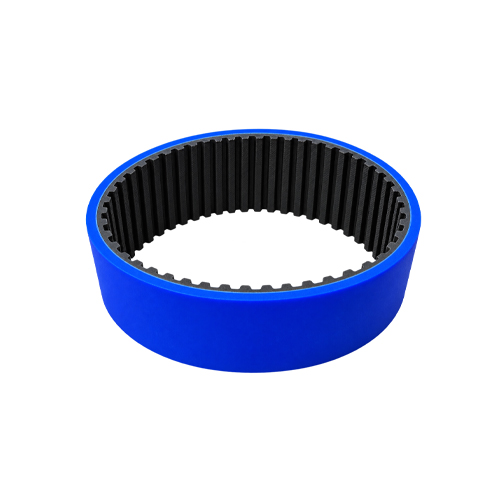
Yes. Depending on the belt construction, customization may include dimensions, reinforcement, coatings, V-guides, cleats, perforations, and special profiles.
Rubber timing belts should generally be stored in a clean, dry environment away from direct sunlight, excessive heat, moisture, and chemicals. Avoid sharp bending, crushing, or unnecessary deformation during storage and handling.
Yes. Open-ended rubber timing belts can be supplied in continuous lengths for suitable linear motion, customized installation, and other application requirements.
Yes. A model or part number is helpful but not always required. An existing belt dimensions, tooth profile, pitch, number of teeth, timing pulley information, drawings, or photos can be used to help identify a suitable replacement configuration.
Yes. TRANDVOX supplies rubber timing belts for distributors, OEMs, machine builders, maintenance requirements, and industrial users.
Related Cases
Application: Quotation review for an endless guided timing belt with a high-friction back cover Component Type: 585H600 black rubber timing […]