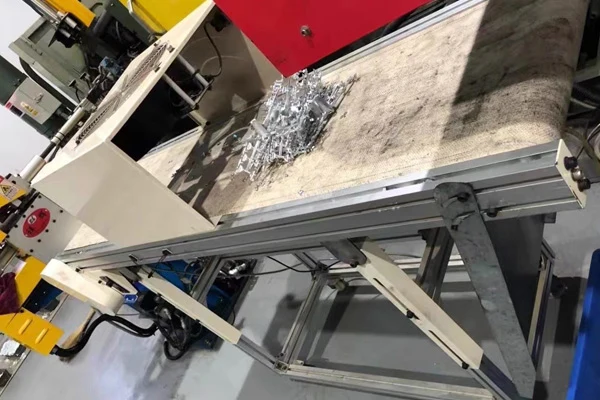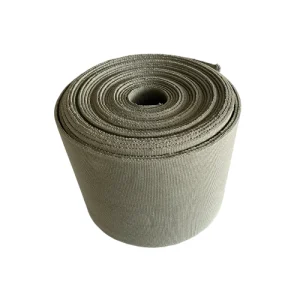
Kevlar® Conveyor Belt
– Kevlar® conveyor belt woven from Kevlar (para-aramid), PBO and 316L stainless steel fibers for continuous conveying of hot products in demanding industrial environments
– High-density, multi-layer woven construction combines heat resistance, tensile strength, abrasion resistance, cut resistance and dimensional stability under demanding thermal and mechanical conditions
– Suitable for hot glassware, aluminum profiles, metal components, ceramics and other hot products, with belt specifications selected according to product temperature, weight and conveying conditions
Kevlar Conveyor Belt Construction
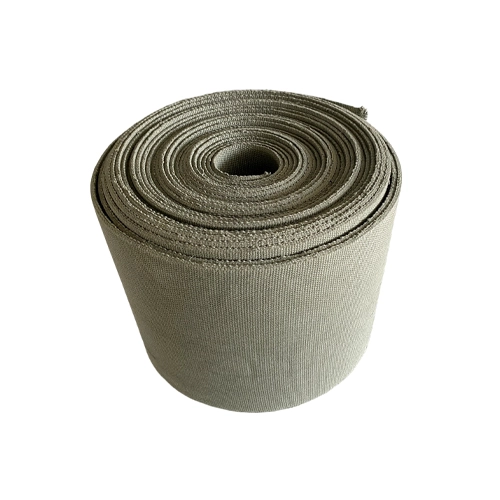
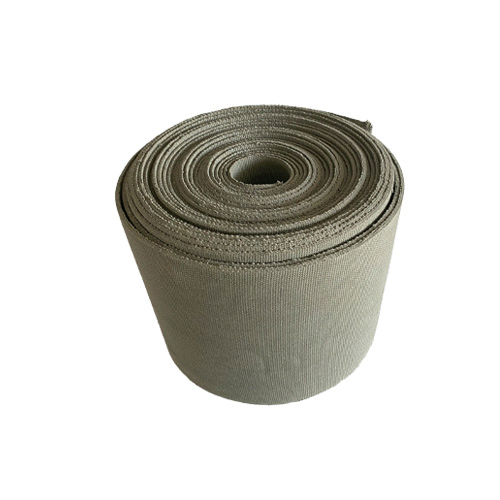
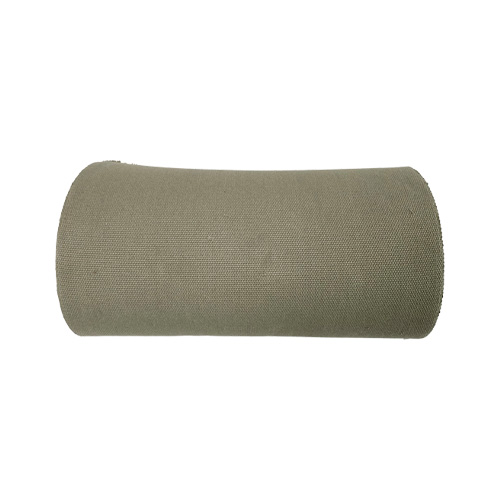
The high temperature Kevlar conveyor belt is a flat woven conveyor belt made from Kevlar (para-aramid), PBO and 316L stainless steel fibers.
These fibers are woven into a high-density, multi-layer structure to form a thick and durable belt suitable for demanding high-temperature conveying applications.
Kevlar (Para-Aramid) Fiber
Kevlar is incorporated into the woven structure as a high-strength reinforcement fiber.
PBO Fiber
PBO is used as a high-performance heat-resistant fiber within the belt structure for applications exposed to elevated temperatures.
316L Stainless Steel Fiber
316L stainless steel fiber is integrated into the woven structure to provide heat resistance, mechanical durability and dimensional stability.
High-Density Multi-Layer Weaving
The three fiber materials are combined through high-density, multi-layer weaving to create a robust flat belt structure for demanding high-temperature conveying applications.
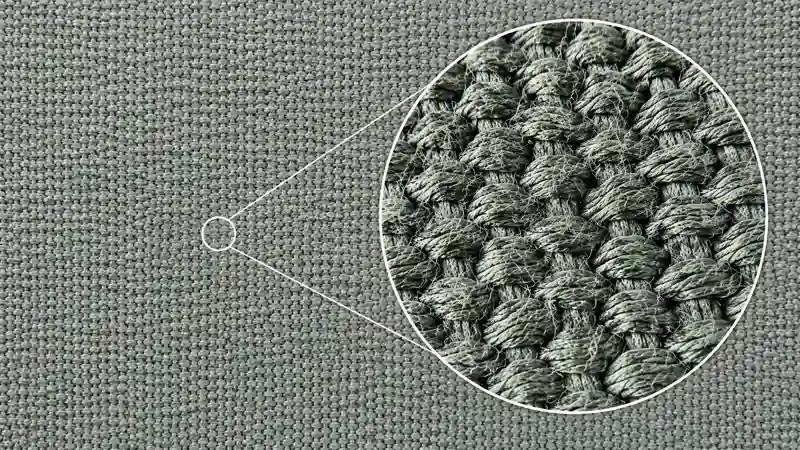
Woven from Kevlar, PBO and 316L stainless steel fibers in a high-density, multi-layer structure for high strength, heat resistance and dimensional stability.
Kevlar Conveyor Belt Specifications
The standard belt thickness is 6 mm, with available widths of 150, 250, 280, 300, 400 and 500 mm. Custom belt length and other fabrication requirements can be coordinated according to conveyor specifications.
| Specification | Details |
|---|---|
| Belt Type | Flat Woven Conveyor Belt |
| Material | Kevlar + PBO + 316L Stainless Steel Fiber |
| Construction | High-Density Multi-Layer Woven Structure |
| Thickness | 6 mm |
| Width | 150 / 250 / 280 / 300 / 400 / 500 mm |
| Length | Customized |
| Joining | Mechanical Fastener / Customized |
| Applications | High-Temperature Industrial Conveying |
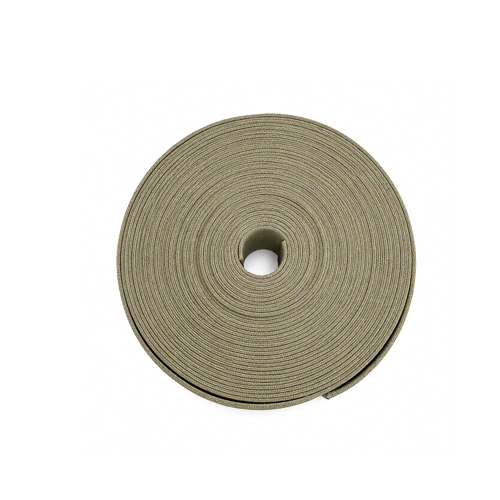
Get a Quote for Kevlar Conveyor Belt
Looking for a Kevlar conveyor belt for demanding industrial conveying applications?
TRANDVOX supplies 6 mm Kevlar + PBO + 316L stainless steel fiber woven conveyor belts in widths of 150, 250, 280, 300, 400 and 500 mm, with customized belt lengths and application-specific joining requirements available.
The belt is suitable for conveying hot glassware, aluminum profiles, metal components, welded parts, ceramics and other high-temperature products. Specifications can be selected according to product temperature, weight, conveying speed, pulley diameter and conveyor design.
To request a quotation, please provide your belt width, length, product type, operating temperature, conveying speed, pulley diameter and available drawings or samples.
TRANDVOX can help coordinate a suitable Kevlar, PBO and 316L stainless steel fiber conveyor belt solution based on your application and equipment requirements.
Key Benefits of Kevlar Conveyor Belt
High Temperature Performance
As a high temperature conveyor belt, this woven Kevlar construction is designed for demanding applications where conventional PVC, PU and rubber conveyor belts may be unsuitable.
Reduced Thermal Shock
The woven structure provides a less thermally conductive product-contact surface than a rigid metal conveying surface, which can help reduce sudden heat transfer at the contact interface in suitable applications.
Controlled Product Contact
Compared with rigid metal conveying surfaces, the woven structure provides a more compliant contact interface. This can help minimize unwanted marking and surface damage when handling heat-sensitive products.
High Abrasion and Cut Resistance
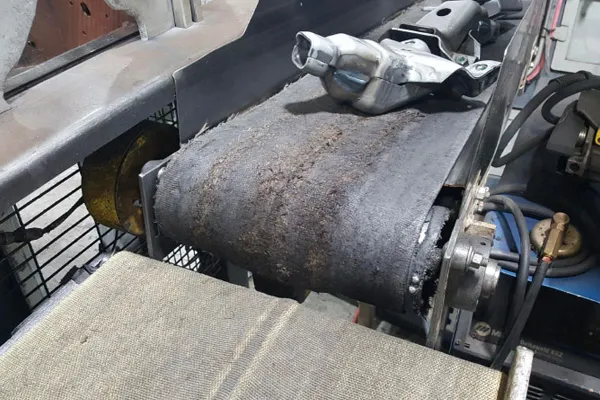
The durable woven construction is designed to withstand repeated contact, friction and mechanical stress during continuous industrial operation.
Dimensional Stability and Low Stretch
The belt is designed to maintain stable dimensions during operation, helping minimize belt elongation and the need for frequent tracking or tension adjustments.
Kevlar Conveyor Belt Applications
The high temperature Kevlar conveyor belt is designed for conveying hot products in demanding industrial environments. Its Kevlar, PBO and 316L stainless steel fiber woven construction combines heat resistance, tensile strength, abrasion resistance and dimensional stability for continuous high-temperature conveying.
The belt is suitable for glass manufacturing, aluminum extrusion, metal heat processing, ceramics and other high-temperature applications, with specifications selected according to product temperature, weight, conveying speed and operating conditions.
Glass Industry
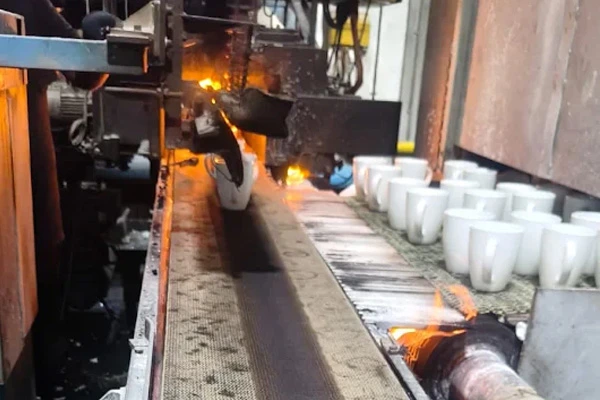
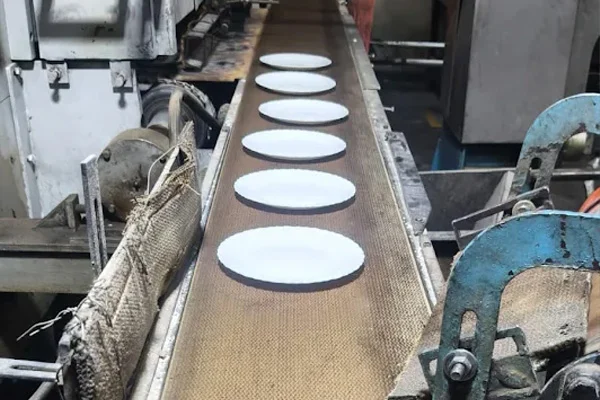
The high temperature Kevlar conveyor belt is designed for the hot end of glass manufacturing lines and can be used as a hot glass conveyor belt for transferring formed glass products while they remain at elevated temperatures.
Applications: Stemware, wine glasses, drinking glasses, glass tableware, ovenware, lamp glass, appliance glass panels and other formed glass products.
Key Stage: The belt is used to transfer hot glass products from the forming section to the annealing lehr entrance. For suitable glass-production lines, this woven belt can be used as an annealing lehr infeed belt to transfer hot glass products from the forming section toward the controlled cooling stage.
Benefits: The high-density woven structure is designed for stable conveying and controlled contact with hot glass products, helping minimize unwanted marking and thermal shock during transfer.
Aluminum Extrusion
Suitable for conveying and transferring hot extruded aluminum profiles during downstream handling. The belt can serve as a hot aluminum conveyor belt for selected cooling, transfer and transition applications.
Applications: Aluminum window frames, heat sinks, structural profiles and other extruded aluminum sections.
Key Stage: Hot profile cooling, transfer and transition stages after extrusion.
Benefits: Provides resistance to heat, abrasion and mechanical stress while helping protect the surface of hot aluminum profiles during conveying.
Metal Heat Processing
Suitable for conveying hot metal components in continuous thermal processing applications. The belt can be used as a hot metal conveyor belt for selected forging, heat-treatment and die-casting transfer processes.
Applications: Metal forging, heat treatment transfer lines, die-casting output and other hot metal handling processes.
Benefits: Kevlar, PBO and 316L stainless steel fibers provide a durable woven structure for high-temperature and mechanically demanding conveying conditions.
Kevlar Conveyor Belt vs. Traditional Metal Conveyor Belt
For selected high-temperature conveying applications, a woven Kevlar, PBO and 316L stainless steel fiber belt can provide a different product-contact and belt-construction approach compared with traditional rigid metal conveying surfaces.
| Feature | Kevlar / PBO / 316L Stainless Steel Fiber Belt | Traditional Metal Conveyor Belt |
|---|---|---|
| Construction | High-density woven fiber structure | Metal mesh or chain structure |
| Contact Surface | Flexible woven surface | Rigid metal surface |
| Hot Product Contact | Controlled contact with hot products | Direct metal contact |
| Surface Marking | Helps minimize unwanted marking | May require additional protection |
| Thermal Contact | Helps reduce direct heat transfer | Transfers heat more directly |
| Flexibility | Flexible woven structure | Generally more rigid |
FAQ
A Kevlar conveyor belt is a woven conveyor belt made from a blend of Kevlar (para-aramid), PBO and 316L stainless steel fibers. Its high-density, multi-layer woven construction is designed for conveying hot products in demanding industrial environments.
Yes. It is designed for hot glassware conveying applications where the belt must withstand elevated temperatures while maintaining stable running and controlled product contact.
Yes. This is a typical application in glass manufacturing. The belt transfers formed glass products from the hot forming section toward the annealing lehr entrance.
The standard belt thickness is 6 mm, with available widths of 150, 250, 280, 300, 400 and 500 mm. Belt length can be customized according to conveyor requirements. Joining methods and other application-specific requirements can also be coordinated based on the conveyor design and operating conditions.
The belt can be supplied with a suitable mechanical joining solution according to the conveyor design and installation requirements. The appropriate fastener or joining method should be selected based on belt construction, operating temperature and equipment configuration.
Belt selection should consider the belt width and length, product weight, conveying speed, pulley diameter, conveyor layout and joining requirements. For high-temperature applications, the product type and heat exposure conditions should also be evaluated to determine the appropriate belt construction and specification.
Yes. The belt is designed for demanding high-temperature conveying applications. However, the allowable operating temperature is not determined by a single temperature rating. It depends on factors such as product temperature, exposure time, belt construction, conveying speed and actual working conditions. The suitable specification should therefore be confirmed according to the application before ordering.