
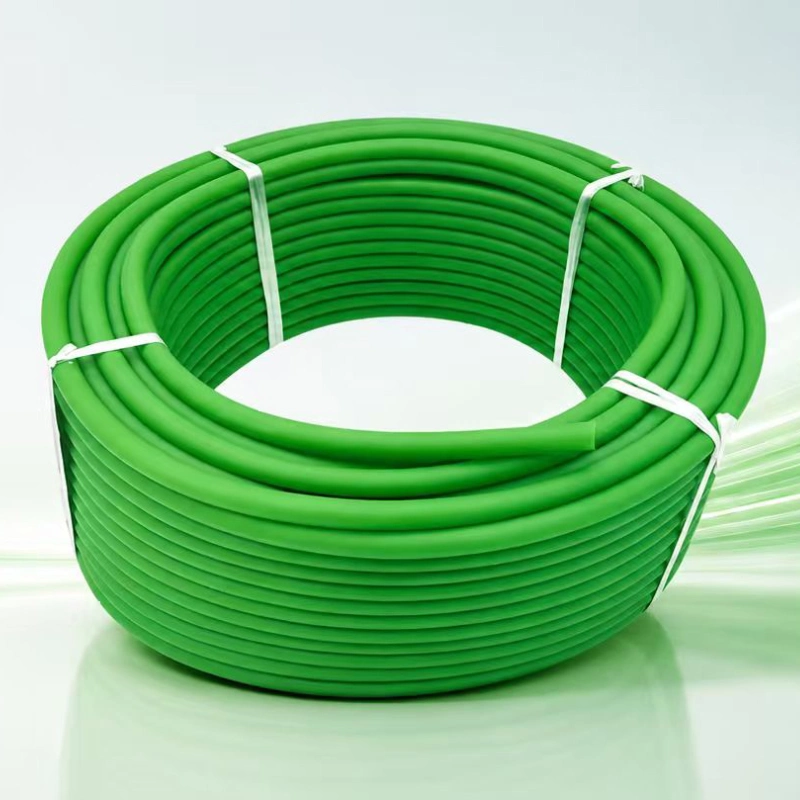
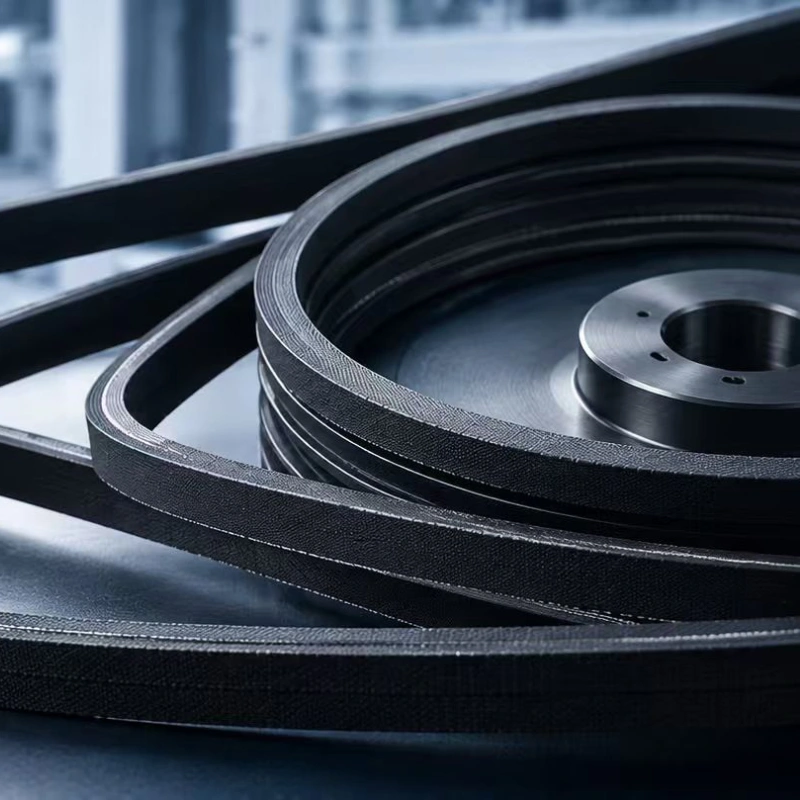
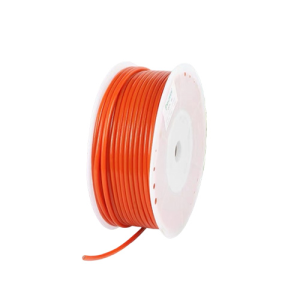
Reinforced Round Belt
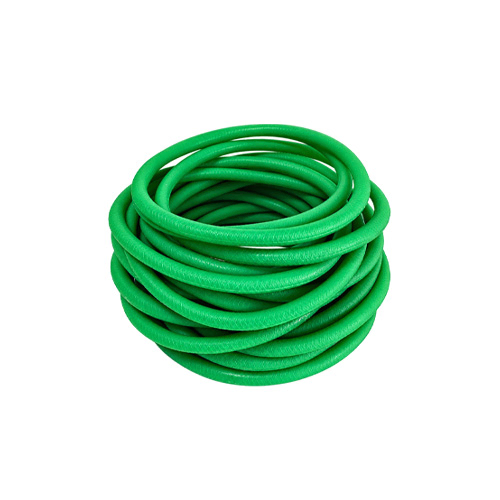
– Reinforced round belts with internal tension members designed to control belt elongation and maintain dimensional stability under operating tension
– Available with polyester cord, aramid cord or steel wire reinforcement to meet different tensile support and operating requirements
– Available in diameters from 4 mm to 20 mm, with 85A and 90A hardness options for different machine and application requirements
Reinforced Round Belt Construction
A reinforced round belt combines a polyurethane belt body with an internal longitudinal tension member.
Unlike a conventional non-reinforced round belt, the internal reinforcement carries part of the longitudinal tensile force and helps limit belt elongation under tension. This provides greater dimensional stability where maintaining belt length and tension is important to machine operation.
Different reinforcement materials can be selected according to the required belt construction and operating conditions.
Polyester Cord Reinforcement
Polyester cord provides internal reinforcement while maintaining a flexible belt construction. It can be selected where improved dimensional stability is required compared with a similar non-reinforced round belt.
Aramid Cord Reinforcement
Aramid cord provides a lightweight, low-elongation reinforcement option for applications where maintaining belt dimensions under tension is important.
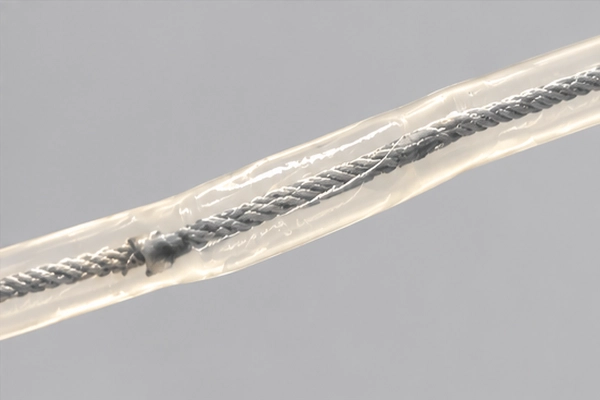
Steel Wire Reinforcement
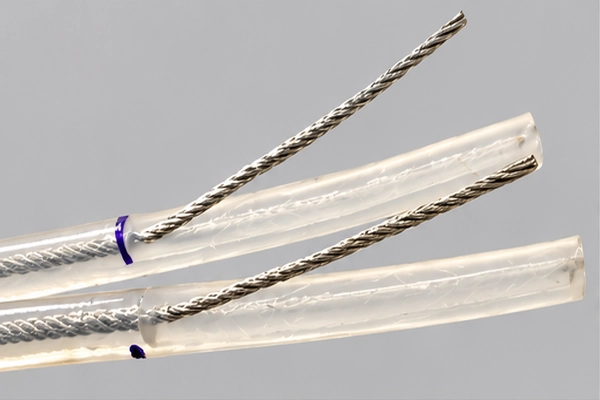
Steel wire provides a metallic internal reinforcement for applications requiring a steel-reinforced belt construction. The internal wire also needs to be considered when preparing and joining the belt.
Reinforced Round Belt Specifications
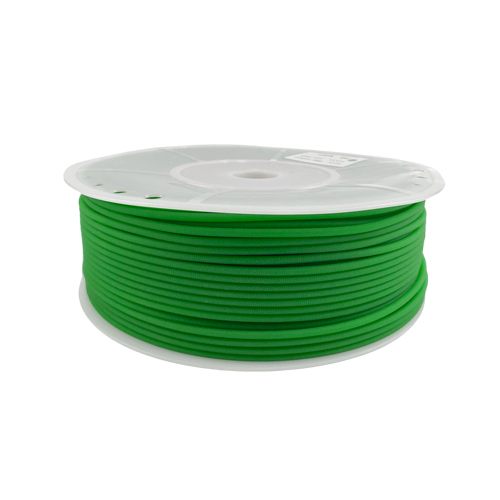
TRANDVOX reinforced round belts are available in diameters from 4 mm to 20 mm, with 85A and 90A hardness options. Each size can be supplied with polyester cord, aramid cord or steel wire reinforcement.
| Diameter | Roll Length |
|---|---|
| 4 mm | 200 m/roll |
| 5 mm | 100 m/roll |
| 6 mm | 100 m/roll |
| 7 mm | 100 m/roll |
| 8 mm | 100 m/roll |
| 9 mm | 50 m/roll |
| 10 mm | 50 m/roll |
| 12 mm | 30 m/roll |
| 15 mm | 30 m/roll |
| 18 mm | 30 m/roll |
| 20 mm | 30 m/roll |
Hardness: 85A / 90A
Reinforcement Options: Polyester Cord / Aramid Cord / Steel Wire
Minimum Order Quantity: 10 rolls
Get Free Quote of Reinforced Round Belts
Need a reinforced round belt for a new machine or replacement application?
TRANDVOX can help match the belt according to the diameter, reinforcement type, hardness, required length, pulley arrangement and operating conditions.
Send us the belt diameter, required length, preferred reinforcement type and application information. For replacement applications, photos of the existing belt, cross-sectio
Steel Wire Reinforced Round Belt Joining
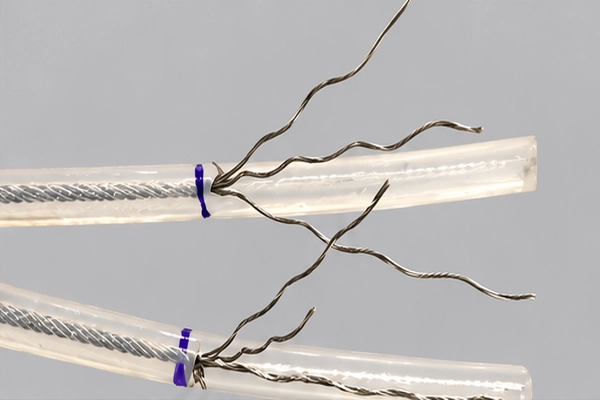
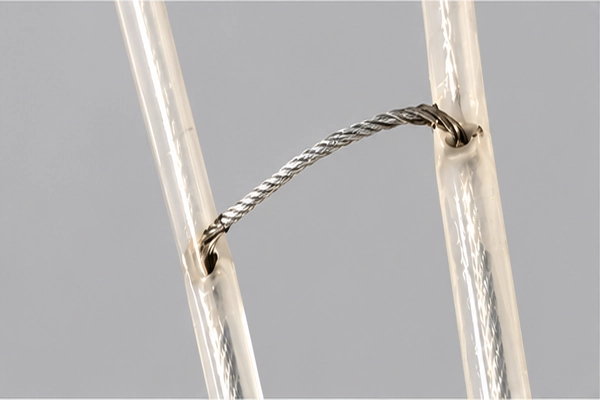
Steel wire reinforced round belts require the internal steel reinforcement to be connected as part of the joining process. The steel wire is first exposed and connected before the polyurethane belt body is joined around the prepared connection.
1. Expose the Steel Wire
Partially cut and remove the polyurethane around each belt end to expose a suitable section of the internal steel wire.
2. Prepare the Wire Ends
Separate and prepare the exposed steel wire ends for connection.
3. Connect the Steel Reinforcement
Connect the steel wire ends so that the internal reinforcement continues through the joint area.
4. Soften the Polyurethane
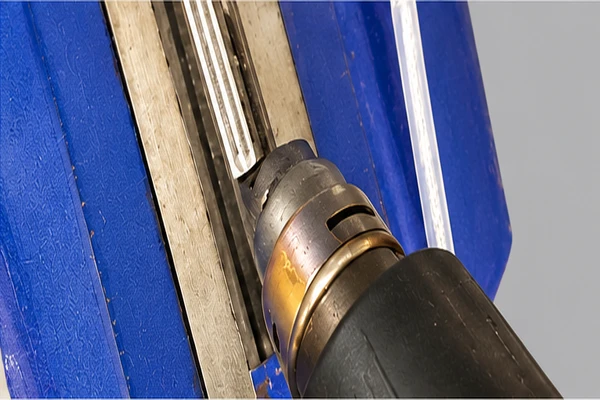
Use suitable heating equipment to soften the polyurethane around the prepared joint.
5. Press and Cool
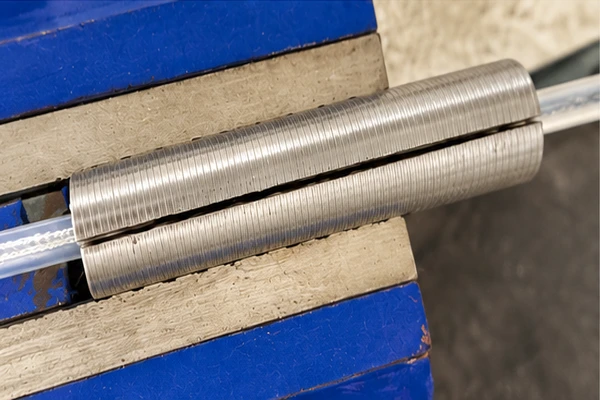
Hold the joint in the correct position under pressure and allow the polyurethane to cool and solidify.
6. Check the Finished Joint
Inspect the completed joint before installing the belt on the machine.
Important: The joining procedure may vary according to belt diameter, reinforcement construction and joining equipment.
Reinforced Round Belt Applications
Reinforced round belts are particularly useful where elongation control, stable working length or additional tensile support is important to the belt system.
Rather than being limited to one specific industry, reinforced construction is selected according to the operating requirements of the machine.
Longer Center-Distance Conveying
As the distance between pulleys increases, belt elongation can have a greater influence on operating tension and working length.
A reinforced construction can be considered where improved longitudinal stability is required over longer belt runs.
Conveying Under Higher Operating Tension
Where a round belt operates under greater tension, the internal reinforcement provides additional longitudinal support and helps limit elongation of the belt body.
Systems Requiring Stable Belt Length
Reinforced round belting can be used where changes in belt length may affect tension, product transfer or consistent machine operation.
How to Select a Reinforced Round Belt
Selecting a reinforced round belt requires more than matching the outside diameter. The reinforcement construction and machine conditions should also be checked.
For a new application or replacement, consider the following information:
- Belt Diameter– Match the required diameter to the existing pulley and belt arrangement.
- Reinforcement Type– Select polyester cord, aramid cord or steel wire according to the required construction.
- Hardness– 85A and 90A options are available.
- Belt Length– Confirm the required circumference or open length.
- Pulley Diameter– Check compatibility with the selected belt size and reinforced construction.
- Center Distance– Consider the distance between pulleys when evaluating belt length and elongation requirements.
- Operating Conditions– Consider belt tension, speed, machine configuration and working environment.
- Existing Belt Construction– For replacement applications, confirm whether the original belt contains an internal cord or wire.
For an existing machine, the original belt specification, a clear cross-section photo or a physical sample can simplify product matching.
Replacement Reinforced Round Belt Matching
When replacing an existing reinforced round belt, confirming the internal construction is important in addition to measuring the belt diameter.
A reinforced and non-reinforced belt may have the same external dimensions while using different internal constructions and exhibiting different elongation characteristics.
For faster replacement matching, provide:
- belt diameter;
- required length or circumference;
- reinforcement type, if known;
- hardness;
- pulley diameter;
- pulley center distance;
- machine and application information;
- original belt markings;
- clear photos of the belt and cross-section;
- an existing belt sample, where available.
If the reinforcement type is unknown, a clear image of a cut belt cross-section can help identify whether the belt uses an internal cord or wire.
FAQ
A reinforced round belt contains an internal longitudinal tension member within the belt body. The reinforcement provides additional tensile support and helps control elongation during operation.
TRANDVOX offers reinforced round belts with polyester cord, aramid cord and steel wire reinforcement options.
The reinforcement carries part of the longitudinal tensile force, helping reduce belt elongation and improve dimensional stability under operating tension.
A reinforced round belt contains an internal cord or wire, while a non-reinforced round belt does not. The reinforcement is used where greater control of belt elongation and working length is required.
A reinforced round belt contains an internal tension member designed primarily to control elongation and provide tensile support. A hollow round belt has an internal opening that allows a compatible connector to be inserted for mechanical joining.
Reinforcement is designed to reduce elongation compared with a similar non-reinforced construction. Actual elongation depends on the belt size, reinforcement type and operating conditions.
The reinforcement should be selected according to the required elongation characteristics, belt size and operating conditions. If replacing an existing belt, provide the original specification, cross-section photo or belt sample where possible.
Standard reinforced round belt diameters range from 4 mm to 20 mm, with 85A and 90A hardness options. Available roll length depends on belt diameter.