
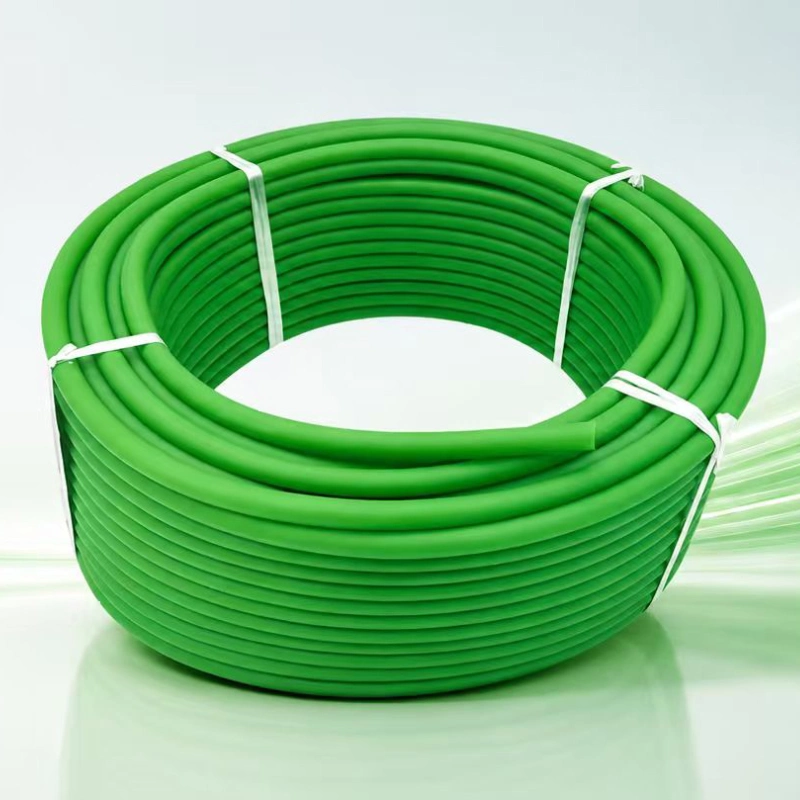
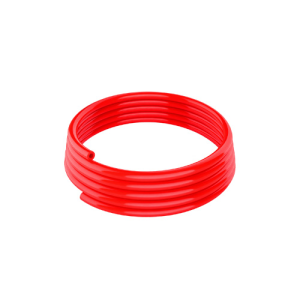
Hollow Round Belt
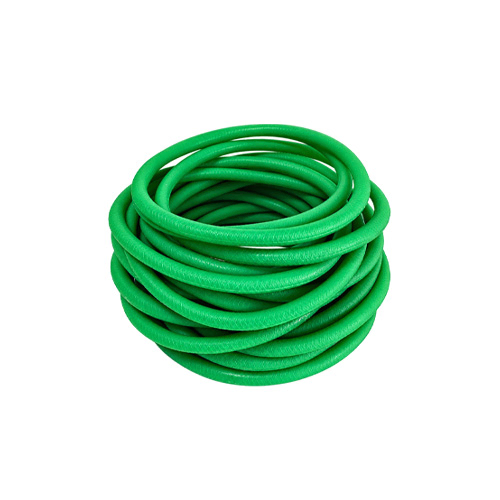
– Thermoplastic hollow round belts designed for light-duty conveying and transfer applications where convenient installation and belt connection are required
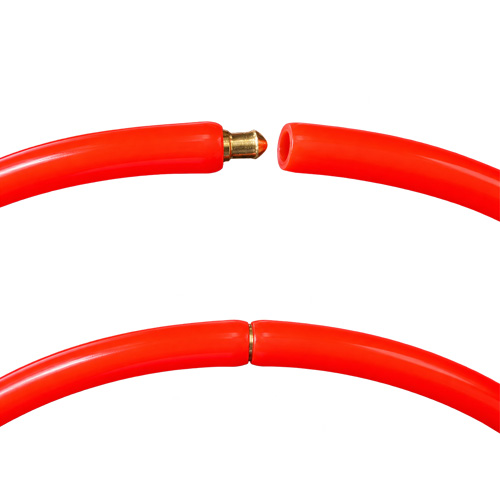
– Hollow construction allows compatible connectors to be inserted into the belt ends for quick on-machine joining, while heat welding is also available for permanent endless connections
– Available in O.D. × I.D. sizes from 5 × 2 mm to 20 × 7.8 mm, with 85A and 90A hardness options for different equipment and replacement requirements
Hollow Round Belt Construction
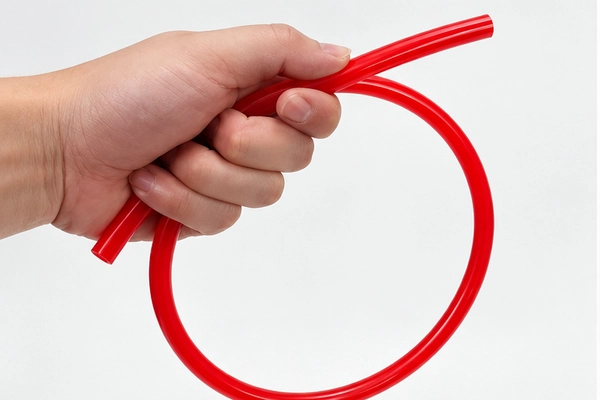
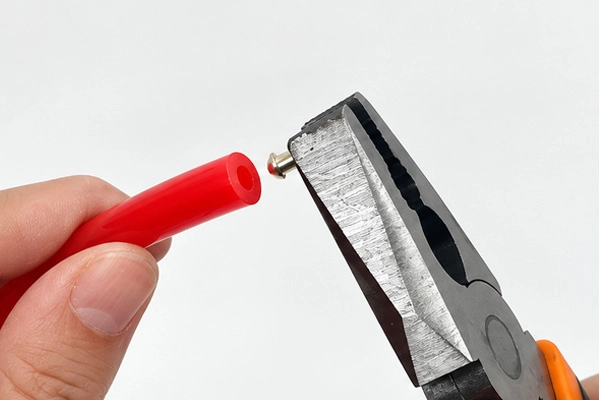
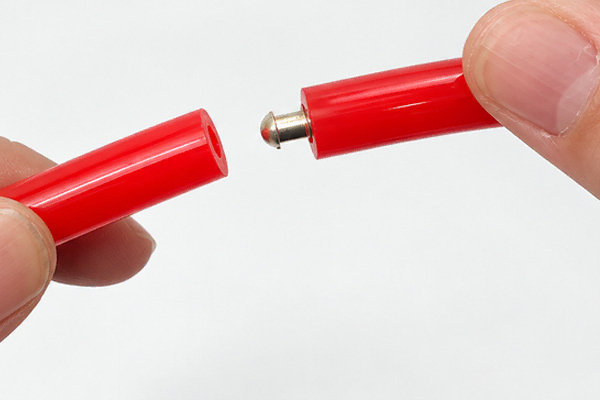
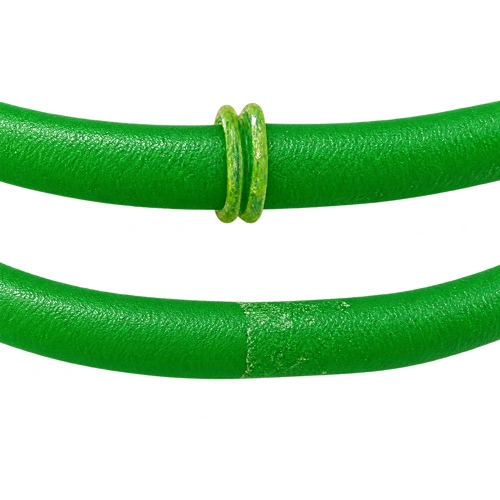
A hollow round belt has a continuous internal opening through the center of the belt. Unlike a solid round belt, this hollow profile allows a compatible metal connector to be inserted into both belt ends for mechanical joining.
The construction makes installation and replacement more convenient where the belt needs to be joined directly on the machine. When a permanent endless connection is required, the belt can also be heat welded.
This combination of hollow construction and flexible joining options makes the belt particularly suitable for applications where installation access and maintenance convenience are important.
Hollow Round Belt Joining Options
One of the main differences between hollow and conventional solid round belting is the ability to use a mechanical connector.
Metal Connector Joining
A hollow round belt connector is inserted into the hollow center of each belt end, allowing the belt to be joined directly on the machine.
This joining method is particularly useful when:
- quick on-site installation is required;
- removing machine components is difficult;
- a belt needs to be replaced quickly;
- welding equipment is not conveniently available.
Connector size should be matched to the inside diameter of the hollow belt. The belt size, load, speed and operating conditions should also be considered before selecting a mechanical connection.
Heat-Welded Joint
Hollow polyurethane round belts can also be heat welded to create a permanent endless loop.
Heat welding may be preferred where the application requires a permanent joint or where operating conditions are not suitable for a mechanical connector.
The appropriate joining method therefore depends on the machine, load and maintenance requirements rather than simply on installation convenience.
Hollow Round Belt Specifications
Hollow round belts are specified by both outside diameter (O.D.) and inside diameter (I.D.). In addition to belt size, hardness, minimum pulley diameter and pull force should be considered when matching the belt to an existing machine or new application.
TRANDVOX offers 85A and 90A hollow round belts in standard O.D. × I.D. sizes from 5 × 2 mm to 20 × 7.8 mm.
| Size (O.D. × I.D.) | Length (m/Roll) | 85A Min. Pulley Ø (mm) | 85A Pull Force at 1% (kg) | 90A Min. Pulley Ø (mm) | 90A Pull Force at 1% (kg) | Weight (kg/m) |
|---|---|---|---|---|---|---|
| 5 × 2 mm | 100 | 35 | 0.29 | 45 | 0.37 | 0.021 |
| 6 × 2 mm | 100 | 45 | 0.49 | 55 | 0.63 | 0.032 |
| 8 × 3.5 mm | 100 | 55 | 0.78 | 65 | 1.01 | 0.052 |
| 9.5 × 3.8 mm | 50 | 65 | 1.10 | 75 | 1.41 | 0.086 |
| 10 × 4 mm | 50 | 75 | 1.49 | 90 | 1.92 | 0.093 |
| 12 × 4.5 mm | 50 | 85 | 1.88 | 100 | 2.42 | 0.135 |
| 15 × 5.2 mm | 30 | 100 | 2.88 | 120 | 3.71 | 0.210 |
| 18 × 7.8 mm | 30 | — | — | 180 | 8.95 | 0.259 |
| 20 × 7.8 mm | 30 | — | — | 200 | 11.34 | 0.342 |
Note: Minimum pulley diameter and pull force should be confirmed according to the specific belt grade and operating conditions. For replacement applications, provide the existing belt size and machine information for matching.
Understanding O.D. × I.D.
Hollow round belt dimensions are normally specified using two measurements:
O.D. – Outside Diameter
The overall diameter of the round belt.
I.D. – Inside Diameter
The diameter of the hollow center.
For example, a 10 × 4 mm hollow round belt has a 10 mm outside diameter and a 4 mm inside diameter.
Both dimensions should be confirmed when selecting hollow round belting. The outside diameter affects pulley matching, while the inside diameter is particularly important for selecting a compatible connector.
Get Free Quote of Hollow Round Belt
Need a hollow round belt for a new machine or replacement application?
TRANDVOX can help match the belt according to your existing dimensions, pulley arrangement, joining method and operating requirements.
Send us the O.D. × I.D., hardness if known, required length, connector or joining method, and application information. If the original specification is unknown, photos or an existing belt sample can also help with identification.
Hollow Round Belt Applications
Hollow round belts are particularly useful where belts need to be joined or replaced directly on the machine. The following applications may benefit from hollow construction when installation access and maintenance convenience are important.
Roller Conveyor Systems
Hollow round belts can be used in selected light-duty roller conveyor systems where belts are installed around multiple rollers and convenient on-machine joining simplifies replacement.
Packaging & Transfer Equipment
In packaging and product-transfer equipment, hollow belting can be considered where machine access makes conventional belt welding or component removal inconvenient.
Sorting & Handling Equipment
Selected sorting and handling systems can use hollow round belts where individual belts need to be installed or replaced without extensive machine disassembly.
Maintenance-Sensitive Equipment
Hollow construction is also useful in equipment where minimizing belt replacement time is an important maintenance consideration.
Hollow Round Belt Installation
Measure and Cut the Belt
Determine the required belt length and cut both ends cleanly and squarely.
Select the Correct Connector
Choose a mechanical connector that matches the hollow round belt diameter and internal construction.
Insert the Connector
Carefully press one end of the connector into the hollow center of the first belt end using suitable installation tools.
Connect the Second Belt End
Align the opposite belt end and press it onto the exposed side of the connector until both ends are securely joined.
Inspect the Connection
Check that both belt ends are properly aligned and securely connected. Confirm that the joint can run smoothly through the required pulley and roller arrangement before operation.
The belt diameter, connector size, pulley dimensions, operating speed and load should be considered when selecting a mechanical joining solution.
Hollow Round Belt vs Solid Round Belt
The main difference between hollow and solid round belts is the cross-section and available joining method.
| Feature | Hollow Round Belt | Solid Round Belt |
|---|---|---|
| Cross Section | Hollow center | Solid cross-section |
| Size Definition | O.D. × I.D. | O.D. |
| Mechanical Connector | Available | Generally not used |
| Heat Welding | Available | Available |
| On-Site Joining | Convenient with compatible connector | Normally requires welding |
| Typical Selection Consideration | Connector joining and convenient replacement | Conventional solid construction |
For applications using a solid construction, PU round belts are also available in a range of diameters and hardness options.
How to Select a Hollow Round Belt
The correct belt should be selected according to the existing machine rather than by outside diameter alone.
For a new application or replacement, consider the following information:
- Outside Diameter (O.D.)– Match the belt size to the pulley and existing system.
- Inside Diameter (I.D.)– Confirm the hollow size required for the compatible connector.
- Hardness– Available in 85A and 90A options.
- Minimum Pulley Diameter– Check the recommended value for the selected size and hardness.
- Pull Force at 1% Elongation– Refer to the specification table for the selected belt size and hardness.
- Joining Method– Choose between connector joining and heat welding.
- Belt Length– Confirm the required circumference or open length.
- Operating Conditions– Consider the actual machine and working environment.
For an existing machine, providing a sample or the original belt specifications can simplify product matching.
Replacement Hollow Round Belt Matching
When replacing an existing hollow round belt, the most reliable approach is to identify the original belt dimensions and operating conditions before selecting a replacement.
For faster matching, provide:
- D. × I.D.;
- required belt length;
- existing belt color or hardness, if known;
- pulley diameter;
- connector dimensions or joining method;
- machine/application information;
- photos or an existing belt sample where available.
For example, identifying a belt simply as “10 mm round belt” is not sufficient when replacing hollow belting. A 10 × 4 mm hollow round belt and a 10 mm solid PU round belt have different constructions and joining requirements.
FAQ
A polyurethane hollow round belt is manufactured with an internal opening through the center, allowing compatible connectors to be inserted into the belt ends for mechanical joining.
A hollow round belt has an internal opening, while a solid round belt has a completely solid cross-section. The hollow construction allows mechanical connector joining in addition to heat welding.
A compatible connector can be inserted into both hollow belt ends to create a mechanical connection. The connector should be selected according to the belt’s inside diameter and application requirements.
Yes. Polyurethane hollow round belting can also be heat welded when a permanent endless joint is preferred.
It indicates a 10 mm outside diameter (O.D.) and 4 mm inside diameter (I.D.).
Check the existing O.D., I.D., hardness, belt length, pulley diameter and joining method. For replacement applications, machine information or an existing belt sample can help confirm the appropriate specification.
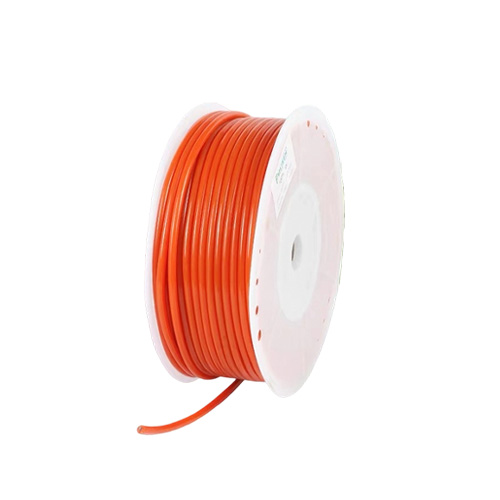
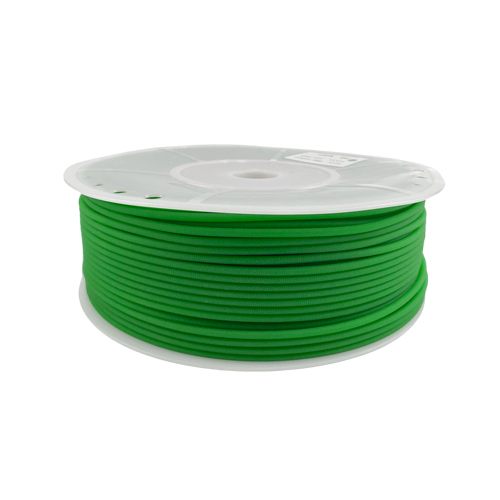
Yes. Hollow round belting can be supplied in roll lengths or prepared according to the required belt length and joining configuration.