
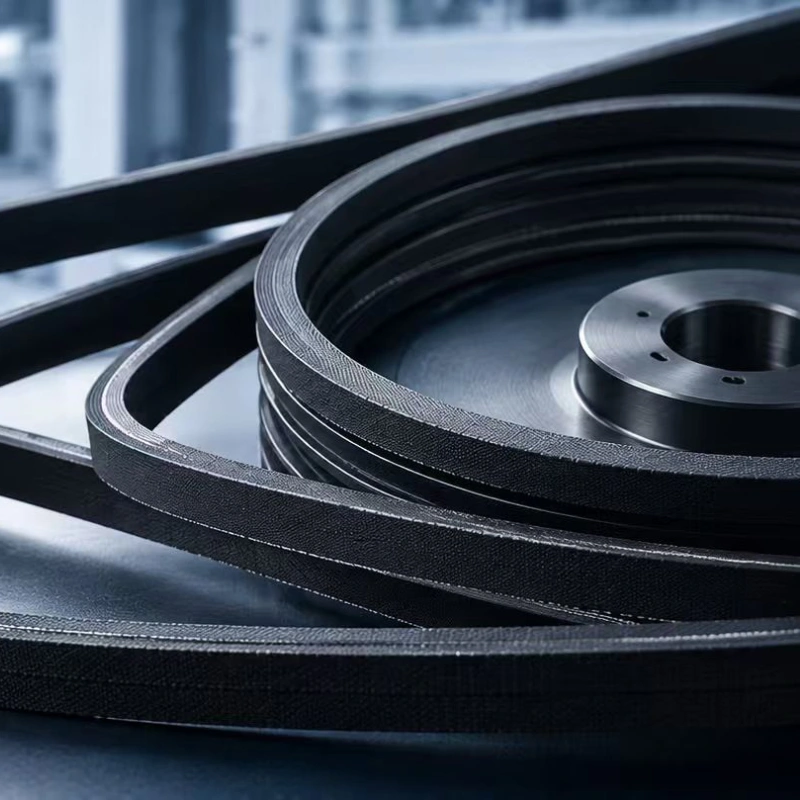
PowerTwist, Accu-Link, and SuperTLink are commonly searched by buyers comparing branded link-belt alternatives for existing V-belt drives. Although these names appear in similar replacement searches, they should not automatically be treated as identical products.
The main differences are not only brand names. Depending on the specific product series, these belts may be intended for different V-belt sections, pulley profiles, drive requirements, and operating conditions.
For maintenance teams and replacement buyers, the practical question is not simply “Which brand is better?” but “Which belt type matches my existing drive?”
This guide compares PowerTwist, Accu-Link, and SuperTLink from a replacement and sourcing perspective, including belt profile, pulley compatibility, length adjustment, and the information needed before selecting an alternative.
1. PowerTwist vs Accu-Link vs SuperTLink at a Glance
The three names are associated with link-style V-belt solutions, but buyers should identify the exact belt series and section before comparing them.
| Comparison | PowerTwist | Accu-Link | SuperTLink |
|---|---|---|---|
| General Product Type | Link-style V belt | Adjustable link V belt | Link-style V belt |
| Adjustable Length | Yes, depending on product construction | Yes | Yes |
| Installation | Can be assembled to required length | Can be adjusted by adding or removing links | Can be assembled to required length |
| Existing Pulley Use | Depends on belt section and pulley condition | Depends on belt section and pulley condition | Depends on belt section and pulley profile |
| Typical Buyer Need | Brand replacement and maintenance sourcing | Adjustable replacement and flexible maintenance use | Replacement for specific industrial V-belt profiles |
| Selection Priority | Belt section and drive requirements | Belt section, length, and pulley fit | Exact belt profile and pulley compatibility |
This table should only be used as a general comparison. Exact compatibility depends on the specific product series and drive configuration.
2. What Is PowerTwist?
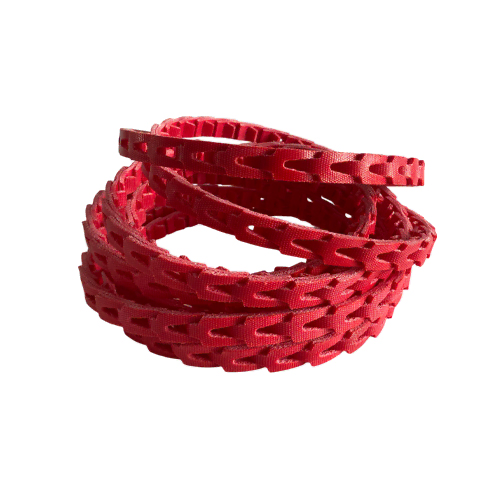
PowerTwist is commonly recognized in industrial maintenance as a link-style V-belt solution that can be assembled to the required length instead of relying on a fixed-length endless belt.
This construction can be useful where conventional endless V belts are difficult to install, or where maintenance teams need a flexible replacement option for existing V-belt drives.
For replacement sourcing, buyers usually need to identify the corresponding belt section, such as classical or fractional-horsepower V-belt profiles, depending on the PowerTwist product being replaced.
The important point is that PowerTwist is not itself a universal belt section. Buyers should use the marking on the existing belt and the pulley configuration to identify the actual replacement requirement.
3. What Is Accu-Link?
Accu-Link is another adjustable link V-belt solution commonly associated with maintenance and replacement applications.
Individual links allow the belt length to be changed during installation, which can be useful when the exact endless belt length is unavailable or when maintenance teams need a flexible replacement option in stock.
When comparing Accu-Link with PowerTwist, buyers may find similarities in the basic maintenance concept. Both may be considered for adjustable-length replacement in suitable V-belt drives.
However, this does not mean every Accu-Link and PowerTwist product can be exchanged directly.
The correct belt section, pulley groove, belt dimensions, load, speed, and operating conditions still need to be confirmed.
4. What Is SuperTLink?
SuperTLink is also encountered in searches for link V belts, especially when buyers are looking for replacement options for specific industrial V-belt drive profiles.
This is where buyers need to pay particular attention to terminology.
A general search for “link belt” may return products intended for different pulley geometries and V-belt sections. A link belt designed for one classical V-belt profile should not automatically be treated as equivalent to a product intended for a wedge or narrow V-belt profile.
When evaluating a SuperTLink replacement, buyers should identify the exact product designation and corresponding pulley section before selecting an alternative.
This makes belt profile identification particularly important when comparing SuperTLink with other link V-belt products.
5. PowerTwist vs Accu-Link: What Is the Main Difference?
For many replacement buyers, PowerTwist and Accu-Link appear similar because both are associated with adjustable link V belts used in maintenance applications.
From a sourcing perspective, the useful comparison is not simply brand versus brand.
Instead, compare:
- Belt section
- Top width and belt dimensions
- Pulley groove
- Required belt length
- Minimum pulley diameter
- Drive speed
- Power or load requirements
- Operating temperature
- Exposure to oil, dust, moisture, or chemicals
- Single-belt or multi-belt drive configuration
If two products belong to compatible sections and meet the same drive requirements, an alternative may be possible. However, the brand name alone does not establish interchangeability.
6. PowerTwist vs SuperTLink: Why Belt Profile Matters
This comparison requires more attention to the actual belt profile.
Buyers sometimes search for a general PowerTwist or SuperTLink alternative and assume that all link V belts operate in the same pulley grooves.
That assumption can lead to incorrect selection.
V-belt drives may use different profile families, including classical, fractional-horsepower, narrow, and wedge sections. The corresponding link belt needs to match the pulley geometry and drive requirements.
For example, belt designations such as:
- A / 4L
- B / 5L
- C
- 3V
- 5V
- SPZ
- SPA
- SPB
- SPC
should not be grouped together simply because link-style replacement belts are available for some of these applications.
Before changing from one link belt product to another, confirm the exact belt section and pulley groove.
7. Can PowerTwist, Accu-Link, and SuperTLink Be Interchanged?
Not automatically.
This is one of the most important points for replacement buyers.
Two belts may look similar and both may use a link construction, but that does not guarantee they are suitable for the same pulley or drive.
Interchangeability should be evaluated according to the actual specification.
Before considering one link belt as a replacement for another, confirm:
- Belt SectionThe replacement should correspond to the required V-belt profile.
- Pulley Groove CompatibilityCheck whether the replacement is designed to operate correctly in the existing pulley.
- Belt DimensionsTop width, height, and profile geometry should be checked.
- Required LengthConfirm the installed belt length and available tension adjustment.
- Pulley DiameterCheck the minimum recommended pulley diameter for the selected belt.
- Drive Load and SpeedA belt suitable for a light-duty machine should not automatically be assumed suitable for a more demanding industrial drive.
- Operating EnvironmentTemperature, oil, dust, moisture, chemicals, and operating hours can influence belt selection.
The correct replacement is determined by drive compatibility, not by visual similarity.
8. Adjustable Link V Belt vs Traditional Endless V Belt
PowerTwist, Accu-Link, and SuperTLink searches sometimes include another practical question: whether a link-style belt can be considered instead of a traditional endless V belt during replacement.
In suitable applications, a link-style belt may help with installation access and length adjustment. A traditional endless V belt may still be preferred where the machine design, load, speed, or operating requirements call for a fixed manufactured belt.
| Factor | Link-Style V Belt | Traditional Endless V Belt |
|---|---|---|
| Length | Adjustable during assembly | Fixed manufactured length |
| Installation | May help on difficult-access drives | May require more access to the belt path |
| Maintenance Use | Useful for replacement evaluation | Common for planned replacement |
| Selection Basis | Section, pulley fit, and drive conditions | Section, fixed length, and drive conditions |
This comparison is included only to support brand alternative evaluation. It is not a complete product selection guide.
9. How to Evaluate a Brand Alternative
For PowerTwist, Accu-Link, or SuperTLink replacement evaluation, buyers should start from the existing drive specification rather than the brand name alone.
1. If You Already Have an Existing Link-Style Belt
Check the marking printed or molded on the belt and identify:
- Brand
- Product series
- Belt section
- Approximate installed length
If the marking is unclear, keep the old belt as a sample and photograph the belt and pulley.
2. If You Are Replacing a Traditional V Belt
Provide the original V-belt designation, such as A, B, C, SPZ, SPA, SPB, 3V, or 5V.
This gives a better starting point than simply requesting a “link belt alternative.”
3. If You Need an Alternative to an Existing Brand
Do not request only a “PowerTwist alternative,” “Accu-Link alternative,” or “SuperTLink alternative.”
Provide the exact product marking whenever possible. This allows the supplier to evaluate the technical replacement requirement rather than relying only on brand equivalence.
10. Information to Provide for Brand Alternative Evaluation
Whether replacing PowerTwist, Accu-Link, SuperTLink, or another existing V-belt product, complete drive information can reduce selection errors.
Prepare:
- Existing belt brand
- Product code or belt marking
- V-belt section
- Top width and thickness if available
- Required belt length
- Pulley diameter
- Pulley groove or profile
- Number of belts on the drive
- Machine type
- Drive speed
- Load or motor information
- Operating temperature
- Exposure to oil, water, dust, or chemicals
- Required quantity
- Photos of the old belt and pulley
For replacement projects where the original marking is unavailable, a belt sample, pulley dimensions, and machine information can provide additional reference.
11. FAQ
Are PowerTwist and Accu-Link the same?
No. PowerTwist and Accu-Link are different branded link-belt products. Although they may serve similar adjustable V-belt replacement and maintenance applications, compatibility should be determined from the specific belt section and drive requirements.
Can I use an Accu-Link alternative to replace PowerTwist?
Potentially, but only when the replacement belt has the appropriate profile and meets the requirements of the existing pulley and drive. Compare the exact specifications rather than replacing according to brand name alone.
Is SuperTLink the same as PowerTwist?
They should not automatically be treated as the same product. The exact product series, V-belt section, pulley profile, and drive requirements should be checked before considering replacement.
Why do PowerTwist, Accu-Link, and SuperTLink searches overlap?
They overlap because all three names are connected with link-style V-belt replacement. However, search overlap does not mean product equivalence. The belt profile and drive requirements still decide whether a replacement is suitable.
What is the biggest mistake when choosing a brand alternative?
The biggest mistake is assuming that a similar appearance or similar product name means direct interchangeability. Buyers should confirm belt section, pulley groove, dimensions, load, speed, and working environment.
What information is needed to find a PowerTwist, Accu-Link, or SuperTLink alternative?
The most useful information includes the original product marking, belt section, installed length, pulley dimensions, machine type, load, speed, and working environment. Photos or an existing belt sample can also help with replacement identification.
12. Conclusion
PowerTwist, Accu-Link, and SuperTLink all appear in link V-belt replacement searches, but buyers should not select a replacement based on brand name or visual similarity alone.
The key differences come from the specific belt series, V-belt section, pulley compatibility, drive requirements, and operating conditions.
For buyers replacing an existing link-style belt, the most reliable starting point is the original belt marking and pulley profile. For buyers converting from a traditional endless V belt, the original V-belt section and machine conditions should be confirmed first.
TRANDVOX supports overseas buyers with brand alternative evaluation for industrial V-belt replacement projects. Based on the existing belt marking, belt section, pulley information, machine conditions, photos, or samples, we can help review suitable options without relying only on brand-to-brand comparison.