Application: Inclined or guided conveying where surface grip and wedge positioning both matter
Component Type: Supergrip PVC belt with thermal joint, underside K6 wedges and drawing-based K10 wedge carriers
The Core Issue: The customer needed a rough-top PVC belt where the wedges had to follow both edge clearance and cross-width spacing, not only a general belt size.
1. The Customer Requirement
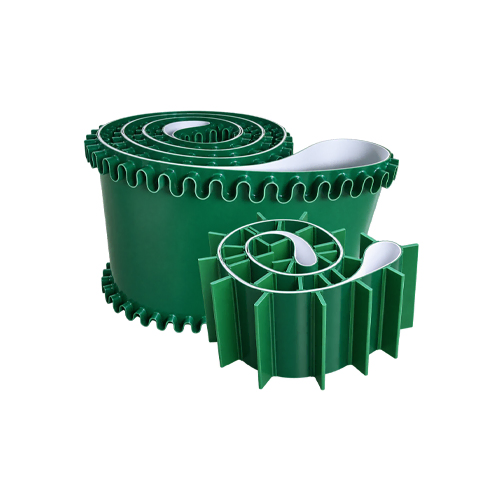
The customer requested a Supergrip PVC belt for a conveying system where surface traction and guided movement had to work together. The belt size was 6950 x 520 mm, with a thermally welded joint. In addition to the belt body, the customer specified K6 wedges on the underside near the edge on both sides, plus K10 wedge carriers positioned according to a simple drawing.
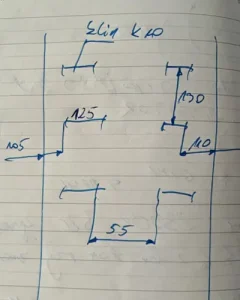
The drawing did not only define the presence of wedges. It also showed how the K10 carriers had to be placed: 125 mm carrier length, 130 mm spacing along the belt length, 55 mm spacing across the belt width, and end offsets of 105 mm from one side and 110 mm from the other side. These dimensions made the project a positioning and fabrication case, not a standard rough-top belt order.
2. Supplied Technical Information
| Item | Customer Requirement |
|---|---|
| Belt surface | Supergrip PVC rough-top surface |
| Finished size | 6950 x 520 mm |
| Joint method | Thermally welded endless belt |
| Underside guides | K6 wedges near both edges |
| Carrier profile | K10 wedge carriers as per drawing |
| Carrier length | 125 mm |
| Carrier spacing | 130 mm along length and 55 mm across width |
| End offset | 105 mm from one end side and 110 mm from the other side |
3. Drawing Review and Fabrication Logic
The main conveyor belt fabrication challenge was the wedge layout. A 6950 x 520 mm belt can be described by size alone, but this case required the underside guides and the top-side or surface-side carriers to be coordinated with the customer drawing. If the wedge positions shifted, the belt could still look correct but fail to match the conveyor frame or product handling points.
TRANDVOX reviewed the K10 carrier positions from three directions: the 125 mm carrier length, the 130 mm distance along the belt travel direction, and the 55 mm cross-width distance. The 105 mm and 110 mm end offsets were also kept as separate values because the drawing showed that the two ends were not symmetrical.
4. Surface and Wedge Structure Confirmation
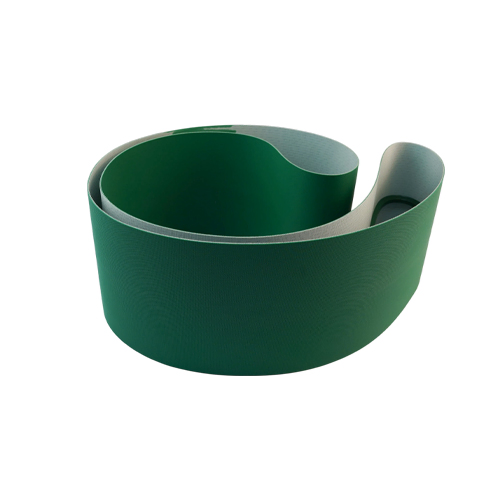
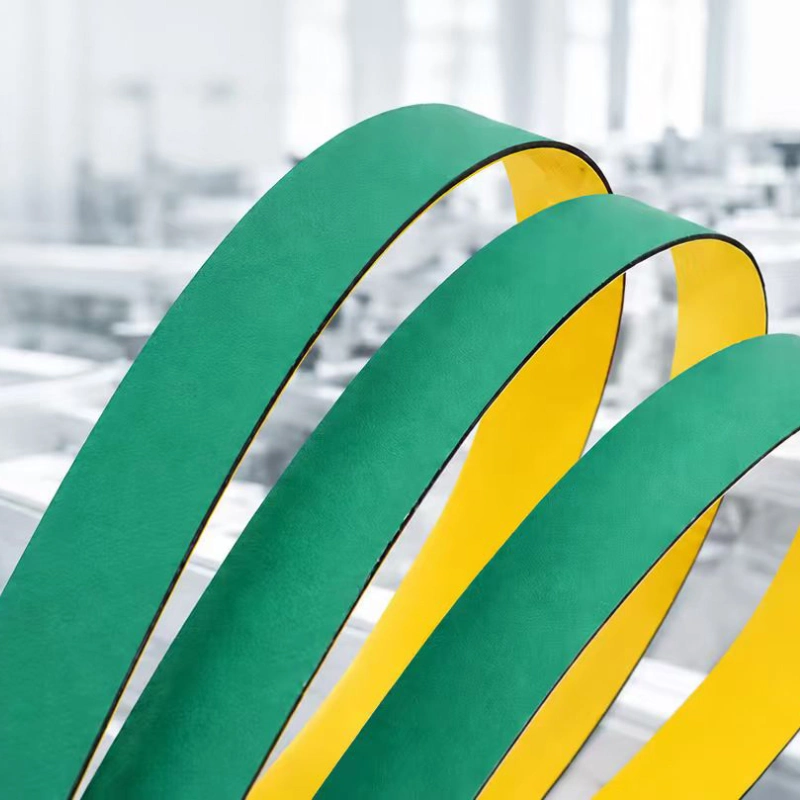
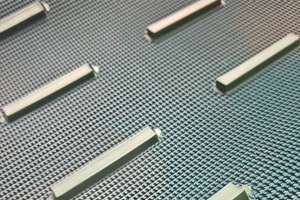
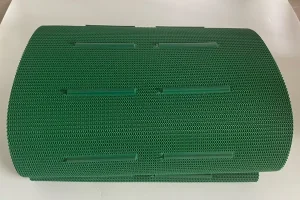
The Supergrip surface was relevant because the belt needed additional traction during conveying. At the same time, the welded wedges had to sit cleanly on the belt without interfering with the rough texture or the thermal joint area. For this reason, the surface photo was used as a practical reference during fabrication review, not as a general product display.
5. Production Focus
During production, the key task was to keep the welded profiles aligned with the drawing while maintaining a clean endless joint. The underside K6 wedges near both edges had to support tracking requirements, while the K10 carriers had to follow the specified spacing for the customer’s conveying layout.
The review focused on these points before delivery:
- 6950 x 520 mm finished belt size
- thermal joint appearance and belt direction
- K6 underside wedge position near both belt edges
- K10 carrier length of 125 mm
- 130 mm lengthwise spacing and 55 mm cross-width spacing
- 105 mm and 110 mm end offsets as shown in the drawing
- visual consistency of welded wedges on the Supergrip PVC surface
6. Result and Buyer Value
The finished belt converted the customer’s simple sketch into a defined fabrication layout: Supergrip PVC surface, 6950 x 520 mm endless size, thermal welding, K6 underside wedges near both edges and K10 wedge carriers positioned by length, width and end offset dimensions.
For overseas buyers, this case shows why a customized PVC conveyor belt with wedges should not be specified only by material and size. Wedge profile, edge clearance, travel-direction spacing, cross-width spacing and end references should be confirmed together before production. This reduces the risk of receiving a belt that fits in size but does not match the conveyor layout.
7. Video
8. Inquiry Notes for Similar Belts
For a similar Supergrip PVC belt or grass-pattern belt with wedges, buyers should provide the belt length, width, joint method, surface pattern, wedge type, wedge position, edge distance, end offset and operating conditions. A simple drawing with marked dimensions can be enough when the key reference points are clear.