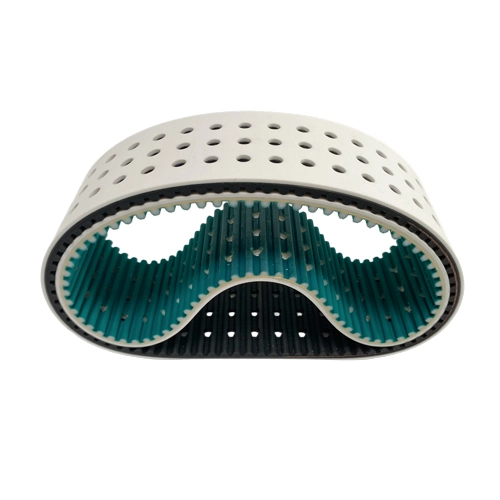
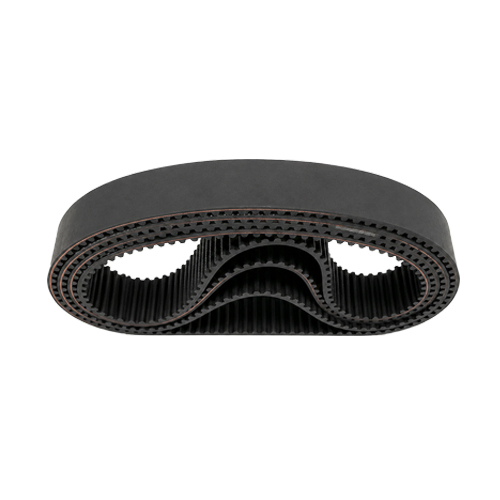
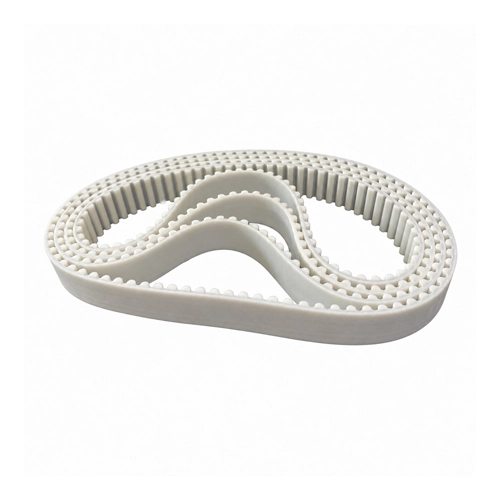
Your Reliable Partner for Industrial Belt Solutions
Double Sided Timing Belt

Double Sided Timing Belt

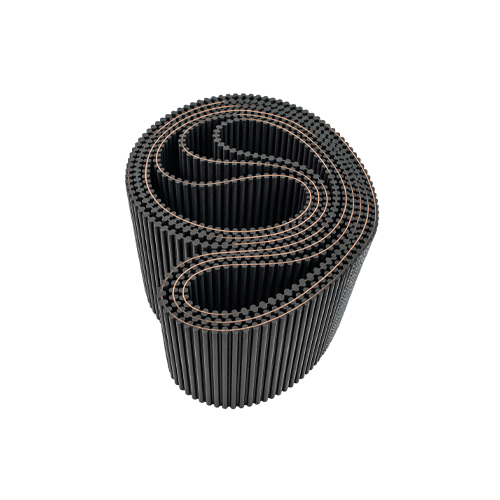
– Double sided timing belts with teeth on both surfaces for multi-shaft transmission, counter-rotating drives, serpentine routing and compact mechanical systems

– Available in DA symmetrical and DB staggered tooth arrangements to match different pulley layouts and two-sided engagement requirements

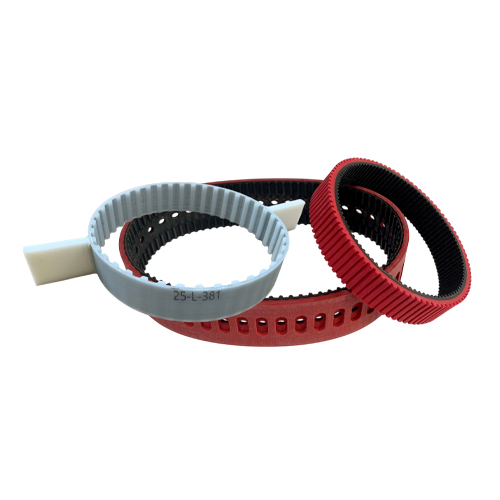
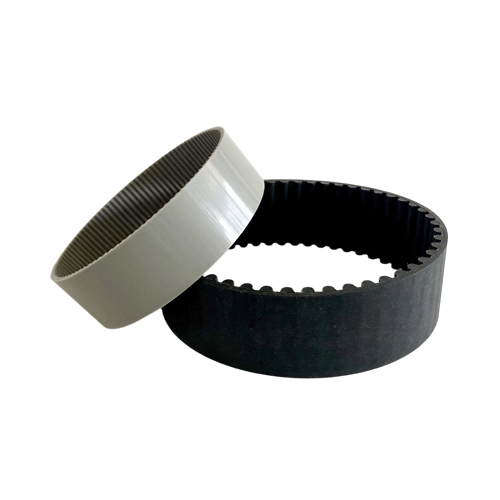
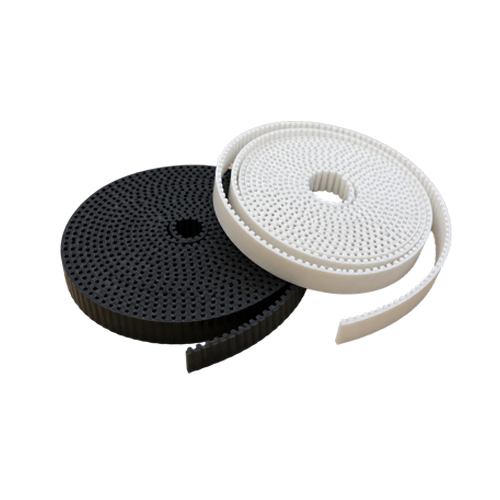
– PU and rubber constructions with multiple tooth profiles, reinforcement options and dimensions are available according to transmission load, routing and machine design

Double Sided Timing Belt Structure

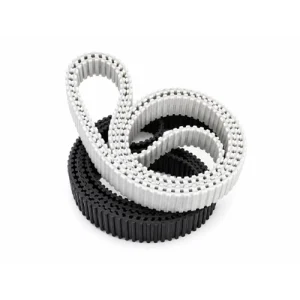
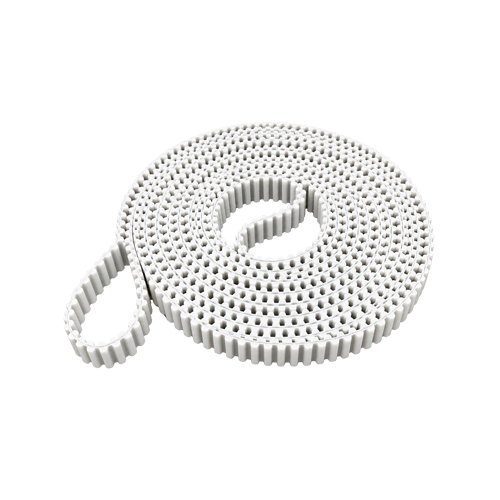
A double sided timing belt is a synchronous belt with toothed profiles on both surfaces, allowing both sides of the belt to engage with timing pulleys. This construction is used in transmission systems where multiple pulleys or shafts need to be driven within one belt circuit.

Depending on the belt construction, tensile reinforcement such as steel cord, fiberglass cord, Kevlar cord, or stainless steel cord helps maintain dimensional stability and controlled elongation during operation.The toothed surfaces are designed to maintain consistent engagement with corresponding timing pulleys on both sides of the belt.

Double sided timing belts are available in DA and DB tooth arrangements to suit different pulley layouts and transmission configurations. The appropriate arrangement should be selected according to the machine design, belt routing, and pulley engagement requirements.

DA vs DB Double Sided Timing Belts

The main difference between DA and DB double sided timing belts is the tooth arrangement on the two belt surfaces. DA belts have aligned teeth on both sides, while DB belts have staggered teeth with one side offset from the other. The correct configuration depends primarily on the pulley layout and required tooth engagement.

DA or DB should be selected according to the pulley arrangement, tooth engagement position, belt routing, pulley diameter, shaft rotation direction, and machine design. Belt dimensions alone cannot determine the correct arrangement; the tooth configuration must correspond to the actual pulley layout.

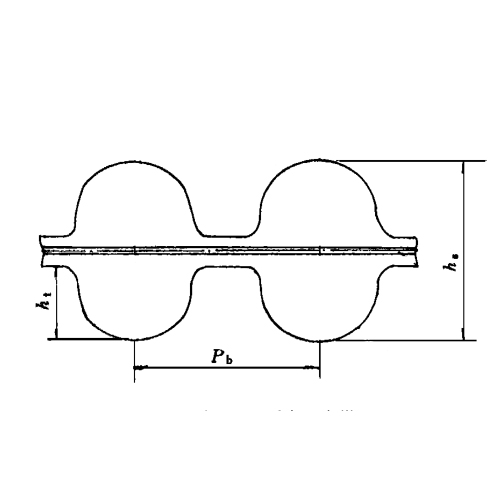
DA Double Sided Timing Belt Structure Diagram
DA – Symmetrical Double Sided Timing Belt

DA double sided timing belts have teeth positioned directly opposite each other on both belt surfaces, creating a symmetrical tooth arrangement. This configuration is suitable for drive layouts where aligned tooth engagement is required on both sides of the belt.

Send Inquiry Now
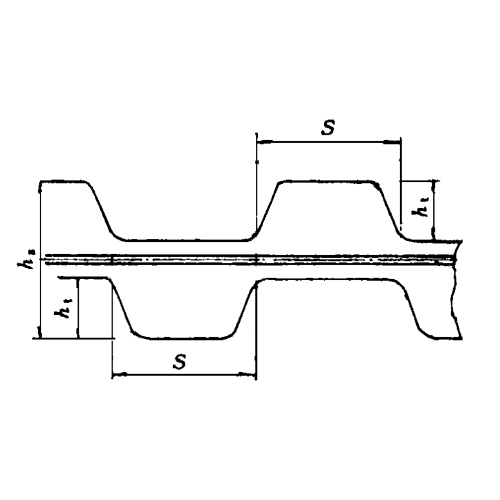
DB Double Sided Timing Belt Structure Diagram
DB – Staggered Double Sided Timing Belt

DB double sided timing belts have a staggered tooth arrangement, with the teeth on one surface offset relative to those on the opposite surface. This configuration is suitable for drive layouts where staggered tooth engagement is required by the pulley arrangement and belt routing.

Send Inquiry Now

Double Sided Timing Belt Materials

Double sided timing belts can be supplied in different belt constructions depending on the required transmission performance and machine conditions.

Double Sided Timing Belt Specifications

Specification Available Options
Belt Type Double Sided Timing Belt
Tooth Arrangement DA / DB
Belt Material PU / Rubber, according to construction
Reinforcement Steel / Fiberglass / Kevlar / Stainless Steel, according to construction
Tooth Profiles T / AT / HTD / STD / Other compatible profiles
Belt Width Customized according to requirements
Belt Length Standard or customized
Tooth Configuration Double-sided toothed

Get a Quote for Double Sided Timing Belt

As a double sided timing belt supplier, TRANDVOX supports custom double sided timing belts for multi-shaft, multi-pulley, counter-rotating, and other specialized transmission systems.

Send us your DA/DB configuration, tooth profile, pitch, belt width and length, pulley specifications, operating conditions, drawing, or existing belt sample. We can help confirm the appropriate belt construction and specifications for your application.

Double Sided Timing Belt Applications

Double sided timing belts are used in machinery where pulleys or shafts need to engage with both toothed surfaces of a single belt. They are particularly suitable for multi-shaft drives, counter-rotating arrangements, compact transmission layouts, and systems with complex belt routing.

Automation & Robotics

Double sided timing belts can be used in automated equipment where multiple shafts, rollers, or driven components are connected within one belt circuit. Engagement on both belt surfaces supports compact multi-pulley layouts and coordinated movement between different driven components.

Packaging Machinery

In packaging machinery, double sided timing belts are suitable for drive systems where multiple rollers or shafts need to be connected through both sides of the belt. This arrangement can simplify multi-pulley transmission and support compact machine layouts where installation space is limited.

Printing Machinery

Printing and paper-processing equipment may use double sided timing belts to connect multiple rollers and shafts within a compact drive arrangement. Both toothed surfaces can engage with separate pulleys, making the belt suitable for multi-roller systems and complex transmission paths.

Textile Machinery

Double sided timing belts can be used in textile equipment with multiple shafts, rollers, or pulleys arranged along a shared transmission path. DA or DB tooth arrangements can be selected according to pulley positioning and the required engagement between the two belt surfaces.

Conveyor & Material Handling

In selected conveyor and material-handling systems, double sided timing belts can connect multiple drive or synchronization points within one belt circuit. Two-sided pulley engagement is useful where the belt follows a multi-pulley or serpentine route through a compact conveying system.

Double Sided Timing Belt Selection Guide

Selecting a double sided timing belt requires confirming how both toothed surfaces interact with the pulleys and shafts within the transmission system. Belt routing, tooth arrangement, and pulley engagement should therefore be checked before confirming the final belt specifications.

1.Confirm the DA or DB Tooth Arrangement

Determine whether the drive requires a DA or DB configuration. The correct arrangement depends on the pulley layout and the required engagement between the two toothed surfaces.

2. Check Pulley Engagement on Both Belt Surfaces

Identify which pulleys engage with each side of the belt and confirm the contact position along the belt path. Both toothed surfaces must correspond correctly with the pulley arrangement throughout the drive system.

3. Confirm Belt Routing and Shaft Rotation

Review the complete belt path, including the number and position of pulleys and the required rotation direction of each shaft. This is particularly important for counter-rotating, serpentine, and other multi-pulley drive layouts.

4. Check Pulley Diameter and Center Distance

Confirm pulley diameters, center distances, and available installation space. These dimensions affect the required belt path, pitch length, and bending conditions within the transmission system.

5. Confirm Tooth Profile and Belt Dimensions

The tooth profile and pitch must match the corresponding timing pulleys. Belt length and width should then be confirmed according to the pulley system, transmitted load, installation dimensions, and required belt specification.

6. Confirm Belt Construction and Operating Conditions

Select the appropriate PU or rubber construction and compatible reinforcement according to the required belt specification and operating conditions, including load, speed, temperature, and working environment.

For complex multi-pulley systems, providing a machine drawing, belt routing diagram, pulley specifications, or an existing belt sample can help confirm the appropriate double sided timing belt configuration.

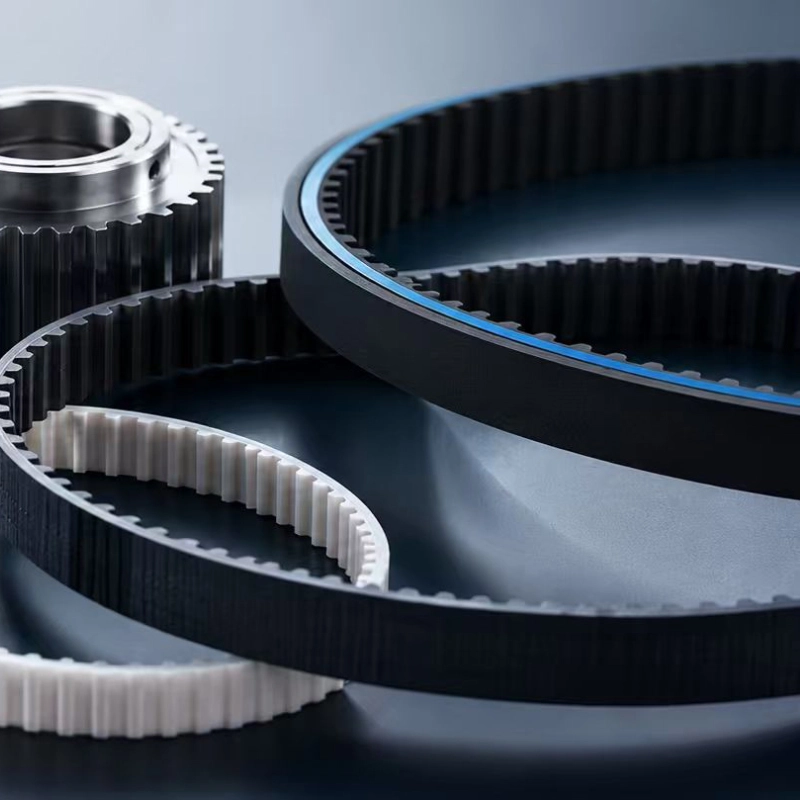
Double Sided Timing Belt vs. Single Sided Timing Belt

The primary difference is the number of toothed surfaces.

A conventional timing belt has teeth on one side and normally engages with one toothed pulley surface. A double sided timing belt has teeth on both sides, allowing both surfaces to engage with toothed pulleys.

Feature Single Sided Timing Belt Double Sided Timing Belt
Toothed Surfaces One Two
Typical Drive Standard synchronous transmission Multi-pulley / complex transmission
Pulley Engagement One toothed surface Both toothed surfaces
Drive Layout Conventional Serpentine / compact / multi-shaft
Counter-Rotating Systems Application dependent More suitable for selected layouts
Routing Capability Conventional routing Suitable for more complex multi-pulley routing
Typical Selection Reason Standard transmission Multiple synchronized drive points

FAQ

1. What is a double sided timing belt?

A double-sided timing belt is a synchronous belt with teeth on both surfaces. Both toothed surfaces can engage with timing pulleys, making the belt suitable for multi-pulley, multi-shaft, and complex transmission layouts.

2. What is the difference between a single-sided and double-sided timing belt?

A single-sided timing belt has teeth on one surface, while a double sided timing belt has teeth on both surfaces.

Double sided belts are used when both belt surfaces need to engage with pulleys within the drive system.

3. What is the difference between DA and DB double sided timing belts?

DA uses a symmetrical tooth arrangement, while DB uses a staggered arrangement.

The correct selection depends on the pulley layout, tooth engagement, belt routing, and machine design.

4. Can double sided synchronous belts be used for multi-shaft transmission?

Yes. Their two toothed surfaces allow a single belt to engage with multiple pulleys in suitable drive layouts, making them useful for synchronized multi-shaft transmission.

5. Can double sided toothed belts drive counter-rotating shafts?

They can be used in suitable drive layouts involving counter-rotating shafts. The actual rotation direction depends on the belt routing and pulley engagement arrangement.

6. Are double sided timing belts available in PU and rubber?

Yes. Depending on the specification, double sided timing belts can be supplied in PU and rubber constructions.

7. What tooth profiles are available for double sided timing belts?

Available profiles depend on the belt construction and supplier specification. Common options include T, AT, HTD, STD, and other compatible timing belt profiles.

8. Can double sided timing belts be customized?

Yes. Customization may include belt dimensions, reinforcement, tooth profile, belt construction, and selected fabrication options.

Products Categories
Send Inquiry Now
Contact Form

Related Products

Related Cases

Scroll to Top

Send Your Inquiry Now !

Contact Form