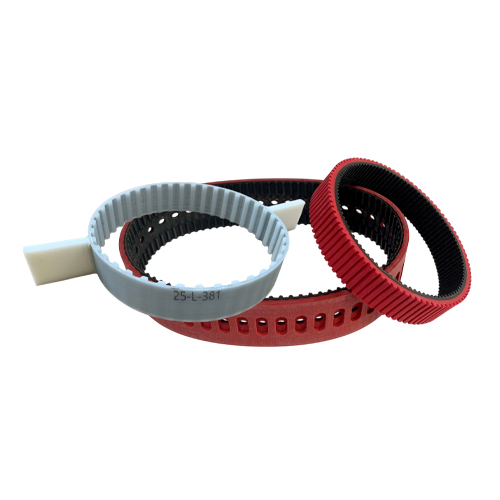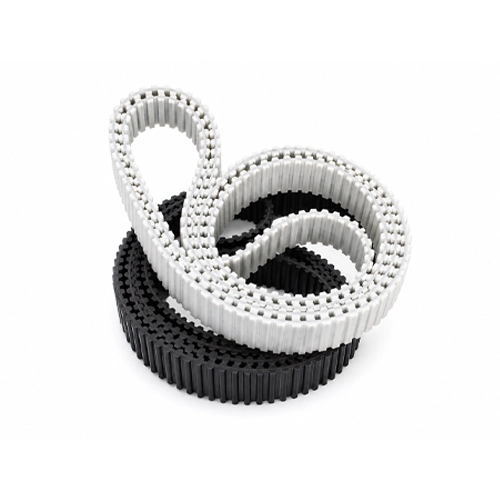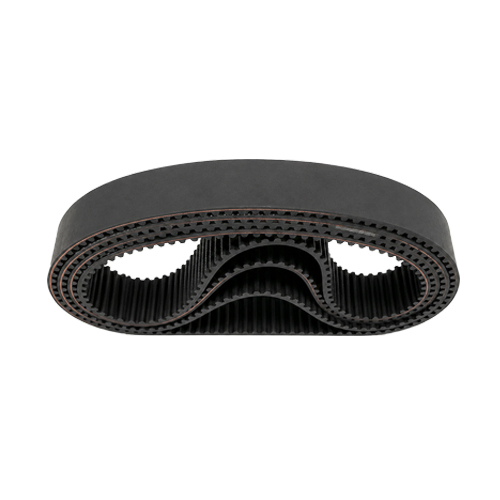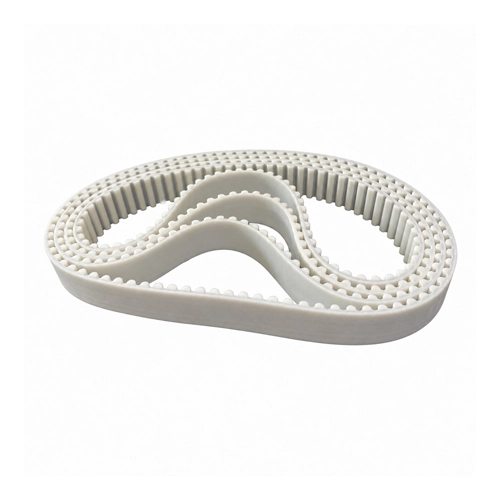
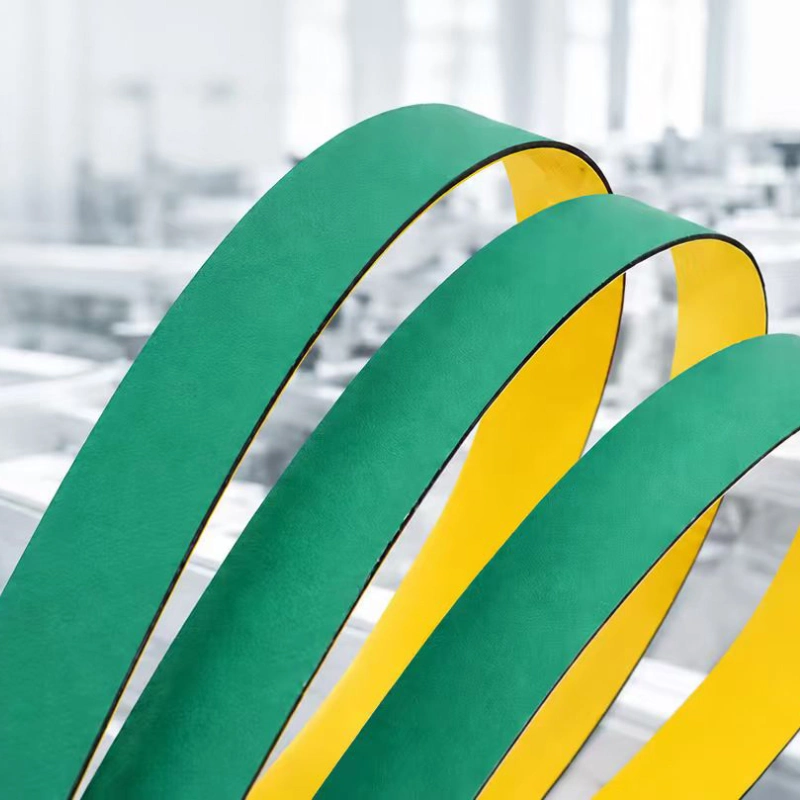
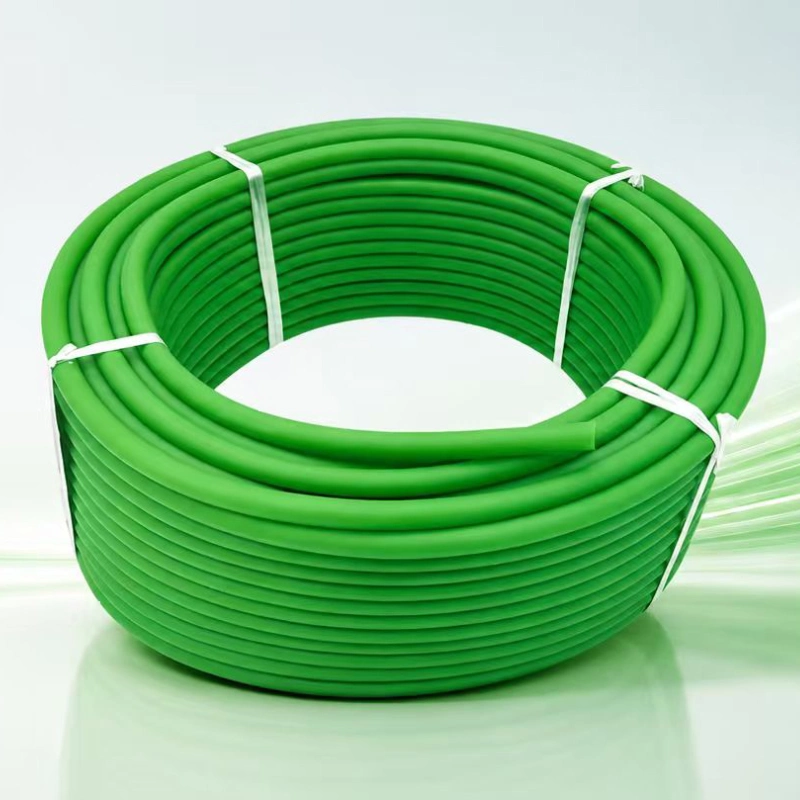
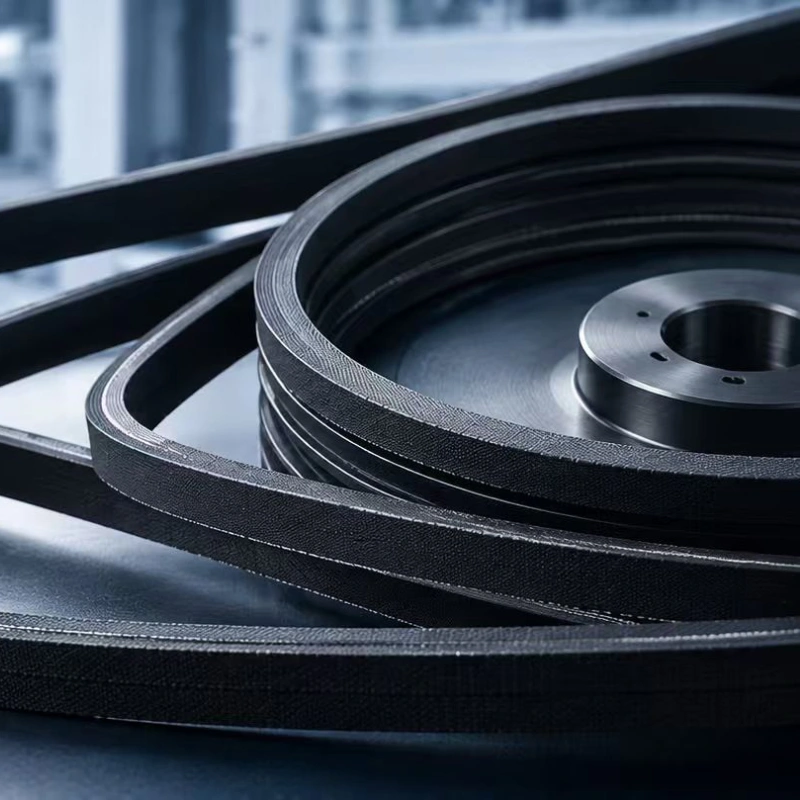
Endless Timing Belt
– Endless timing belts designed as continuous closed-loop solutions for synchronous power transmission, conveying, automation and replacement applications
– Available in truly endless and joined or welded constructions, with PU or rubber materials and different reinforcement options according to operating requirements
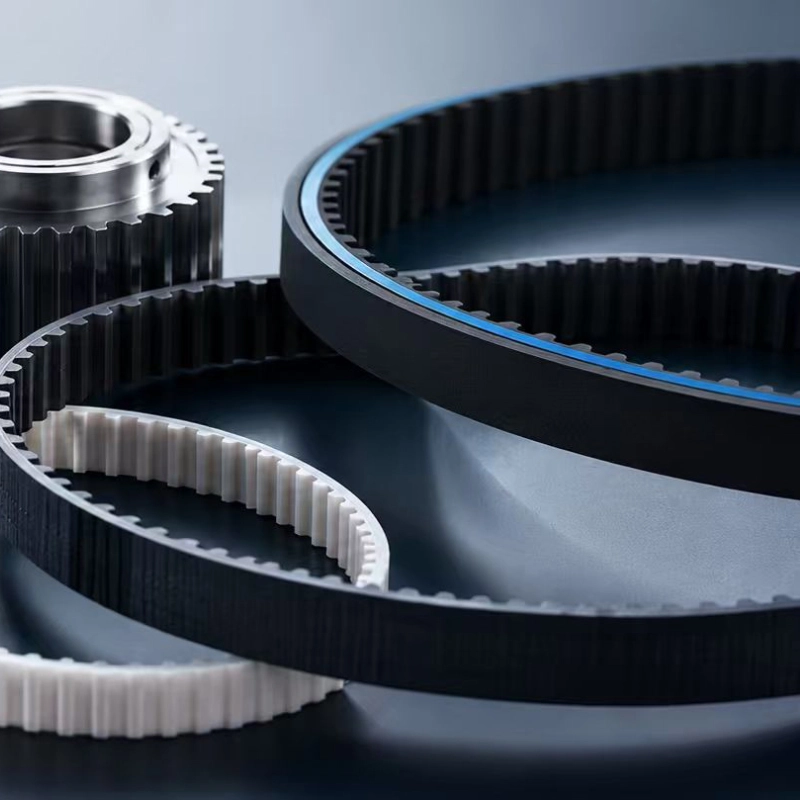
– Multiple tooth profiles, widths and circumferences are available to match pulley arrangements, center distances and machine-specific transmission requirements
Endless Timing Belt Structure
An endless timing belt, also referred to as an endless synchronous belt in some industrial applications, is a toothed transmission belt configured as a continuous closed loop. This closed-loop timing belt construction may be manufactured as a truly endless belt without a joint or formed by joining open-ended timing belt material into a continuous loop.
Depending on the belt material and construction, tensile reinforcement may include steel cords, fiberglass cords, Kevlar, or other suitable tensile members to provide the required tensile strength, dimensional stability, and running performance.
Truly Endless vs Joined Endless Timing Belt
Endless timing belts can be supplied in different closed-loop constructions. The distinction is important because the belt joint or lack of a joint can affect tensile performance, running characteristics, and application suitability.
Truly Endless Timing Belt
A truly endless timing belt is manufactured as a continuous loop without a welded or mechanically joined section. This joint-free construction is also commonly described as a seamless timing belt.
Continuous reinforcement can provide uniform tensile characteristics around the belt and eliminate a conventional joint from the belt path.
Truly endless belts are particularly relevant to:
- High-load synchronous transmission
- High-speed operation
- Precision positioning
- Continuous conveying
- Applications where a joint is undesirable
- Systems requiring consistent belt geometry
Joined or Welded Endless Timing Belt
A joined endless timing belt is produced from open-ended belt material and connected into a continuous loop.
Depending on the belt material and construction, joining may use an application-specific welding or other connection process.
This construction can provide greater flexibility in custom belt length and can be useful where the machine requires a particular center distance or where the required truly endless construction is not available in the specified length.
However, the joint becomes part of the belt construction and must be considered when evaluating load, speed, pulley diameter, and application requirements.
Endless Timing Belt Materials
Endless timing belts can be supplied in different belt materials according to the required transmission and operating conditions.
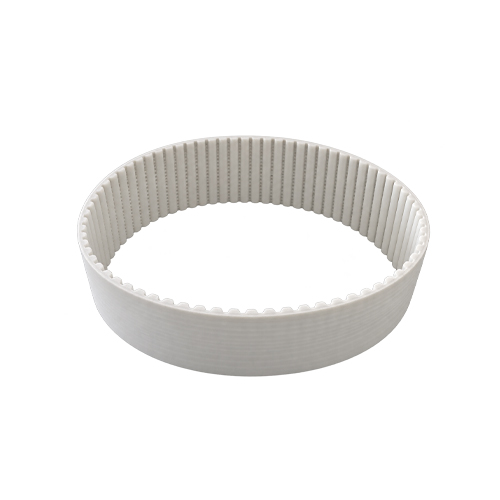
Endless PU timing belts provide high wear resistance, dimensional stability, and precise movement, making them suitable for automation, positioning, and conveying applications requiring clean and consistent synchronous operation.
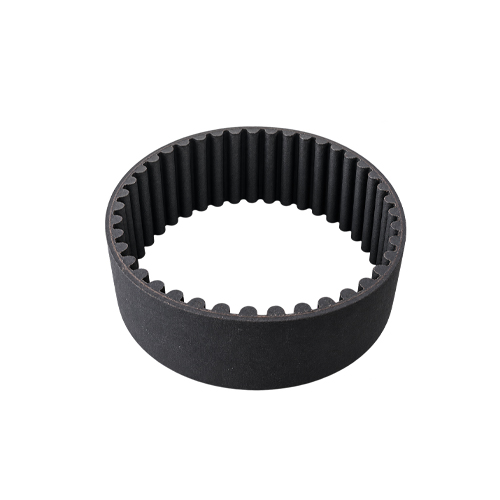
Endless rubber timing belts provide flexibility, vibration damping, and reliable power transmission, making them suitable for mechanical drives operating under dynamic loads, repeated cycling, and demanding running conditions.
Endless Timing Belt Dimensions & Specifications
TRANDVOX can supply endless timing belts in standard or application-specific dimensions, depending on the belt construction, tooth profile, material, and reinforcement.
| Specification | Available Options |
|---|---|
| Belt Construction | Truly Endless / Welded or Joined Endless |
| Belt Material | PU / Rubber, according to construction |
| Tooth Profiles | T / AT / HTD / STD / RPP / Other compatible profiles |
| Reinforcement | Steel / Fiberglass / Kevlar / Other suitable reinforcement |
| Tooth Arrangement | Single-Sided / Double-Sided, according to construction |
| Belt Length | Standard or application-specific |
| Belt Width | Standard or customized |
| Surface | Standard / Fabric / Coated, according to construction |
| Fabrication | Selected modifications according to belt construction |
Get Free Quote of Endless Timing Belt
As an endless timing belt supplier, TRANDVOX provides belt solutions for industrial equipment requiring continuous closed-loop operation for synchronized transmission, conveying, and repeatable motion. We support standard and application-specific belt configurations for automation, packaging, logistics, printing, and specialized machinery.
When selecting an endless timing belt, the existing pulley system and belt geometry are important. Our team can evaluate belt circumference, tooth profile, pitch, width, number of teeth, pulley dimensions, and center distance to help identify a suitable belt configuration for your equipment.
For quotation and technical evaluation, customers can provide the existing belt, pulley specifications, belt dimensions, equipment drawings, or machine details. For a custom endless timing belt, information about the required reinforcement, material, surface construction, V-guides, cleats, or other fabrication features can also be provided. TRANDVOX helps coordinate the appropriate belt specification and sourcing solution for continuous-loop applications.
Endless Timing Belt Applications
Power Transmission
Truly endless timing belts can be considered for synchronous power transmission where continuous reinforcement and the absence of a conventional joint are important.
Synchronized Conveying
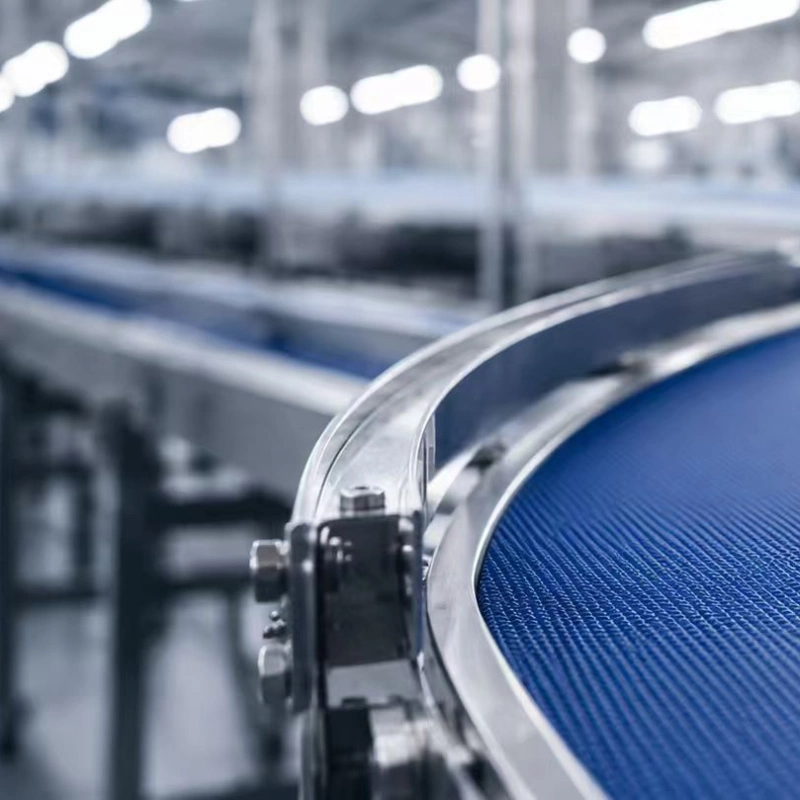
Endless timing belts can provide continuous circulation for conveying systems where the belt must repeatedly travel around pulleys.
Precision Positioning
Continuous belt construction can support repeatable synchronous movement in suitable positioning and automation systems.
Packaging Machinery
Endless timing belts can be used for continuous synchronized movement of rollers, feeders, and machine components.
Textile Machinery
Endless timing belts are used in selected textile applications requiring continuous synchronized transmission.
High-Speed Machinery
Truly endless construction can be considered where a conventional joint could be undesirable at high speed or under demanding dynamic conditions.
Endless Timing Belt vs Open-Ended Timing Belt
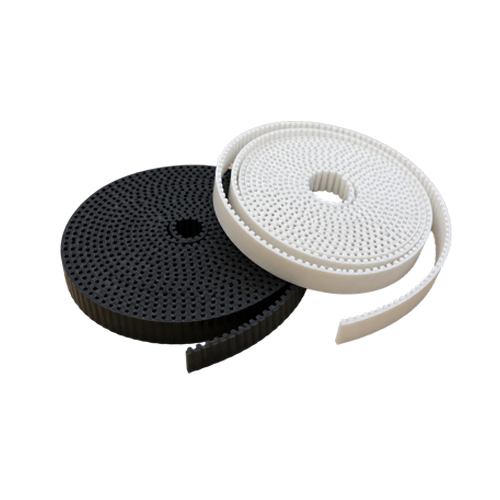
Unlike an open ended belt, which is supplied in a continuous open length for applications such as linear motion and positioning, an endless timing belt is configured as a continuous closed loop for operation around a pulley system. The appropriate construction depends on the machine layout, motion requirements, and installation method.
How to Select an Endless Timing Belt
Selecting the correct endless timing belt requires more than matching the belt width. The complete transmission system should be considered.
1. Belt Tooth Profile
Confirm the required tooth profile and pitch based on the existing pulley.
2. Belt Circumference
The endless belt circumference must match the pulley center distance and transmission configuration.
3. Belt Width
Select a belt width appropriate for the transmitted load and available pulley width.
4. Tensile Reinforcement
Steel, fiberglass and aramid reinforcement provide different combinations of tensile strength, flexibility and dimensional stability.
5. Belt Material
PU and rubber constructions should be selected according to operating temperature, abrasion, chemical exposure, flexibility and environmental conditions.
6. Operating Speed and Load
High-speed or high-load applications may require specific reinforcement and belt construction to maintain stable operation.
7. Surface Requirements
For conveying or product-contact applications, consider whether a standard belt surface is sufficient or whether silicone, PU, rubber, sponge or fabric covering is required.
8. Fabrication Requirements
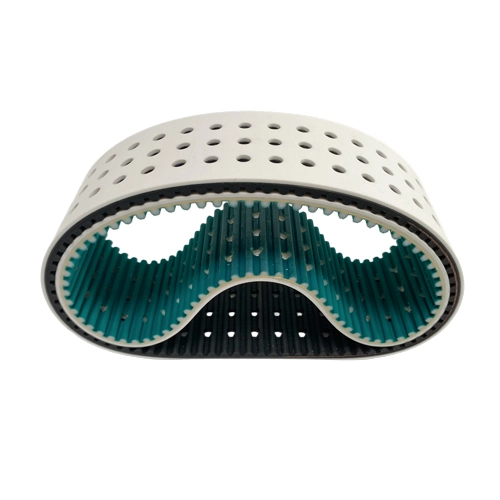
If the belt requires V-guides, cleats, perforations, coatings, or other modifications, the required timing belt fabrication should be confirmed during belt selection.
FAQ
An endless timing belt is a timing belt configured as a continuous closed loop. It can be manufactured as a truly endless belt without a joint or formed by joining open-ended belt material into a loop.
Not necessarily.
“Endless” describes a closed-loop configuration, while “truly endless” or “seamless” generally indicates a continuous belt without a splice or joint.
A welded timing belt can also operate as an endless loop but contains a joined section.
A truly endless belt has no conventional joint, while a welded endless belt is formed by joining the two ends of an open-ended belt.
The construction affects tensile continuity, belt performance, available lengths, and application suitability.
Yes. PU endless timing belts are available in different profiles and reinforcement constructions.
Yes. Rubber endless timing belts can be supplied for suitable mechanical transmission applications.
Typical applications include synchronous power transmission, continuous conveying, positioning systems, packaging machinery, textile equipment, and other applications requiring continuous closed-loop motion.
Depending on the manufacturing method and belt construction, custom-length endless belts may be available.
Truly endless and welded constructions have different manufacturing limitations, so the required length should be confirmed with the belt profile and application.
Yes, selected belt constructions can be supplied with teeth on both surfaces.
Selected belt constructions can be supplied with silicone-coated surfaces for applications requiring additional grip or product-contact performance.
Endless timing belts are generally used for continuous-loop motion. For linear motion and long travel applications, open-ended timing belts are often more appropriate.
Provide the existing belt, belt length, width, tooth profile, number of teeth, reinforcement, belt construction, pulley information, photographs, or machine drawings.
The distinction between truly endless and joined endless construction should also be confirmed.