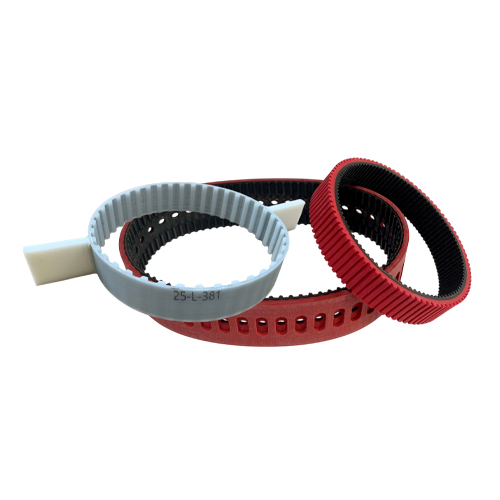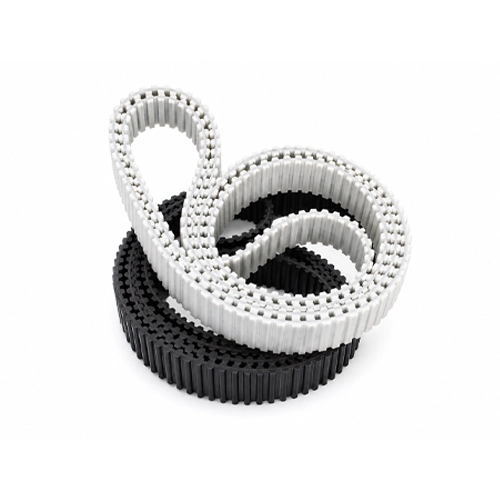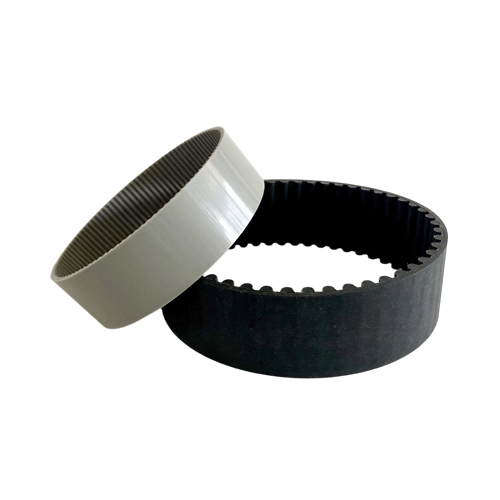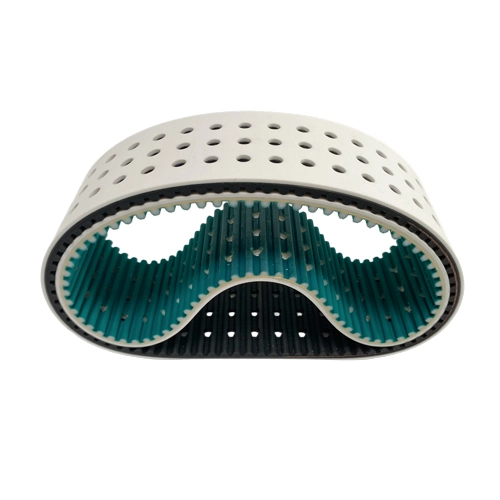
Open Ended Timing Belt
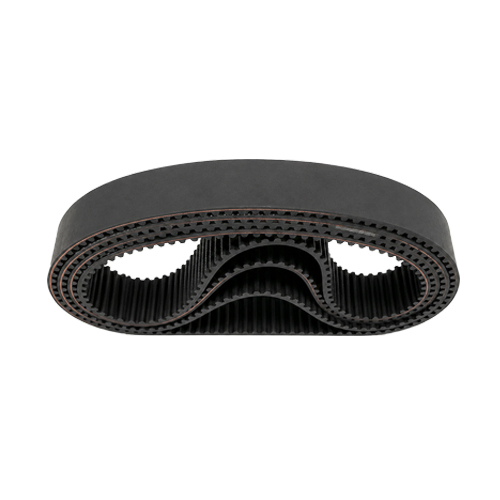
– Open ended timing belts supplied in continuous lengths for linear motion, precision positioning, automation and long-travel machine applications
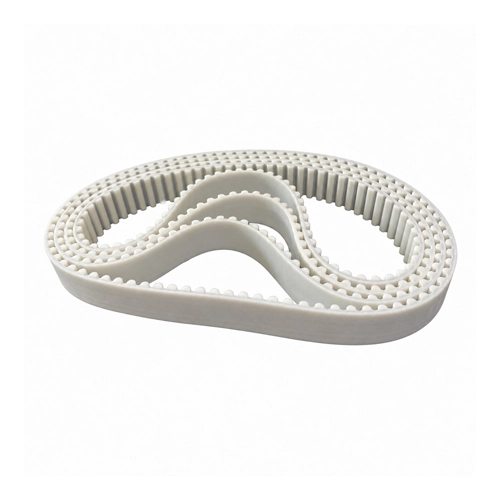
– Available in PU or rubber constructions with multiple tooth profiles, widths and reinforcement options to match different pulley systems and motion requirements
– Flexible belt lengths can be selected according to machine travel, center distance and installation requirements without being limited by a fixed closed-loop circumference
Open Ended Timing Belt Structure & Reinforcement
An open ended timing belt, also referred to as an open ended synchronous belt in some industrial applications, is a toothed belt supplied in a continuous open length without factory joining. This construction is suitable for linear motion, positioning, and customized machine applications where the required belt length or installation layout makes a fixed closed-loop timing belt impractical.
Tensile reinforcement helps control belt elongation, maintain dimensional stability, and support consistent tooth engagement during long travel and repeated positioning cycles.
Steel Reinforcement
Suitable for applications requiring high tensile strength, low elongation, and accurate positioning.
Fiberglass Reinforcement
Provides a balance of strength, flexibility, and dimensional stability for general transmission and automation applications.
Kevlar / Aramid Reinforcement
Suitable where lightweight construction, flexibility, and dynamic performance are important.
The appropriate reinforcement should be selected according to travel length, load, acceleration, speed, pulley diameter, and positioning requirements.
Open Ended Timing Belt Materials
Open ended timing belts can be supplied in different belt materials according to the application.
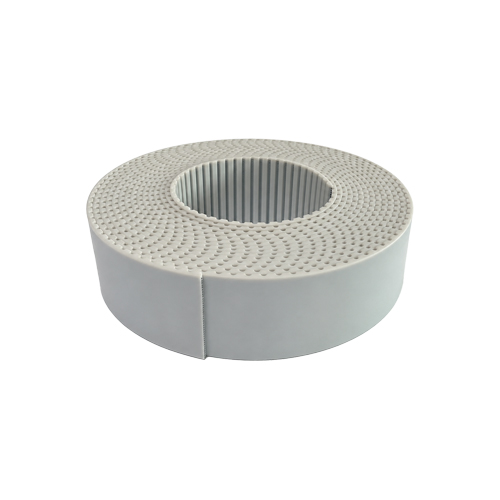
An open ended PU timing belt offers excellent abrasion resistance, dimensional stability, and low elongation for precise linear motion and positioning applications.
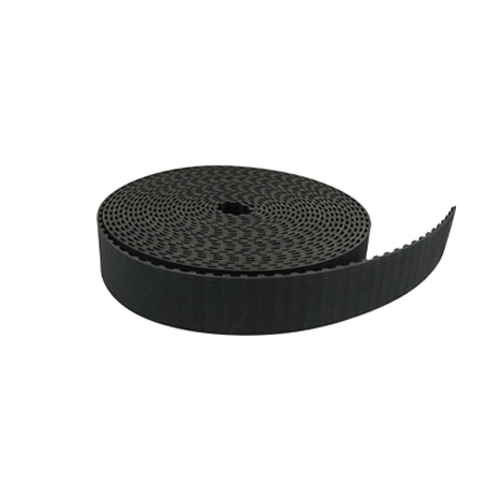
An open ended rubber timing belt provides good flexibility, vibration damping, and reliable power transmission for machinery requiring smooth and durable operation.
Open Ended Timing Belt Specifications
| Specification | Available Options |
|---|---|
| Belt Form | Open Ended Continuous Length |
| Belt Material | PU / Rubber, according to construction |
| Reinforcement | Steel / Fiberglass / Kevlar / Other suitable reinforcement |
| Tooth Profiles | T / AT / HTD / STD / RPP / MXL / XL / L / H |
| Belt Width | Standard or customized |
| Belt Length | Continuous length / Cut to required length |
| Tooth Arrangement | Single-Sided / Double-Sided, according to construction |
| Surface | Standard / Fabric / Coated, according to construction |
| Joining | Application-specific |
| Fabrication | Cleats / V-guides / Perforations / Special processing where applicable |
Get Free Quote of Open Ended Timing Belt
As a professional open ended timing belt supplier, TRANDVOX provides customized open length timing belt solutions for automation equipment manufacturers, distributors, and industrial customers.
Based on belt specifications, drawings, samples, or equipment requirements, our team helps customers select suitable open ended timing belt solutions according to application needs, including belt length, reinforcement structure, tooth profile, and fabrication requirements.
For quotation and technical evaluation, customers can provide belt width, required length, tooth profile and pitch, reinforcement, pulley information, travel distance, machine model, installation conditions, or existing belt samples. TRANDVOX supports customers with accurate belt selection, customized processing options, and reliable supply solutions.
Open Ended Timing Belt for Linear Motion
Open ended timing belts are widely used in linear motion systems where a toothed belt drives a carriage, slide, actuator, or positioning axis along a defined travel path. The open length design makes them suitable for applications requiring customized belt lengths, long travel, and repeatable positioning.
Typical applications include linear actuators, CNC equipment, pick-and-place machines, robotic axes, conveyor positioning systems, and automated production lines.
Long Travel Applications
For long-travel systems, open ended timing belts allow the belt length to be matched to the machine travel and pulley arrangement without being limited by a fixed closed-loop circumference.
Belt length, width, reinforcement, pulley diameter, pretension, speed, acceleration, and positioning accuracy should be considered during selection.
Precision Positioning
Open ended timing belts can provide synchronized linear movement for positioning systems where repeatable carriage or component movement is required.
For precision or high-acceleration applications, belt pitch, reinforcement, tooth engagement, pretension, and pulley configuration should be matched to the machine’s dynamic and positioning requirements.
Open Ended Timing Belt Applications
Open ended timing belts are used across industrial equipment where customized belt lengths and synchronized movement are required.
Automation & Assembly Equipment
Used in automated assembly lines, handling modules, pick-and-place equipment, and other machinery requiring synchronized component movement.
Packaging Machinery
Suitable for feeding, indexing, transfer, and other synchronized movements in automated packaging equipment.
CNC & Precision Machinery
Used in CNC equipment, cutting systems, inspection equipment, and other precision machinery requiring controlled movement.
Logistics & Material Handling Systems
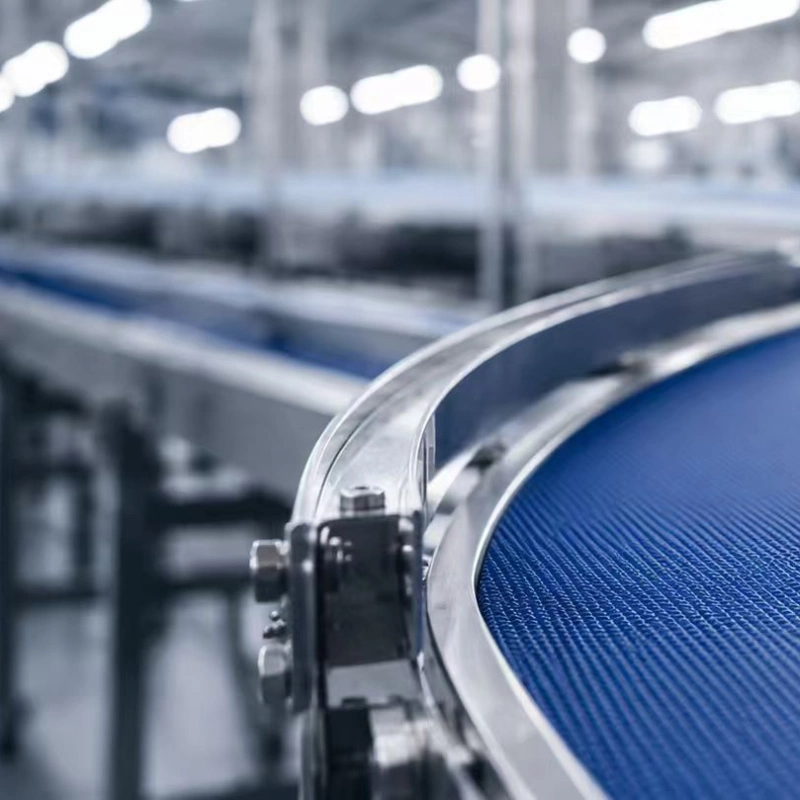
Applied in sorting equipment, transfer modules, conveyor systems, and automated handling equipment requiring reliable synchronized movement.
Open Ended Timing Belt Joining Options
Depending on the belt material, tooth profile, reinforcement, and application, an open ended timing belt may be joined or mechanically secured to form a continuous loop.
Possible joining approaches can include:
- Welded joining – applicable to selected thermoplastic polyurethane constructions.
- Mechanical joining – used for selected belt constructions and applications.
- Other application-specific joining methods – subject to belt material and construction.
The appropriate joining method should be confirmed according to the specific belt construction and operating requirements. When a permanently closed-loop construction is required, an endless timing belt may be more appropriate depending on the application.
Open Ended Timing Belt vs Endless Timing Belt
| Feature | Open Ended Timing Belt | Endless Timing Belt |
|---|---|---|
| Belt Form | Continuous open length | Continuous closed loop |
| Length | Cut to required length | Defined closed-loop circumference |
| Installation | Flexible installation | Requires pulley access |
| Application | Linear motion and custom systems | Rotary transmission |
| Customization | Flexible length and fabrication options | Subject to closed-loop construction and available circumference |
Open ended belts are particularly useful when continuous belt length and linear travel are key requirements, while endless belts are selected when a closed-loop belt configuration is required.
Custom Length Open Ended Timing Belt
One of the main advantages of an open ended timing belt is its flexible belt length. The belt can be supplied in continuous lengths and cut to the required size according to the available belt construction.
This makes a custom length open ended timing belt suitable for machines with long travel distances, application-specific dimensions, or installation layouts where a fixed closed-loop belt would be impractical.
The required belt length should be determined according to the machine travel, pulley arrangement, and installation configuration.
Open Ended Timing Belt Selection Guide
Selecting the right open ended timing belt requires consideration of belt length, reinforcement, motion requirements, pulley configuration, operating conditions, and installation requirements. These factors help determine a suitable belt configuration for reliable linear motion and synchronous transmission.
1. Determine Required Belt Length
Confirm the required belt length based on the machine travel, pulley arrangement, and installation space. For long-travel systems, the complete motion path and installation configuration should be considered before specifying the final belt length.
2. Select Suitable Reinforcement Structure
Select the reinforcement according to travel length, load, acceleration, pulley diameter, and positioning requirements. Steel, fiberglass, and Kevlar constructions provide different combinations of tensile strength, flexibility, elongation control, and dynamic performance.
3. Consider Motion Requirements
Evaluate travel distance, positioning accuracy, speed, acceleration, load, and pulley arrangement together. High-precision, high-speed, and long-travel systems may require different combinations of belt width, reinforcement, pretension, and belt flexibility.
4. Evaluate Operating Environment
The working environment can influence belt material selection and service life.
Important factors include:
- Operating temperature
- Dust and contamination
- Chemical exposure
- Cleaning requirements
- Continuous running conditions
Based on application requirements, open ended timing belts can be supplied with different belt materials, coatings, and fabrication options.
5. Confirm Fabrication Requirements
Fabrication requirements such as joining, coatings, cleats, V-guides, or perforations should be confirmed according to the belt construction and application. More complex modifications can be specified through our timing belt fabrication solutions.
FAQ
An open ended timing belt is a toothed synchronous belt supplied in a continuous open length rather than as a closed loop. It is commonly used where the required belt length is determined by machine travel, installation layout, or linear motion requirements.
Open ended timing belts are commonly used in linear actuators, positioning systems, CNC equipment, robotic axes, pick-and-place machines, packaging equipment, and automated material handling systems.
An open ended timing belt is supplied as a continuous open length, while an endless timing belt is configured as a closed loop. Open ended belts are commonly selected for linear motion and custom-length applications, while endless belts are typically used for continuous closed-loop transmission or conveying.
Yes. Open ended timing belts can be supplied in continuous lengths and cut to the required size, subject to the available belt construction. This provides flexibility for long-travel systems and application-specific machine dimensions.
Yes. Linear motion is one of the primary applications for open ended timing belts. Their toothed engagement provides synchronized movement for actuators, positioning axes, carriages, and other systems requiring controlled linear travel.
Open ended timing belts can be supplied in PU or rubber constructions, depending on the application. Reinforcement options may include steel, fiberglass, Kevlar or aramid cords, with the appropriate construction selected according to load, travel length, flexibility, and positioning requirements.
Selected open ended timing belt constructions can be joined to form a closed loop using a suitable joining method. Compatibility depends on the belt material, tooth profile, reinforcement, dimensions, and operating requirements.
Selection should consider the required belt length, tooth profile and pitch, belt width, reinforcement, pulley dimensions, travel distance, load, speed, acceleration, positioning accuracy, and operating environment.
For quotation and specification matching, provide the required belt length and width, tooth profile and pitch, reinforcement, pulley dimensions, travel distance, operating conditions, and any fabrication requirements. Existing belt samples, photographs, machine models, or technical drawings can also help confirm the required configuration.